
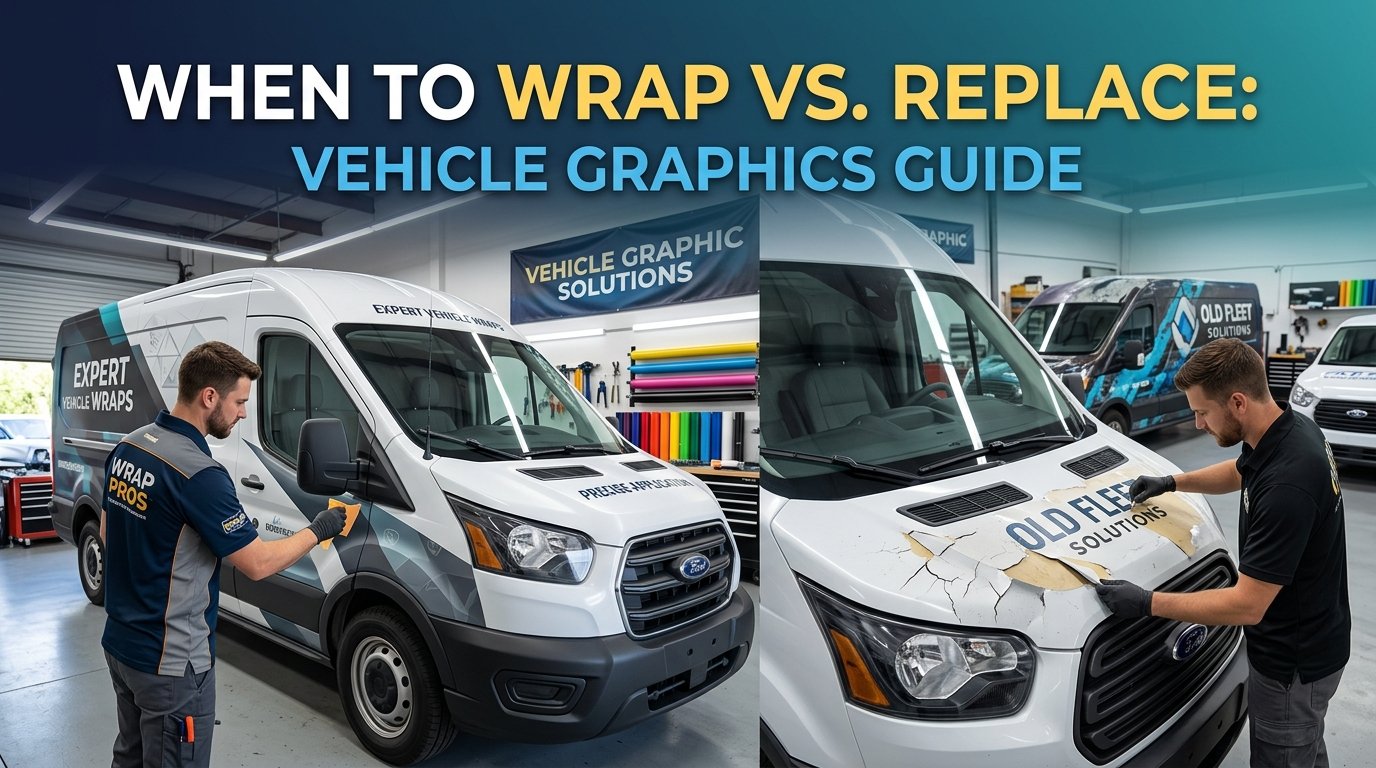
Your fleet vehicles are rolling billboards generating thousands of impressions daily, but faded graphics and peeling edges tell the wrong story about your brand. Making the right call between refreshing existing wraps and complete replacement affects both your marketing impact and your bottom line. Understanding the critical factors that determine whether to repair, refresh, or replace vehicle graphics ensures maximum return on your branding investment.
Evaluating Your Current Wrap Condition
Professional wrap assessment starts with understanding the difference between surface-level wear and structural failure. A thorough evaluation examines multiple factors that determine whether vehicle wrap replacement makes financial sense or if targeted repairs extend your graphics’ life effectively.
Visual Inspection Indicators
Edge lifting represents the most common early warning sign. When adhesive begins failing along seams, door handles, or body contours, you’re facing a decision point. Minor lifting under one inch often responds well to professional resealing, while extensive edge failure suggests the adhesive has reached end-of-life across the entire installation.
Color fading tells a different story in South Florida compared to northern climates. The intense UV exposure accelerates pigment breakdown, particularly in reds and yellows. When fading becomes noticeable from ten feet away, your wrap has lost its marketing effectiveness regardless of physical integrity. Color shift of more than 20% from original specification typically warrants full vehicle wrap replacement rather than attempting to match new panels to degraded film.
Surface cracking and film embrittlement indicate material breakdown at the molecular level. Quality 3M and Avery Dennison films include UV inhibitors designed for specific lifespans, but once the protective layer degrades, the vinyl becomes brittle. Cracking around rivets, body lines, or high-flex areas cannot be repaired effectively—the surrounding material has similarly degraded even if not yet visible.
Physical Integrity Assessment
Adhesive failure manifests differently than surface wear. When wraps begin releasing from the substrate, you’ll notice bubbling in flat areas rather than just edge lifting. This indicates either installation issues or adhesive breakdown from heat cycling and moisture infiltration. Bubbles smaller than a quarter can often be addressed through targeted repair, while widespread bubbling across multiple panels suggests systemic adhesive failure requiring complete replacement.
Impact damage and scratches require case-by-case evaluation. Surface scratches that haven’t penetrated the protective laminate respond well to spot replacement of affected panels. However, deep gouges exposing adhesive or paint create moisture entry points that compromise surrounding film. Professional wrap maintenance specialists can determine if panel replacement integrates seamlessly or if color matching issues make full vehicle wrap replacement more practical.
Climate Impact on Wrap Lifespan
South Florida’s subtropical environment creates unique challenges for vehicle graphics longevity. Understanding these regional factors helps predict when wraps approach end-of-life and plan proactive fleet graphics refresh cycles rather than reactive emergency replacements.
UV radiation intensity in South Florida exceeds national averages by 30-40%, directly impacting car wrap lifespan. Premium cast vinyl with quality laminates typically delivers 5-7 years in moderate climates but may show significant degradation at 3-4 years under constant South Florida sun exposure. Vehicles parked outdoors full-time experience accelerated aging compared to garaged vehicles, creating different replacement timelines within the same fleet.
Salt air exposure for coastal operations adds another degradation vector. Marine environments accelerate adhesive breakdown and promote edge lifting as salt crystals form microscopic intrusion points. Fleet vehicles operating within five miles of coastline typically require wrap replacement 12-18 months earlier than identical vehicles in inland territories.
Heat cycling between air-conditioned interiors and 140-degree surface temperatures creates expansion and contraction stress that weakens adhesive bonds. This explains why wraps on delivery vehicles with frequent door operation fail faster than wraps on vehicles with less thermal cycling. Understanding your specific use patterns helps establish realistic expectations for wrap maintenance South Florida timelines.
Cost Analysis: Repair vs. Replace
Financial decision-making requires comparing true costs rather than just invoice prices. Wrap replacement cost includes material, labor, and vehicle downtime, while repairs add complexity around color matching and longevity guarantees.
When Repairs Make Financial Sense
Panel replacement works economically when damage affects less than 30% of total wrapped surface area and the remaining wrap shows minimal degradation. A single damaged door or hood can be replaced using material from the same production lot, ensuring color consistency. The cost typically runs 15-25% of full vehicle wrap replacement while extending overall graphics life by 1-2 years.
Edge resealing and minor repair addresses early-stage adhesive failure before it progresses. Professional wrap maintenance catches these issues during routine inspections, with repair costs running $100-300 per vehicle versus $2,500-4,500 for complete replacement. For fleet graphics refresh planning, scheduled maintenance appointments at 18-month intervals catch repairable issues before they become replacement requirements.
When Complete Replacement Becomes Necessary
Once wrap degradation exceeds 40% of surface area, attempting repairs becomes false economy. Mismatched color between new and aged vinyl creates unprofessional appearance that defeats branding purpose. Multiple repair attempts also increase installation time and costs while producing inferior results compared to complete replacement.
Wraps approaching 4-5 years in South Florida typically warrant proactive replacement rather than reactive repair. The material has absorbed sufficient UV exposure that remaining lifespan rarely justifies repair investment. Planning fleet graphics refresh on this timeline prevents emergency replacements that disrupt operations and eliminate negotiating leverage for volume pricing.
Rebranding initiatives obviously trigger replacement regardless of existing wrap condition. However, timing rebrand launches to coincide with natural wrap replacement cycles maximizes return on both investments. A well-maintained 3-year-old wrap might receive an additional 12 months service while rebrand planning proceeds, avoiding premature replacement followed shortly by scheduled replacement.
Fleet Management Strategies
Commercial fleet managers face unique challenges tracking multiple vehicles through different lifecycle stages. Systematic approaches to vehicle wrap repair and replacement optimize both branding consistency and budget allocation.
Establishing Replacement Schedules
Proactive scheduling based on installation dates and usage patterns prevents the scattered appearance of mixed-condition fleet vehicles. Implementing rolling replacement cycles—refreshing 25% of fleet annually rather than 100% every four years—smooths budget impact and maintains consistent brand presentation. This approach also allows incorporating design improvements incrementally rather than committing entire fleets to designs that may need refinement.
Usage-based planning recognizes that delivery vehicles accumulate more wear than executive transport. Categorizing fleet by daily mileage, parking conditions, and operational environment creates realistic replacement timelines. High-use vehicles might require wrap replacement on 36-month cycles while low-mileage specialty vehicles deliver 6-7 years service from quality installations.
Inspection and Documentation Systems
Quarterly visual inspections with photographic documentation track degradation patterns and identify vehicles approaching replacement thresholds. Digital records showing condition progression help justify budget requests and optimize timing—replacing wraps showing early degradation signs before they impact brand perception or require emergency service.
Maintenance logs documenting repairs, cleaning schedules, and environmental exposures establish patterns that improve future planning. If coastal territory vehicles consistently require replacement at 36 months while inland vehicles deliver 48-month service, route assignments and replacement budgets can reflect these realities.
Material Selection Impact on Longevity
The relationship between initial material investment and car wrap lifespan creates long-term value equations that challenge simple cost comparisons. Premium materials command higher upfront prices but deliver superior longevity and reduced replacement frequency.
Cast vinyl films from manufacturers like 3M and Avery Dennison include advanced UV inhibitors and adhesive formulations specifically engineered for extended outdoor exposure. These materials maintain color stability and physical integrity 30-50% longer than economy calendered films. For South Florida vehicle wraps, this translates to 4-5 year performance from premium materials versus 2-3 years from budget alternatives—making premium materials less expensive on annual cost basis despite higher initial investment.
Laminate selection equally impacts longevity. High-performance laminates with UV absorbers and scratch-resistant coatings protect underlying print and vinyl from environmental damage. The incremental cost of premium lamination—typically 15-20% of total wrap price—extends serviceable life by 12-24 months, delivering substantial return on investment through delayed vehicle wrap replacement cycles.
Installation Quality and Longevity Connection
Material quality means nothing without proper installation technique. Professional wrap maintenance begins at installation, with surface preparation and application methods directly determining wrap lifespan and repair requirements.
3M Preferred Wrap Installers and certified technicians follow manufacturer protocols ensuring optimal adhesion and longevity. Surface preparation includes paint decontamination, proper temperature control during installation, and post-application heat treatment that activates adhesives and relieves film stress. These technical details separate installations delivering full material lifespan from those requiring premature replacement due to installation deficiencies.
Post-installation edge sealing and attention to high-stress areas like door handles and body contours prevent premature failure initiation points. Quality installers identify vehicle-specific challenges—complex curves, aggressive body lines, textured surfaces—and employ appropriate techniques ensuring long-term adhesion. This expertise proves its value when competitor wraps show edge lifting at 18 months while professionally installed wraps remain secure at 36 months.
Maintenance Practices That Extend Wrap Life
Proper care significantly impacts when vehicle wrap replacement becomes necessary. Simple maintenance protocols add 12-24 months to wrap lifespan, multiplying return on initial investment.
Hand washing with pH-neutral automotive soap prevents premature degradation from harsh chemicals and high-pressure spray. Automatic car washes with brushes create micro-scratches that accumulate into visible damage over time. Professional fleet managers implementing hand-wash requirements consistently achieve longer wrap service life than those permitting automatic wash facilities.
Regular application of wrap-specific protectants maintains laminate performance and UV resistance. These products don’t reverse existing damage but slow degradation progression, particularly valuable for fleet graphics refresh timing flexibility. Quarterly protectant application represents minor investment compared to accelerated replacement costs from neglected maintenance.
Covered parking or vehicle covers for extended idle periods dramatically reduce UV exposure. Vehicles parked outdoors 24/7 experience continuous UV bombardment even overnight from ambient light reflection. Companies providing covered parking for wrapped vehicles reduce replacement frequency by 20-30% compared to outdoor parking—a facilities investment that pays returns through extended graphics life.
Making the Decision: Refresh or Replace
The ultimate decision balances immediate costs against long-term value and brand impact. Vehicle wrap repair makes sense for isolated damage on otherwise sound installations with 18+ months expected remaining service life. Complete vehicle wrap replacement becomes the right choice when degradation exceeds 40% of surface area, material approaches end-of-life expectations, or repair costs exceed 50% of replacement investment.
Professional assessment from experienced installers provides objective evaluation beyond emotional attachment to existing graphics. Quality wrap shops offer honest guidance recognizing that appropriate repair recommendations build long-term client relationships more effectively than pushing unnecessary replacements.
Professional Expertise Makes the Difference
Understanding when to refresh versus replace vehicle graphics requires expertise that comes from thousands of installations and honest assessment of your specific situation. South Florida’s demanding environment makes professional evaluation even more critical—decisions appropriate for moderate climates may not apply to our UV-intense, salt-air conditions.
Whether managing commercial fleet graphics or maintaining luxury vehicle appearance, the right decision maximizes your investment while ensuring your graphics deliver intended impact. Contact professional wrap specialists who prioritize long-term client relationships over transactional sales for honest assessment and recommendations aligned with your specific needs and budget realities.
