
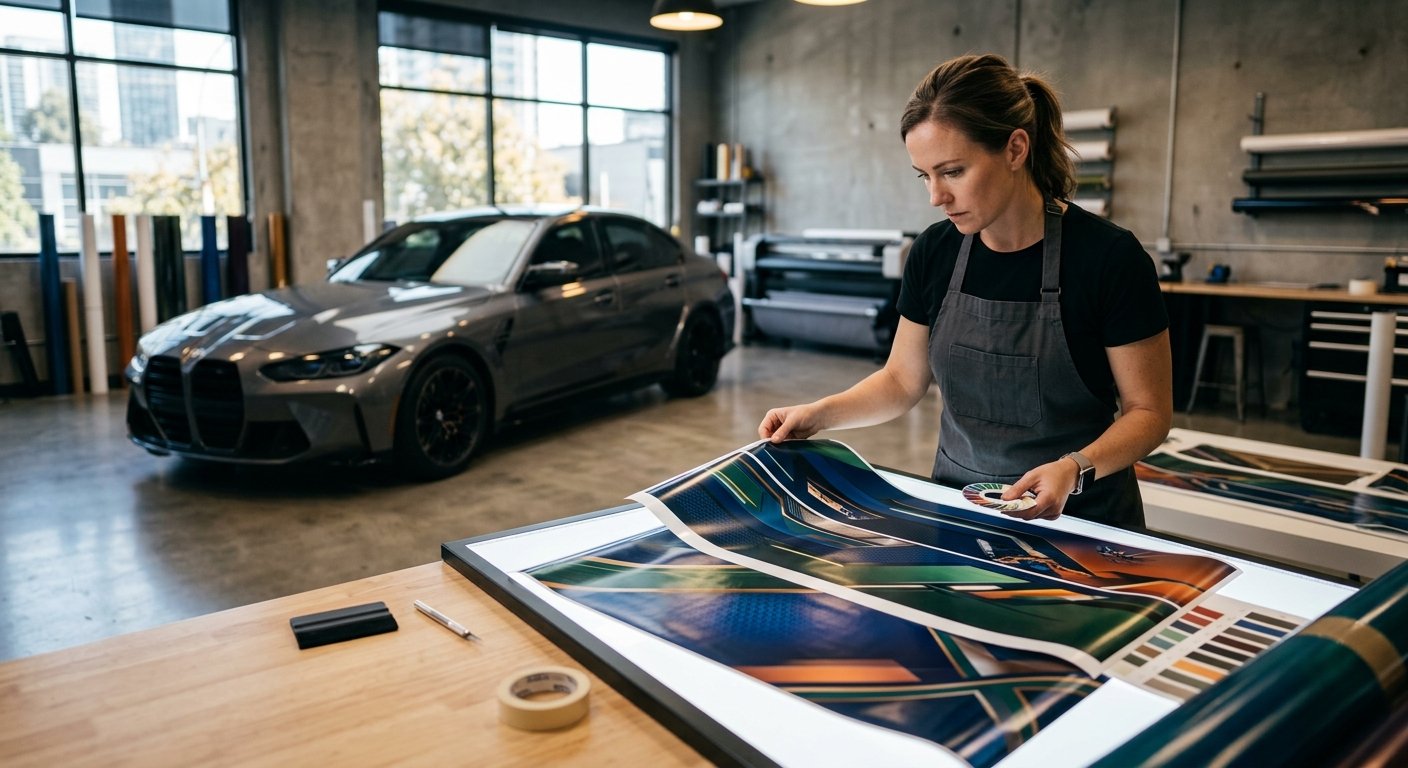
A custom car wrap transforms a vehicle’s appearance through precision-cut, digitally printed vinyl film applied directly over factory paint. The process moves through distinct phases—design consultation, artwork preparation, material selection, surface preparation, and professional installation—each of which determines the quality and longevity of the finished result. Understanding how these stages connect helps vehicle owners and fleet managers make better decisions before the first design file is ever opened.
- Design quality is determined long before vinyl touches the vehicle—accurate vehicle templates and properly calibrated artwork are non-negotiable foundations.
- Material selection, particularly 3M-certified cast vinyl films, directly affects how a wrap performs under South Florida’s intense UV exposure and salt-air environment.
- Surface preparation—cleaning, decontamination, and panel inspection—accounts for a significant share of professional installation quality.
- Color, finish, and cut choices interact in ways that only become visible at full scale; reviewing physical samples before approving digital artwork prevents costly surprises.
- A professionally executed wrap protects the underlying paint while delivering a brand or aesthetic statement that holds up for years with proper care.
Why the Design Phase Determines Everything
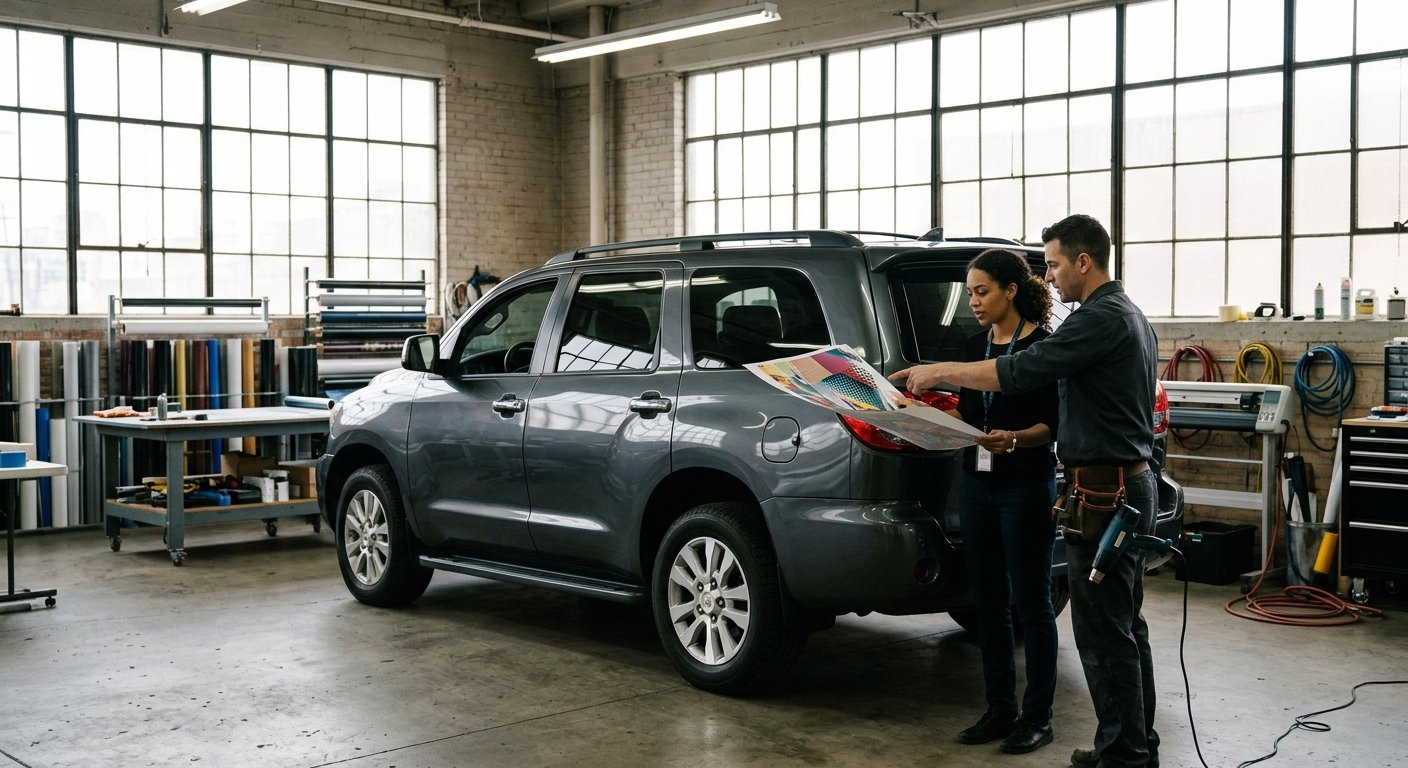
A common misconception is that vehicle wrap design is simply a graphic design exercise—drop a logo onto a car template, choose some colors, and move forward. In practice, the design phase is an engineering exercise as much as a creative one. Curved panels, door handles, mirrors, window lines, and body character creases all create interruptions and distortions that a flat design file cannot accurately predict. An experienced wrap professional maps the actual vehicle geometry before any creative work begins.
At Florida Car Wrap, that process starts with vehicle-specific templates that account for real panel dimensions rather than generic outlines. This matters because a design that looks balanced on screen can appear top-heavy, too busy, or misaligned once scaled to a full-size vehicle. Reviewing scaled proofs and, where possible, test panels before final approval eliminates the most expensive surprises in the workflow.
Effective bespoke car graphics require a minimum print resolution of 100 DPI at full vehicle scale—files that look sharp at thumbnail size often print poorly when expanded. Always request a resolution check from your installer before approving artwork, especially if logos or photography are involved.
Choosing the Right Materials for South Florida
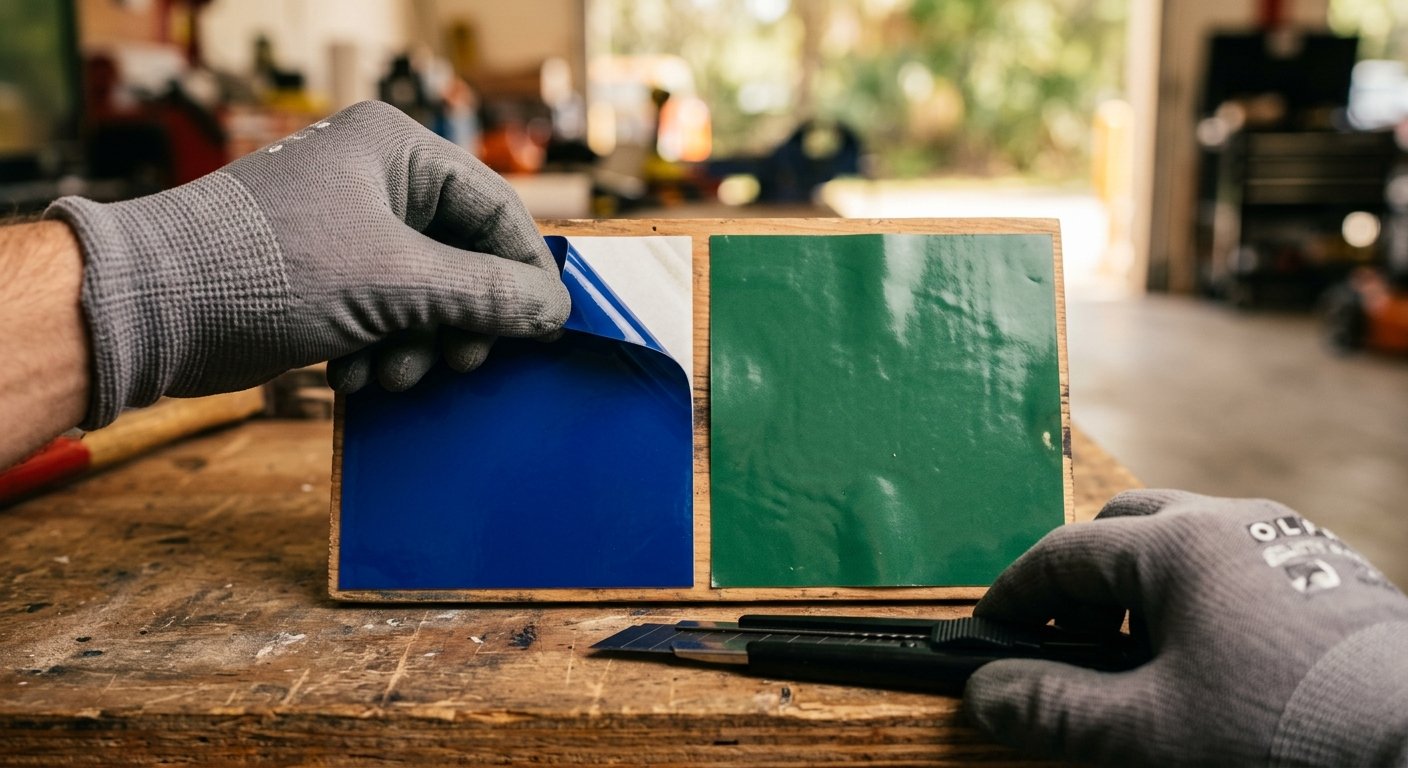
Not all wrap vinyl is equal, and in South Florida’s climate the difference between cast and calendered vinyl becomes measurable within the first year. Cast vinyl is manufactured by spreading liquid PVC onto a casting sheet and curing it, which produces a dimensionally stable film that conforms to complex curves without stress memory. Calendered vinyl is extruded under pressure, leaving internal tension that causes it to lift and shrink at edges over time—particularly in heat. For vehicle wrap design services where the expectation is a multi-year finish, cast vinyl is the professional standard.
3M’s wrap films, including the widely specified 1080 and 2080 series, are cast products that carry documented performance warranties when installed by a 3M Certified installer. According to 3M’s product documentation, these films are engineered for full vehicle wraps and rated for exterior durability under high-UV conditions. That certification is not a marketing label—it represents a documented standard of material quality and installation practice that protects both the vehicle and the finish investment.
For vehicles operating near the coast or kept outdoors year-round, the laminate layer above the printed graphic is equally important. A UV-blocking overlaminate extends color fidelity significantly compared to unlaminated prints. This is a detail that distinguishes a professional wrap shop from a print-and-ship operation.
| Material Property | Cast Vinyl | Calendered Vinyl |
|---|---|---|
| Conformability on curves | Excellent — no stress memory | Limited — lifts at edges over time |
| Dimensional stability in heat | High | Moderate to low |
| Suitable for full vehicle wraps | Yes | Not recommended |
| UV resistance (with laminate) | Strong multi-year performance | Degraded within 12–18 months |
| Typical professional application | Full wraps, fleet, luxury vehicles | Short-term signage, flat surfaces |
The Installation Process: What Happens in the Shop
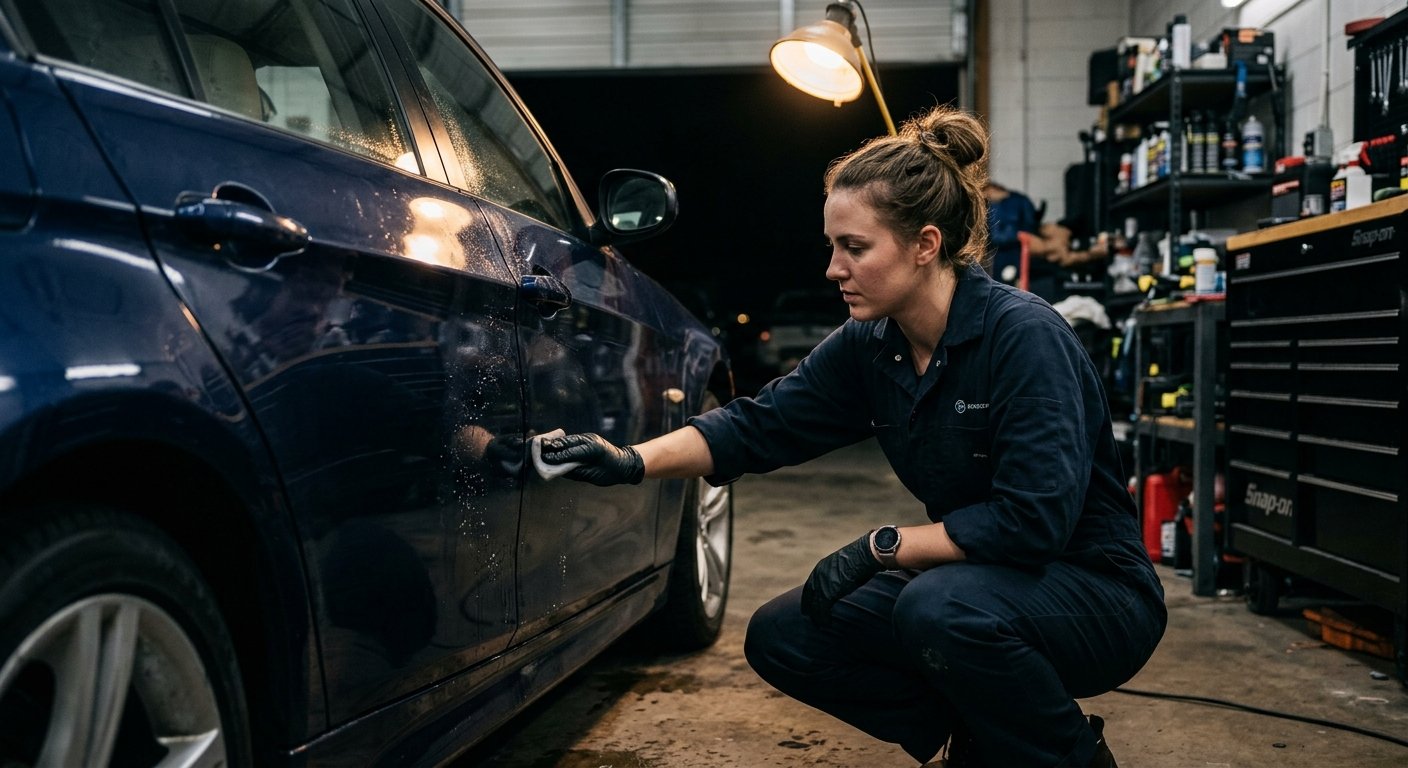
Professional car wrap installation is a multi-day process when done correctly. Rushing any stage—particularly surface preparation—produces failures that no quality vinyl can prevent.
Vehicle Inspection and Decontamination
Every panel is inspected for paint chips, rust, bodywork repairs, and contamination. Silicones, waxes, and road tar must be fully removed because vinyl will not bond permanently to contaminated surfaces. Paint defects trapped under a wrap eventually telegraph through the film.
Artwork Finalization and Print Production
The approved design file is color-profiled to the specific printer and vinyl combination being used, then printed and laminated. Colors shift between screen, proof, and production print if profiling is skipped—a step that separates professional vehicle wrap design services from commodity print shops.
Panel Application
Panels are applied section by section using heat guns, squeegees, and knifeless tape to conform the film without cutting into paint. Recessed areas—door handles, mirror housings, bumper vents—require additional heat and time. Complex areas like hoods with character lines are often the true test of an installer’s skill level.
Edge Finishing and Post-Heat
Edges are wrapped or precisely trimmed and post-heated to relieve any installation tension in the vinyl. This step is critical in South Florida—improperly finished edges lift faster in heat and humidity than in temperate climates.
Final Inspection
The completed wrap is inspected under controlled lighting for bubbles, lifting edges, color seams, and panel alignment. A properly executed custom car wrap shows no visible seams except where geometry requires them, and no air channels.
The edge is where an installation either holds for years or begins to fail within months—no amount of quality vinyl compensates for rushed finishing.
Color, Finish, and the Decision That Lasts
The vinyl industry now offers finishes that were unavailable even five years ago: satin chrome, color-shift films, brushed metal textures, matte blacks with soft-touch surfaces, and full gloss whites that rival factory paint depth. Choosing a finish is not purely aesthetic—some finishes are more forgiving of minor surface imperfections while others amplify them.
For commercial fleet branding, legibility and brand consistency across multiple vehicles typically take priority. The Society for Experiential Graphic Design provides guidelines on contrast ratios and color visibility that translate directly into effective fleet graphics—the same principles that make wayfinding signage readable at a glance apply to vehicles moving through traffic.
For luxury and exotic vehicles, the priority often shifts toward finish depth and precision edge work. Painted accents, two-tone combinations, and partial wraps that accent specific body lines require a level of design intention that distinguishes bespoke car graphics from simple color-change wraps. Reviewing physical vinyl samples under natural light—not just screen swatches—is strongly recommended before any final approval.
If you are wrapping a fleet of vehicles, request a physical proof panel on one vehicle before full production begins. Color output can vary subtly between print runs, and a panel proof lets you verify consistency before committing materials and labor across the entire fleet.
Caring for a Professional Wrap
A wrap is a durable surface, but it rewards appropriate care. Hand washing with pH-neutral soap and avoiding high-pressure direct streams at panel edges preserves the laminate and edge bonds. Automatic brushless car washes are generally safe for established wraps, but high-pressure touchless systems focused at seam lines can introduce lifting over time. Parking in covered or shaded environments reduces cumulative UV load, which matters for any finish in South Florida’s sun. For marine applications—where Florida Car Wrap’s boat wraps are specified with salt-air resistance in mind—rinsing with fresh water after saltwater exposure significantly extends film performance.
According to the Printing Industries Association, properly maintained large-format graphics using quality overlaminated films can sustain color fidelity and adhesion for multiple years in high-UV environments when installed on clean, sound substrates. This aligns directly with the performance expectations that 3M Certified materials are designed to meet.
Frequently Asked Questions
How long does the custom car wrap design and installation process take?
The timeline varies by vehicle complexity and design scope. Design review and approval typically span several days to a week depending on revision cycles. Installation itself requires the vehicle to be clean, in the shop, and stationary for the duration of the work—complex full wraps on large vehicles or intricate designs take longer than straightforward color changes. Rushing either phase compromises quality, so build schedule flexibility into your project planning.
Will a wrap damage my factory paint?
A professionally installed wrap using quality cast vinyl actually shields factory paint from UV and minor abrasion during the wrap’s service life. When removed correctly by a trained installer, properly applied vinyl should not damage sound factory or professionally refinished paint. Paint that was compromised before wrapping—chips, peeling clear coat, uncured respray—can present complications at removal, which is one reason a thorough pre-installation inspection matters.
What is the difference between a printed wrap and a color-change wrap?
A color-change wrap uses a solid-color cast vinyl film—no printing involved—to give the vehicle a new uniform finish. Custom printed car wraps incorporate full-color digital graphics, photography, brand elements, or complex designs printed onto the vinyl before installation. Printed wraps require additional lamination to protect the ink layer. Both approaches use the same installation techniques; the difference is in the production step that precedes installation.
Can wraps be applied to commercial fleet vehicles of different sizes?
Yes. Commercial fleet wraps scale from compact sedans and vans to box trucks and trailers, provided the vehicle surfaces are in sound condition and accessible to proper installation tools. For fleets, consistency across multiple vehicles requires careful color management and templating—each vehicle model may have slightly different body dimensions even within the same make and year range. Explore the full scope of commercial fleet wrap options for more on multi-vehicle programs.
How do I evaluate whether a wrap shop is qualified for my project?
Look for 3M Certified Installation credentials, which indicate the installer has met a documented standard of material handling and application practice. Review completed work samples under varied lighting, not just curated portfolio photos. Ask specifically about how the shop handles surface preparation, edge finishing, and warranty coverage. For specialized applications—luxury vehicles, marine environments, architectural graphics—ask for examples of that specific work category.
From Design File to the Road
Every custom car wrap begins as a conversation about intent—what the vehicle needs to communicate, how long it needs to hold up, and what constraints the vehicle’s geometry and current paint condition create. From there, design, material selection, and installation form a chain where each link affects the next. Skipping steps or substituting lower-grade materials anywhere in that chain produces a result that looks adequate initially and disappoints over time.
Whether you are exploring custom car wraps for a single enthusiast vehicle or building a branded fleet identity across South Florida, the investment deserves a process that matches the outcome you expect. At Florida Car Wrap, Steve Hargittai’s award-winning craftsmanship and 3M Certified Installation standards exist to ensure that every project—from concept file to finished road-ready vehicle—reflects the quality that the South Florida market demands.
Ready to bring your wrap design to life?
Contact Florida Car Wrap to discuss your vehicle, your vision, and the right materials for South Florida’s demanding environment.
About Florida Car Wrap
Florida Car Wrap delivers premium vehicle wrap services specializing in commercial fleet branding, luxury car customization, and marine-grade wraps throughout South Florida. Led by award-winning wrap professional Steve Hargittai, the company combines 3M-certified materials with competition-proven craftsmanship to serve discerning business owners and automotive enthusiasts who value longevity and quality over price. Their expertise extends beyond vehicles to architectural graphics, wall wraps, and floor wraps, all executed with attention to South Florida's unique climate demands including UV exposure and salt air considerations. Visit floridacarwrap.com →
