
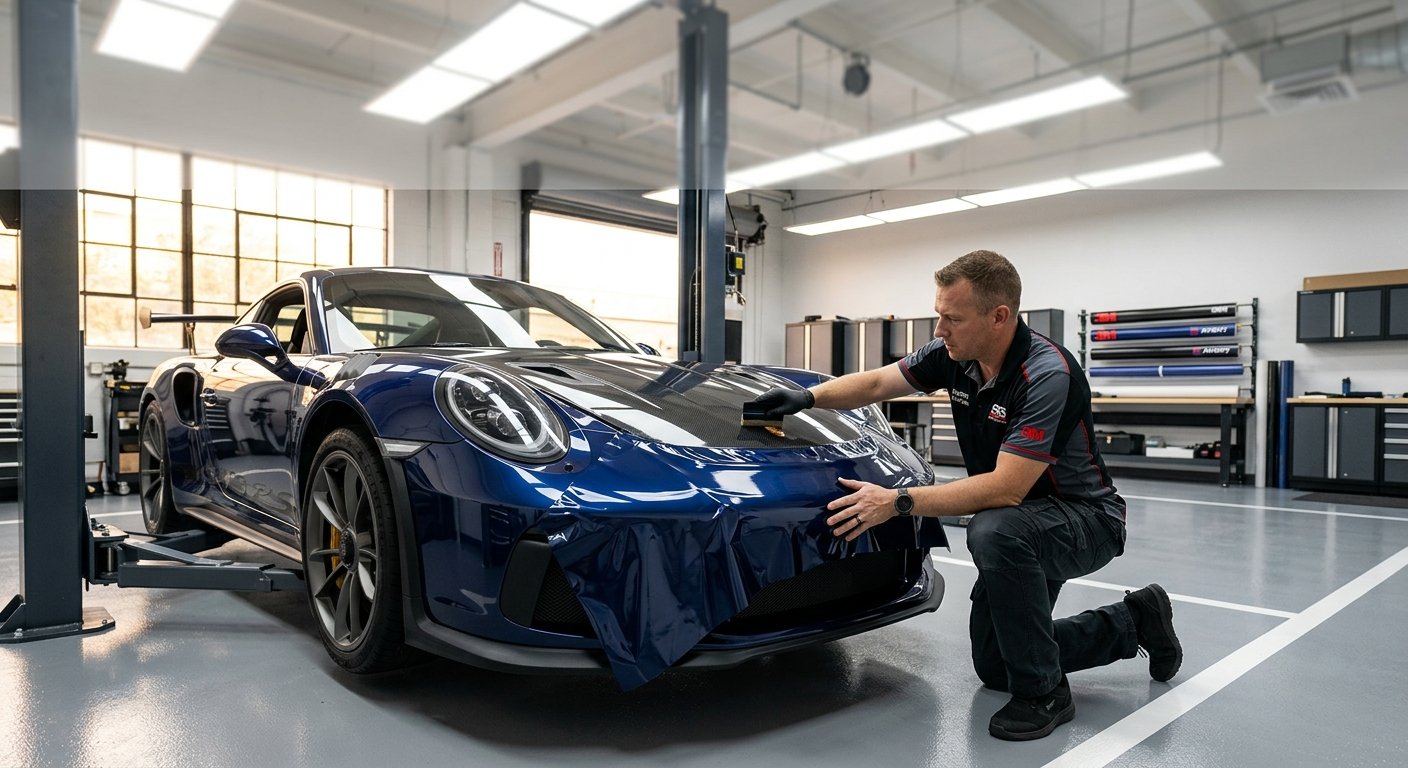
A professional color change wrap covers every painted panel—hood, roof, fenders, doors, bumpers, mirrors, and door jambs—with a continuous vinyl film that can be indistinguishable from a factory respray. With 3M Certified materials and correct installation, a full wrap in South Florida typically lasts three to five years. Done wrong, it lifts at the edges within months and costs more to fix than the original savings.
- A color change wrap is a full-vehicle application—not partial graphics—and modern professional films offer finishes impossible to achieve with conventional paint.
- Surface prep is the most critical phase: wax, silicone, and road oils invisible to the naked eye will cause silvering, lifting, and peeling if not removed.
- Professional-grade films from manufacturers like 3M are rated for 5–7 years of exterior use; consumer-grade vinyl is structurally different, not just cosmetically.
- Full color change wraps for passenger vehicles in South Florida generally range from $2,500 to $6,000 or more for exotic or larger vehicles.
- Post-heat treatment and edge sealing after application are non-negotiable for longevity in South Florida’s UV and temperature conditions.
Whether you’re a business owner looking to rebrand your fleet, a luxury car enthusiast exploring custom car wraps as an alternative to a paint job, or simply someone who wants a bold new look on a daily driver, this guide walks you through the entire professional process—step by step.
What Is a Color Change Wrap?
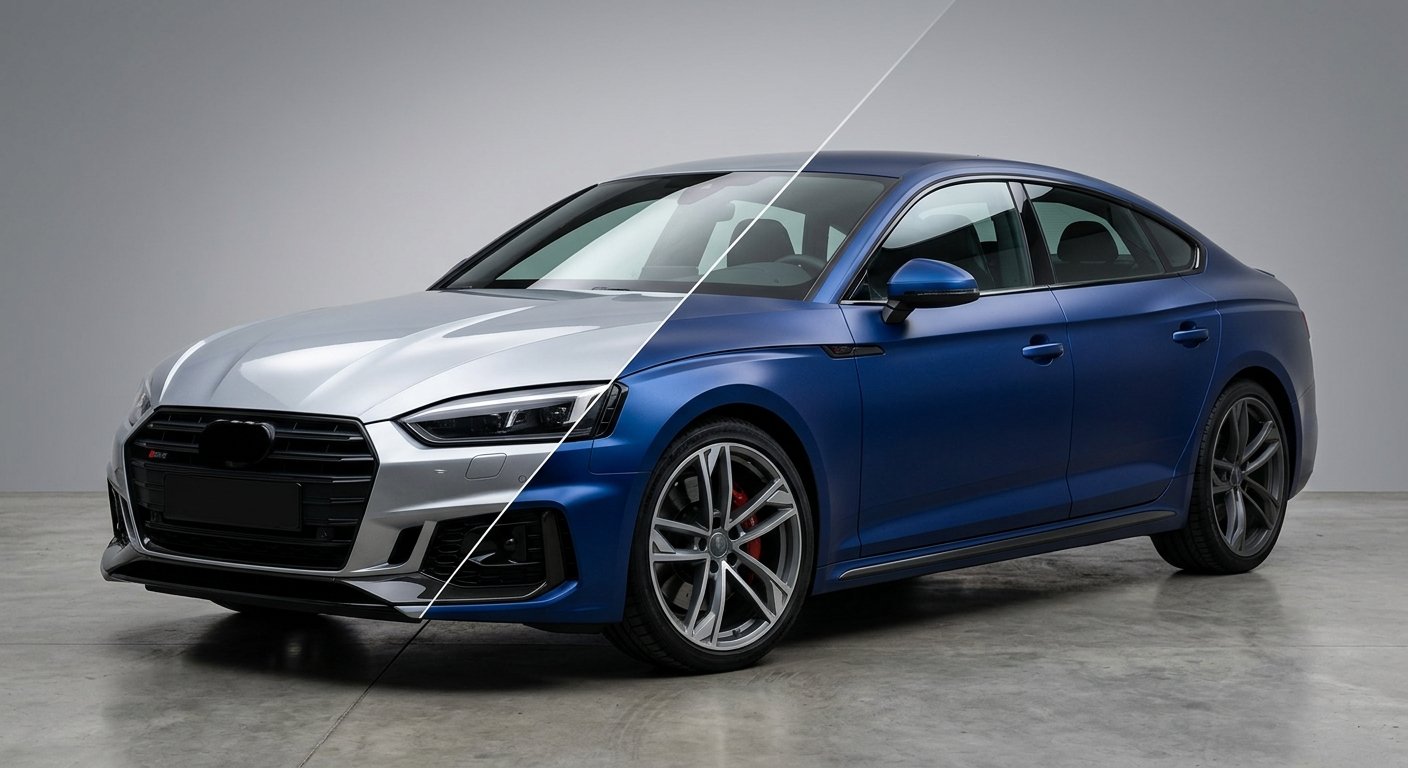
A color change wrap is a full-vehicle vinyl film application designed to completely alter a vehicle’s exterior color. Unlike partial graphics or spot decals, it covers every painted panel with a continuous film that mimics or exceeds the appearance of paint. Modern professional-grade vinyl from manufacturers like 3M offers finishes ranging from gloss and satin to matte, chrome, brushed metal, color-shift, and textured surfaces that simply aren’t achievable through conventional painting.
According to the 3M Graphics Films documentation, their automotive-grade wrap films are engineered for multi-year outdoor durability with built-in UV inhibitors—an essential feature in South Florida’s relentless sun exposure. The distinction between a consumer-grade vinyl and a 3M Certified professional film is not cosmetic. It’s structural, and it determines how long your wrap performs.
Step 1: Design and Material Selection
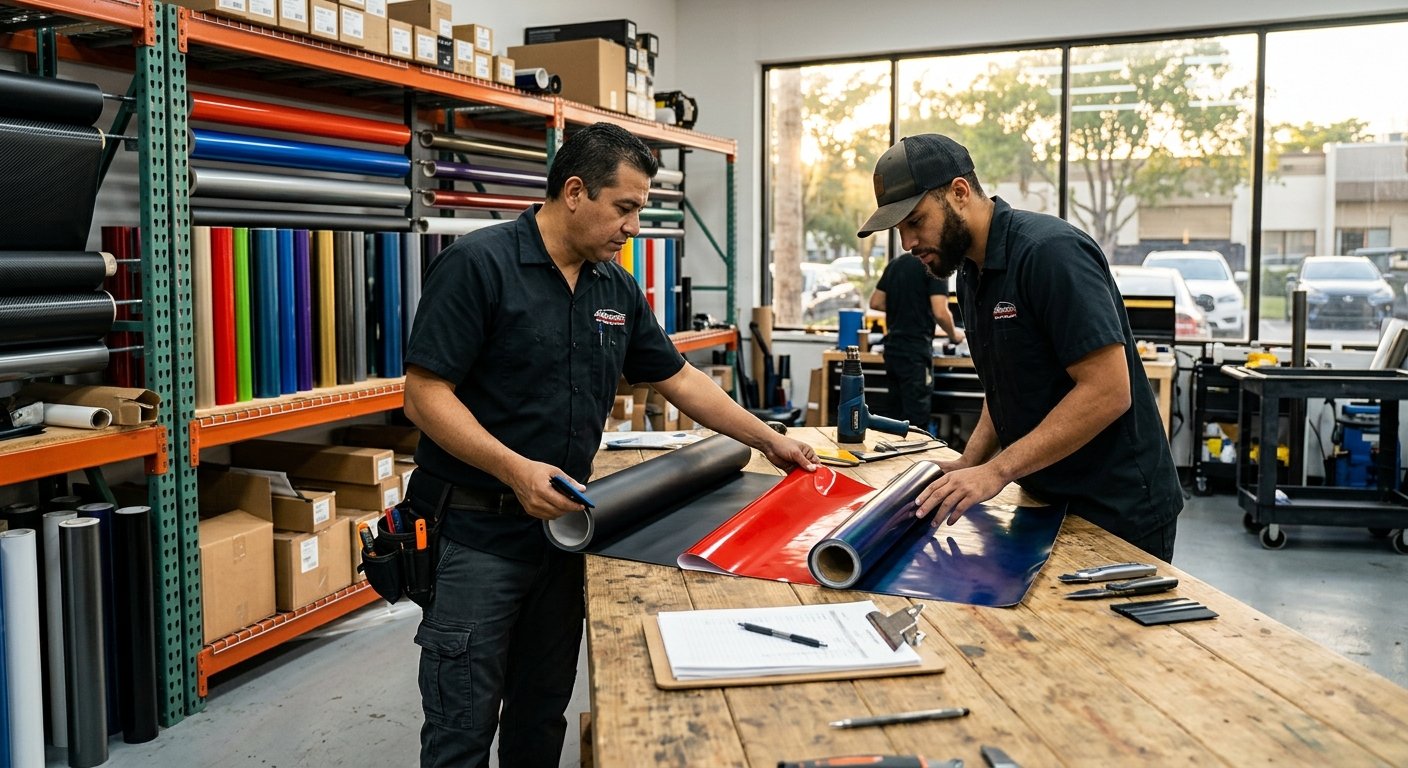
Every quality color change begins before a single piece of film is cut. Material selection is a critical decision that impacts the final appearance, durability, and installation behavior of the wrap.
Key decisions at this stage include:
- Finish type: Gloss, satin, matte, chrome, color-flip, or textured
- Film brand and grade: Professional-grade films rated for 5–7 years of exterior use
- Color accuracy: Reviewing large-format samples in natural light, not just swatches
- Vehicle-specific considerations: Complex curves, deep recesses, and body line details on certain vehicles require more conformable cast films rather than cheaper calendered alternatives
This is also the point where unique car wrap ideas translate from concept to specification. If you’re considering a two-tone color split, accent panels in a contrasting finish, or a vehicle-specific design element, those decisions are mapped out here before cutting begins.
Step 2: Vehicle Inspection and Paint Assessment
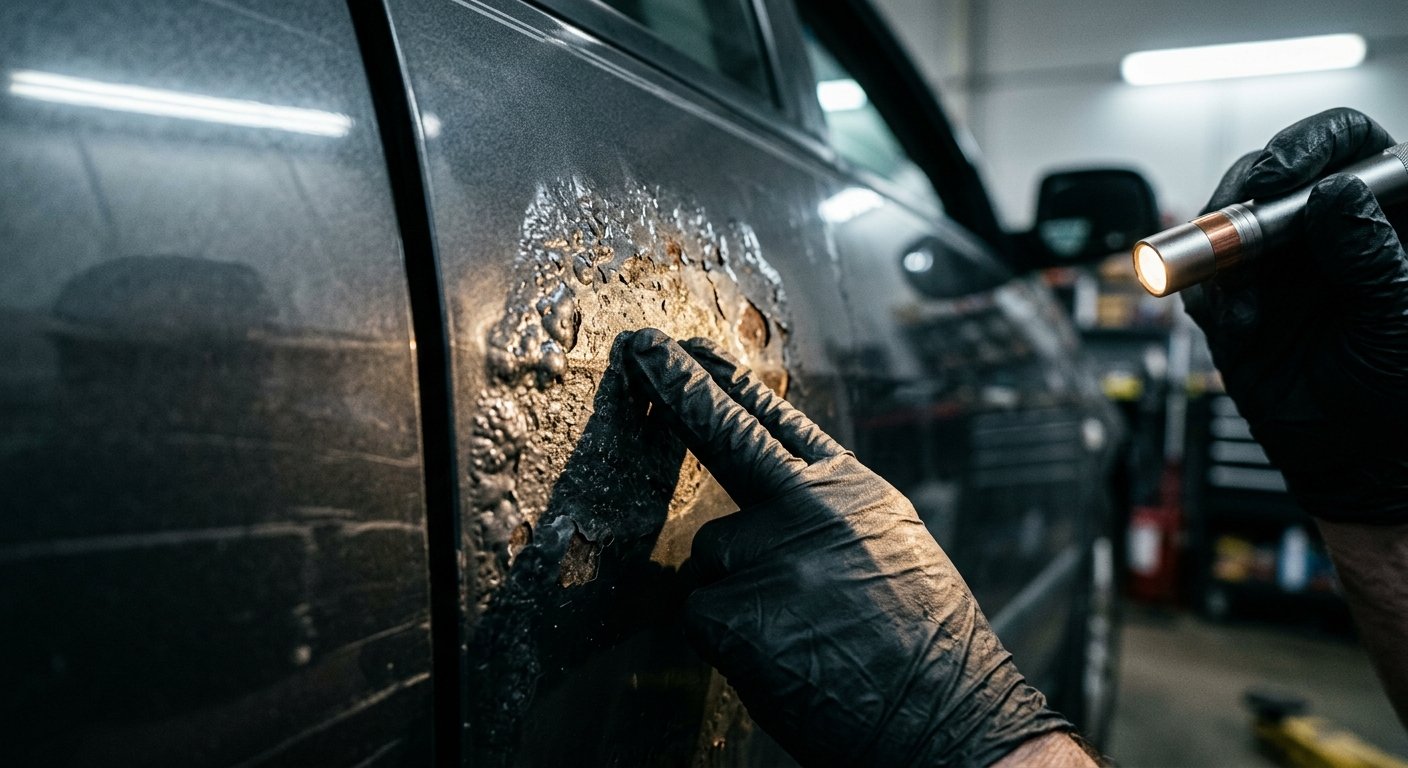
A vinyl wrap does not hide surface defects—it conforms to them. Any rust, bubbling, flaking paint, deep scratches, or body filler irregularities will show through the finished wrap, or worse, cause it to fail prematurely. A professional installer will conduct a thorough inspection before accepting the job.
This includes:
- Checking for active rust or paint delamination
- Identifying previous body repair areas where filler may be porous
- Assessing aftermarket paint jobs that may have incompatible chemistry
- Noting any existing decals, pin striping, or previous wrap remnants that require removal
If issues are found, they need to be addressed before wrapping. Attempting to wrap over compromised surfaces is a shortcut that results in early failure—and any reputable shop operating at a professional level will tell you this upfront rather than wrap over the problem.
Step 3: Surface Preparation
Surface prep is arguably the most important phase of a professional car wrap installation, and it’s the step most often underinvested in by shops focused on throughput over quality. Contamination that’s invisible to the naked eye—wax, silicone, road oils, polishing compounds—will prevent vinyl from bonding properly and create silvering, lifting, and eventual peeling.
Full Decontamination Wash
Iron remover and clay bar treatment pull embedded particles from the paint surface that a standard wash cannot reach.
Panel Wipe-Down
Isopropyl alcohol solution eliminates any remaining wax, polish, or silicone residue across every panel.
Heat Gun Inspection
Reveals any moisture trapped under existing paint or clearcoat that would compromise adhesion.
Edge and Seam Cleaning
Around doors, hood, and trunk where contamination accumulates and adhesion is most critical—especially important in South Florida’s salt-air environment.
In South Florida, vehicles accumulate salt air residue and road film that requires more aggressive decontamination than in inland markets. This is a detail that matters significantly in professional car wrap installation florida work, where environmental conditions demand it.
Step 4: Film Cutting and Panel Layout
Precision cutting is where the technical skill of the installer becomes visible. For a color change wrap, film is typically cut oversize for each panel, then trimmed to final size during installation. High-volume shops often use computer-aided plotting for complex shapes, but experienced installers can achieve equally precise results through measured hand-cutting and pattern knowledge.
A wrap that terminates mid-panel rather than at a logical edge is a sign of either inexperience or insufficient material.
The goal in panel layout is minimizing seams in visible areas and planning wrap termination points at logical body line breaks—door edges, hood lips, and trim boundaries—where seams are both hidden and protected from peeling.
Step 5: Application
Application is where craftsmanship separates average installs from award-winning wrap work. South Florida vehicle graphics professionals work in climate-controlled environments to maintain consistent temperature and humidity during application—vinyl film responds to heat and humidity, and inconsistent conditions affect how the adhesive sets.
The application process involves:
- Positioning film panels with slip solution to allow repositioning before initial adhesion
- Working film around complex curves using heat guns or torch lighters to activate the film’s conformability
- Using hard squeegees and felt-edge tools to eliminate air channels without scratching the film surface
- Stretching film into recessed areas, body lines, and curved edges without creating stress points that will later cause lifting
- Finishing door jambs, trunk seals, and hood edges where wrap termination must be clean and fully adhered
For exotic and luxury vehicles where panel geometry is complex—think curved door handles, sculpted fender arches, and compound-curve hoods—this step requires deep experience with how specific films behave under heat and tension. The Professional Decal Application Alliance (PDAA) certification standards recognize this complexity and establish professional benchmarks for wrap quality.
Step 6: Post-Heat Treatment and Edge Sealing
Once panels are applied, post-heat treatment activates the film’s conformable memory and ensures the adhesive has fully bonded to the surface. Edges are carefully heated and pressed to maximize adhesion at the most vulnerable termination points. Some installers apply an edge sealer to door jambs and cut edges as an additional precaution—particularly relevant for vehicles that see frequent washing or marine environments.
Post-heat treatment is non-negotiable for longevity. A wrap that hasn’t been properly post-heated will lift at edges within weeks, especially in the intense UV and temperature cycling that South Florida conditions deliver year-round.
Step 7: Final Inspection and Quality Review
A thorough quality review involves inspecting every panel in multiple lighting conditions—direct overhead light, raking side light, and natural daylight—to identify any air pockets, silvering, edge lifts, or surface contamination trapped under the film. Any issues found are corrected before the vehicle is released.
Professional installers document the vehicle’s condition before and after installation. This protects both parties and reflects the level of accountability that separates a professional operation from a transactional one.
How Long Does a Color Change Wrap Last?
With professional-grade 3M Certified materials and proper installation, a full color change wrap in South Florida typically performs well for three to five years with appropriate maintenance. Longevity depends on parking conditions, washing frequency, and whether the vehicle is garaged. Matte and satin finishes require more specific care than gloss. Regular hand washing, avoiding automated brush washes, and periodic detailer’s spray formulated for wrapped surfaces will extend the film’s life significantly.
For businesses considering commercial fleet wraps, this lifespan aligns well with typical vehicle replacement and rebrand cycles—making wraps a cost-effective investment when compared to paint or recurring decal replacement.
Frequently Asked Questions
Can a color change wrap be applied over existing vinyl or a previous wrap?
Wrapping over existing vinyl is not recommended for full color changes. Old wrap adhesive residue creates an uneven bonding surface and can cause the new film to lift prematurely. A proper installation always begins with a clean, bare-paint surface.
Will a wrap damage my original paint?
When installed and removed correctly, a professional vinyl wrap protects the paint underneath from UV exposure, minor abrasion, and environmental contaminants. Damage occurs when wraps are removed improperly—typically by rushing the process or using heat incorrectly. This is another reason professional removal matters as much as installation.
How much does a full color change wrap cost?
Pricing varies based on vehicle size, film finish selection, and panel complexity. Professional-grade full color change wraps for passenger vehicles in South Florida generally range from $2,500 to $6,000 or more for exotic or larger vehicles. Pricing below this range typically reflects lower-grade materials or expedited installation that compromises quality.
Can I wash my wrapped vehicle normally?
Hand washing is always preferred. Touchless automatic washes can be used with caution, but high-pressure brush washes pose a real risk of lifting edges and damaging the film surface—particularly on matte and satin finishes. Dedicated wrap-safe wash products are available and worth using.
Can a wrapped vehicle be detailed or polished?
Wrapped vehicles should never be machine-polished with abrasive compounds—this will damage the film surface. Gloss wraps can be safely maintained with quality detailer sprays designed for vinyl. Ceramic coating compatible with vinyl films is increasingly popular as an additional protection layer and is offered by professional wrap shops.
Ready to Transform Your Vehicle?
A professional color change wrap is a significant investment in your vehicle’s appearance and identity—and it deserves the kind of attention to detail that only comes from experienced, 3M Certified installation. Florida Car Wrap brings that level of craftsmanship to every project, from single luxury vehicles to full commercial fleets across South Florida. Contact us to discuss your project, review material options, and get a professional assessment from a team that takes the process as seriously as you take your vehicle.
Get a Professional Wrap Assessment
Discuss your project, review material options, and receive an honest evaluation from a 3M Certified team serving South Florida.
About Florida Car Wrap
Florida Car Wrap delivers premium vehicle wrap services specializing in commercial fleet branding, luxury car customization, and marine-grade wraps throughout South Florida. Led by award-winning wrap professional Steve Hargittai, the company combines 3M-certified materials with competition-proven craftsmanship to serve discerning business owners and automotive enthusiasts who value longevity and quality over price. Their expertise extends beyond vehicles to architectural graphics, wall wraps, and floor wraps, all executed with attention to South Florida's unique climate demands including UV exposure and salt air considerations. Visit floridacarwrap.com →
