
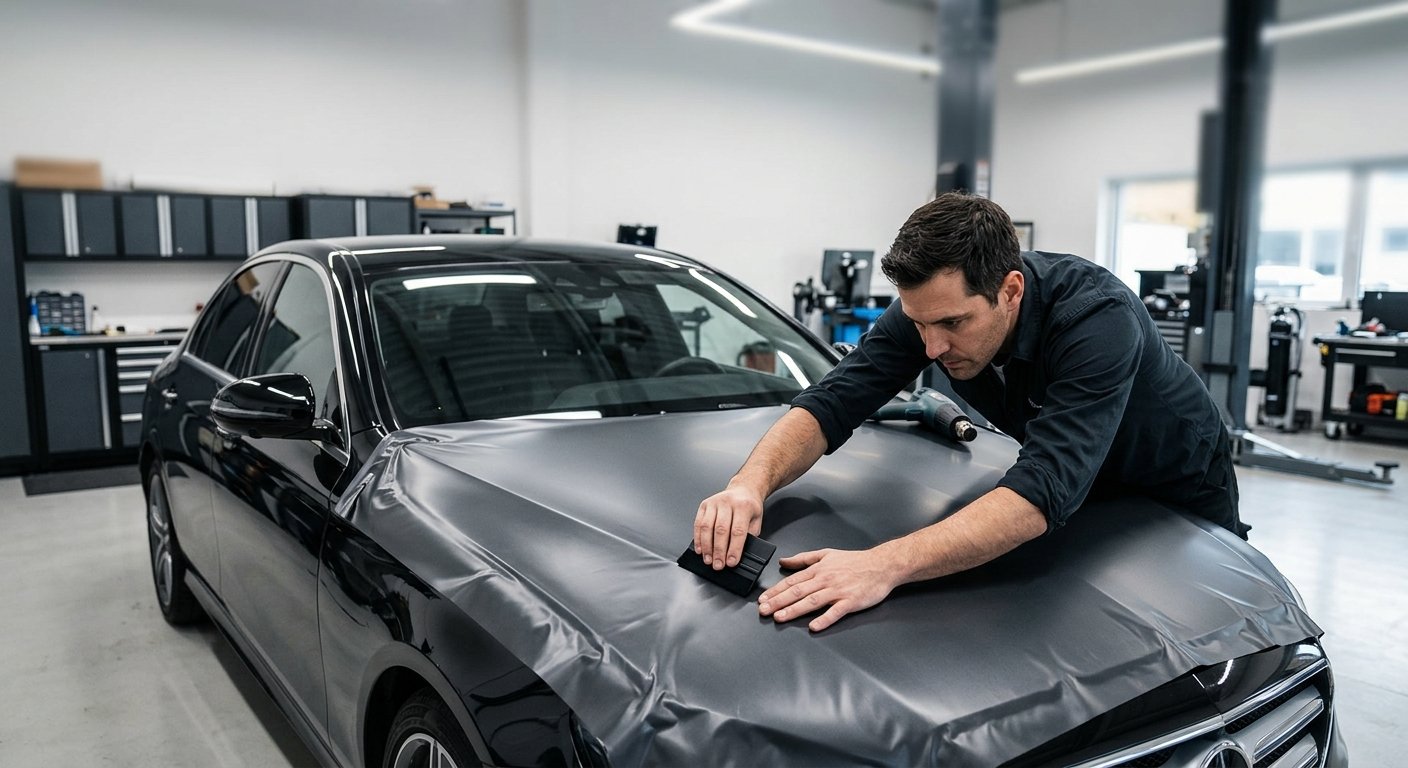
A 3M Certified Wrap Installer has completed 3M’s official training and demonstrated verified proficiency with 3M materials, techniques, and application standards. The certification is awarded directly by 3M — not a trade association or installer self-report — and it qualifies the installer to apply 3M wraps in a way that preserves the manufacturer’s warranty coverage for the end customer. For business owners and vehicle enthusiasts in South Florida, it’s the clearest third-party signal of professional-grade installation quality.
- 3M certification is awarded by 3M directly after formal training and skills verification — it is not self-declared.
- Using a certified installer is typically required to preserve 3M’s material warranty on completed wraps.
- The certification covers both material knowledge and application technique — two distinct competencies that matter equally.
- In South Florida’s UV-intense, salt-air environment, certified installation with correct materials is especially critical for wrap longevity.
- Not every shop that sells or applies 3M vinyl has earned the installer certification — always ask for proof.
What the Certification Actually Covers
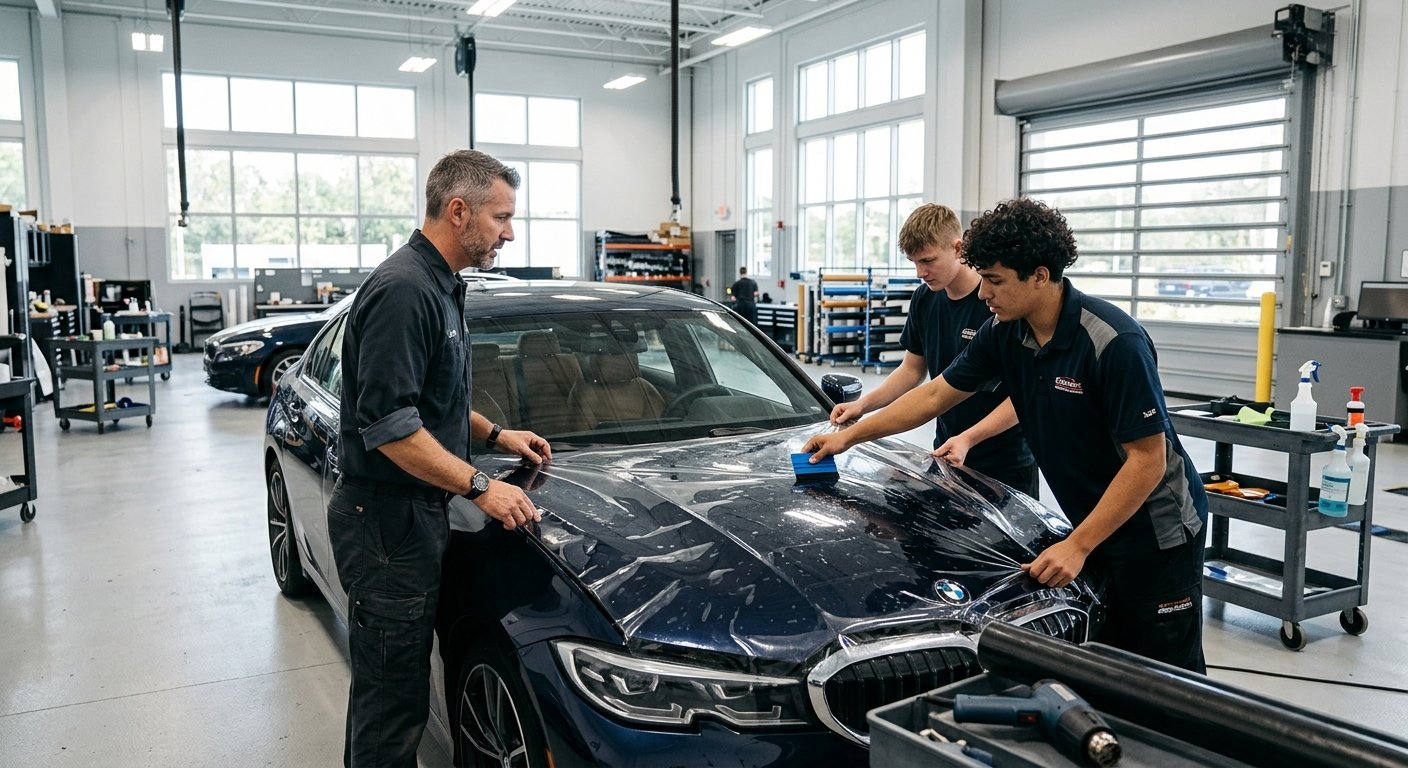
Many vehicle owners assume that any shop using 3M materials is automatically a “3M installer.” That assumption costs people real money. The 3M™ Preferred Installer Program requires applicants to complete hands-on training, pass assessments on proper surface preparation, film handling, heat activation, and finishing techniques, and demonstrate consistent results before certification is granted. It is a competency credential, not a purchasing relationship.
The curriculum covers several distinct skill areas: understanding film chemistry and how different 3M vinyl products behave under heat, tension, and UV exposure; reading and preparing surfaces correctly before any material ever touches the vehicle; managing film memory (the tendency of vinyl to contract toward its original shape); and executing post-installation steps that determine whether edges lift prematurely or hold cleanly for years. Each of these is a trainable, measurable skill — and each one is evaluated before the credential is granted.
The difference between a certified and uncertified installation is often invisible on day one. It shows up at the eighteen-month mark, when edges start lifting, corners wrinkle, or film begins to discolor unevenly. South Florida’s UV index accelerates every latent installation error — so technique gaps that might take three years to appear in a milder climate can surface in twelve to eighteen months here.
Why the Warranty Piece Matters More Than You Think
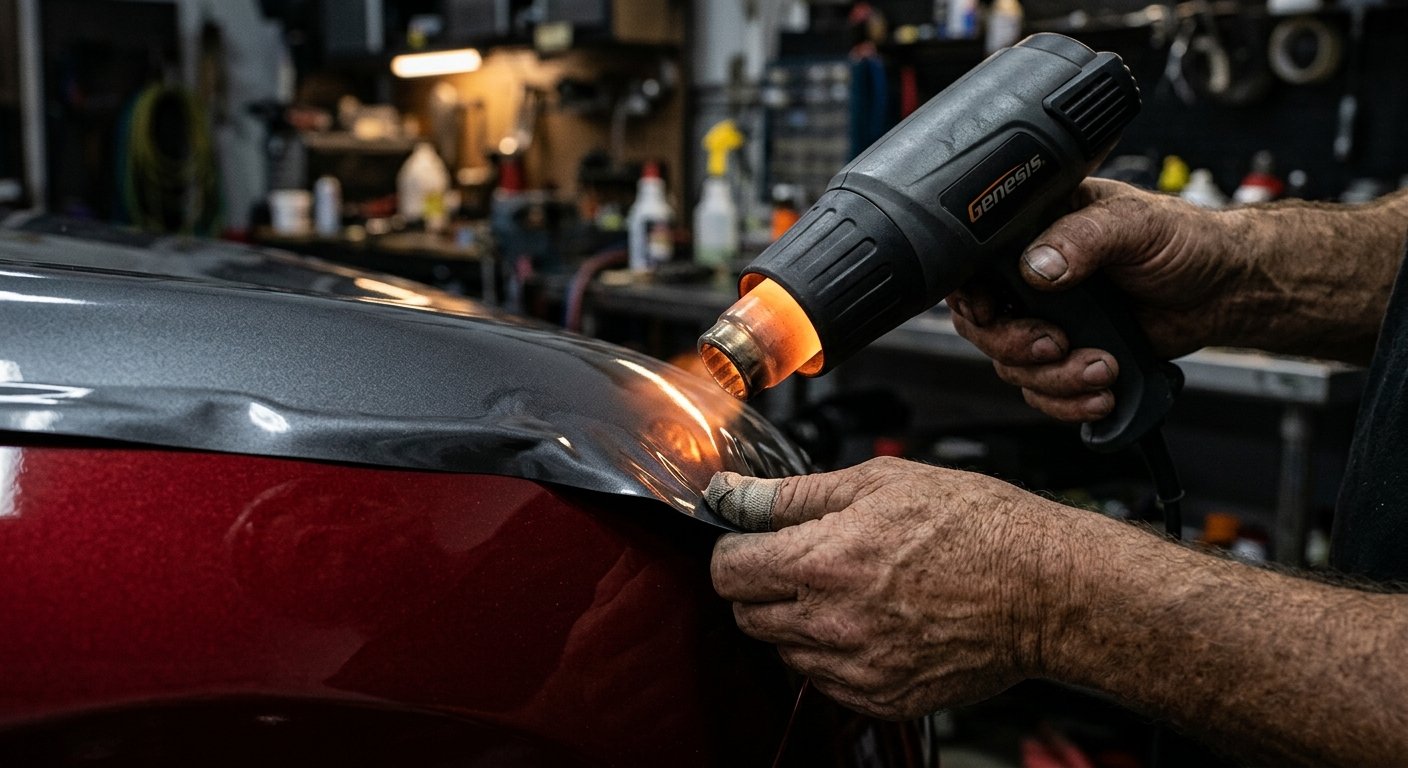
3M manufactures some of the most respected wrap films in the industry. According to 3M’s vehicle graphics product documentation, their premium wrap films are engineered for multi-year exterior durability — but that durability is contingent on correct installation. When film is applied without proper surface prep, wrong squeegee pressure, or inadequate post-heat treatment, the material cannot perform as designed. More practically: if you have a warranty concern and the film was installed incorrectly, 3M’s warranty process requires evidence of certified application. Without it, claims become significantly harder to resolve.
For commercial fleet managers wrapping multiple vehicles, this is a business risk question as much as a quality question. A fleet of ten wrapped vehicles represents a meaningful capital investment. Protecting that investment starts with selecting an installer whose credential is recognized by the manufacturer — not just one who displays a 3M logo on their website.
A 3M logo on a shop door is not the same as a 3M installation certification — ask to see documentation before any deposit changes hands.
Material Knowledge Is Half the Equation
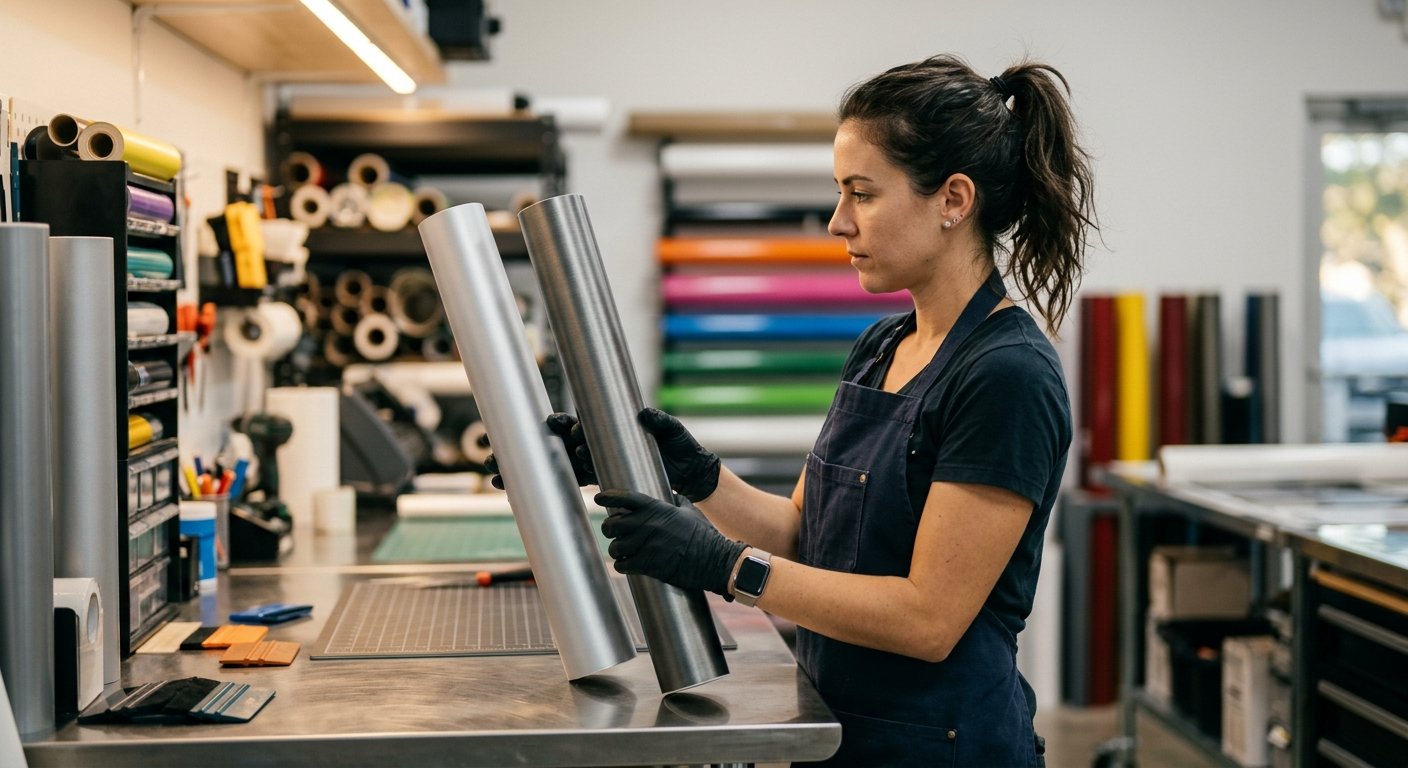
3M’s wrap product line is extensive. The 3M 1080 Series alone includes dozens of finishes — gloss, matte, satin, carbon fiber, brushed metal, and specialty textures — and each behaves differently during installation. A certified installer understands not just how to apply vinyl, but which product is appropriate for a given vehicle surface, geometry, and intended use.
For South Florida applications specifically, this selection knowledge carries additional weight. Marine environments with salt air accelerate adhesive degradation on films that weren’t selected with coastal exposure in mind. Intense UV radiation — South Florida consistently records some of the highest UV index readings in the continental United States — breaks down films with insufficient UV stabilizers faster than manufacturers’ typical estimates, which are often based on more temperate climates. A knowledgeable certified installer accounts for these regional variables when specifying materials, not just when applying them.
| Factor | Certified Installer | Non-Certified Applicator |
|---|---|---|
| Material selection guidance | Based on vehicle, use case, and South FL climate | Often based on price or availability alone |
| Surface preparation | Standardized 3M prep protocol | Variable; no verified standard |
| Warranty eligibility | Preserved with certified application | May be voided without documentation |
| Edge and corner finishing | Trained technique, post-heat required | Inconsistent; a common failure point |
| Accountability | Credential traceable to 3M program | Self-assessed quality claims only |
How Certification Connects to Craftsmanship
Certification establishes a baseline — it is the floor, not the ceiling. The best wrap professionals in the industry combine 3M’s technical training with years of applied experience on complex surfaces: curved hoods, recessed door handles, compound body panel geometry, and full-vehicle color changes on luxury and exotic vehicles where any imperfection is immediately visible.
Award-winning craftsmanship — the kind that holds up under competition judging — requires mastering film alignment, managing tension on complex curves without introducing stress lines, and maintaining a dust-controlled environment throughout. None of that is accidental, and none of it comes from a weekend course. It is built through repetition, mentorship, and a genuine commitment to finishing work at a level that exceeds what most customers will ever see but would immediately notice if absent.
At Florida Car Wrap, Steve Hargittai brings exactly that combination of formal 3M certification and competition-proven technique to every project — from commercial fleet wraps requiring precise brand consistency across multiple vehicles to custom car wraps on high-value vehicles where zero tolerance for imperfection is the standard.
When evaluating any wrap installer, ask two specific questions: Can you show me your 3M certification documentation? And can I see completed work on a vehicle similar to mine? A skilled certified installer will answer both questions without hesitation.
The South Florida Dimension
The Skin Cancer Foundation notes that UV radiation in subtropical regions like South Florida is among the most intense in North America, which is relevant not just to human health but to any exterior coating or film applied to vehicles and vessels. For boat wraps and marine applications, this UV reality combines with salt air and constant water exposure to create one of the most demanding environments any vinyl film will face. Proper material selection and installation technique are not optional extras in this context — they are the difference between a wrap that performs for years and one that fails within months.
Certified installers who specialize in the South Florida market bring an understanding of how local conditions interact with material performance. That regional expertise, layered on top of formal 3M training, is what separates a genuinely qualified local specialist from a shop that has completed the coursework but lacks real-world experience with coastal conditions.
Verify the Certification
Ask for documentation from the installer’s 3M program status. A legitimate 3M Preferred Installer can provide proof — not just a logo or verbal claim.
Review Portfolio Work
Look at completed projects on vehicles or surfaces comparable to yours. Ask specifically about work done in exterior South Florida conditions.
Understand the Material Being Used
A knowledgeable installer will explain which specific 3M product they’re recommending and why it’s appropriate for your application and environment.
Clarify Warranty Terms
Understand what the manufacturer’s warranty covers, what the installer’s workmanship guarantee covers, and how both are documented in writing.
Frequently Asked Questions
Is 3M certification the same as being an authorized 3M dealer?
No. Being an authorized reseller of 3M products means a shop can purchase and sell 3M materials. The 3M Preferred Installer certification is a separate credential that verifies the installer’s training and application technique. A shop can sell 3M vinyl without being certified to install it to 3M’s standards.
Does using a certified installer affect my wrap warranty?
Yes, in most cases it does. 3M’s material warranties are tied to proper installation protocols. Using a certified installer creates a documented chain of custody for your warranty claim if one becomes necessary. Without that documentation, resolving a material-related warranty issue becomes significantly more complicated.
How long does a professionally installed 3M wrap typically last in South Florida?
Lifespan depends on film grade, vehicle storage conditions, and maintenance practices. South Florida’s UV intensity means outdoor-stored vehicles face more aggressive exposure than manufacturer estimates often assume. A correctly specified and installed 3M wrap can perform well for several years in this climate — but installation quality and material selection are prerequisites for reaching that potential.
What questions should I ask before hiring a wrap installer?
Ask to see current 3M certification documentation, a portfolio of comparable completed work, which specific 3M product will be used and why, and what the workmanship warranty covers. An experienced, certified professional will answer these questions with specifics, not generalities.
Does Florida Car Wrap offer services beyond vehicle wraps?
Yes. Florida Car Wrap’s expertise extends to architectural graphics, wall wraps, floor wraps, and marine-grade applications — all executed with the same 3M-certified materials and installation standards applied to vehicle work.
Work with a 3M Certified Installer in South Florida
Whether you’re branding a commercial fleet, customizing a luxury vehicle, or protecting a vessel, the credential behind the installer matters — contact Florida Car Wrap to discuss your project with a certified professional.
About Florida Car Wrap
Florida Car Wrap delivers premium vehicle wrap services specializing in commercial fleet branding, luxury car customization, and marine-grade wraps throughout South Florida. Led by award-winning wrap professional Steve Hargittai, the company combines 3M-certified materials with competition-proven craftsmanship to serve discerning business owners and automotive enthusiasts who value longevity and quality over price. Their expertise extends beyond vehicles to architectural graphics, wall wraps, and floor wraps, all executed with attention to South Florida's unique climate demands including UV exposure and salt air considerations. Visit floridacarwrap.com →
