

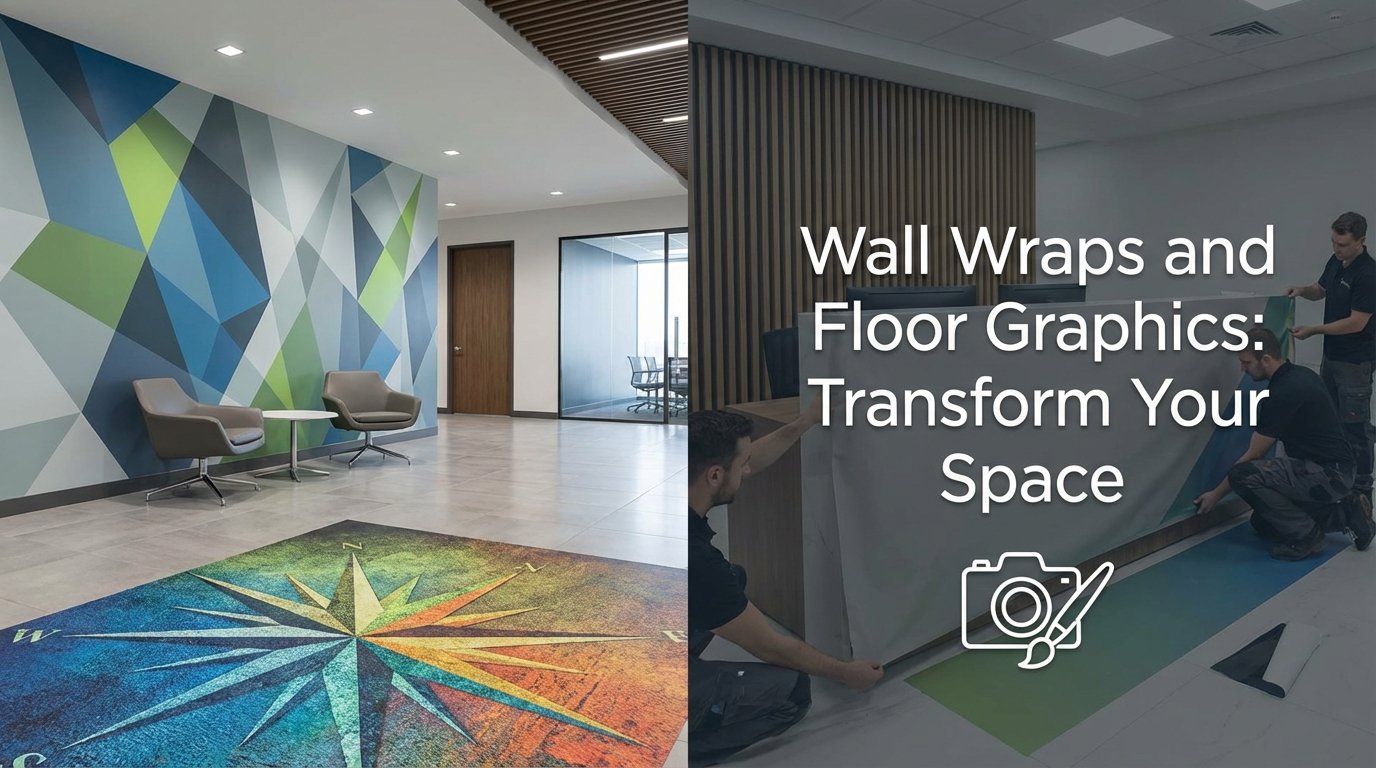
A South Florida retail store owner recently faced a challenge: competitors were completing expensive renovations, but her budget couldn’t accommodate construction downtime or contractor fees. Within 48 hours of installing custom wall wraps and branded floor graphics, her space looked completely renovated—without a single nail, paint can, or day of closure. The transformation cost 60% less than traditional renovation and took a fraction of the time.
This scenario plays out repeatedly across commercial spaces in Miami, Fort Lauderdale, and West Palm Beach. Business owners discover that architectural wraps deliver immediate visual impact while maintaining operational continuity. The technology has evolved significantly, with materials engineered specifically for vertical surfaces and high-traffic flooring that withstand South Florida’s unique environmental demands.
Understanding Architectural Graphics Technology
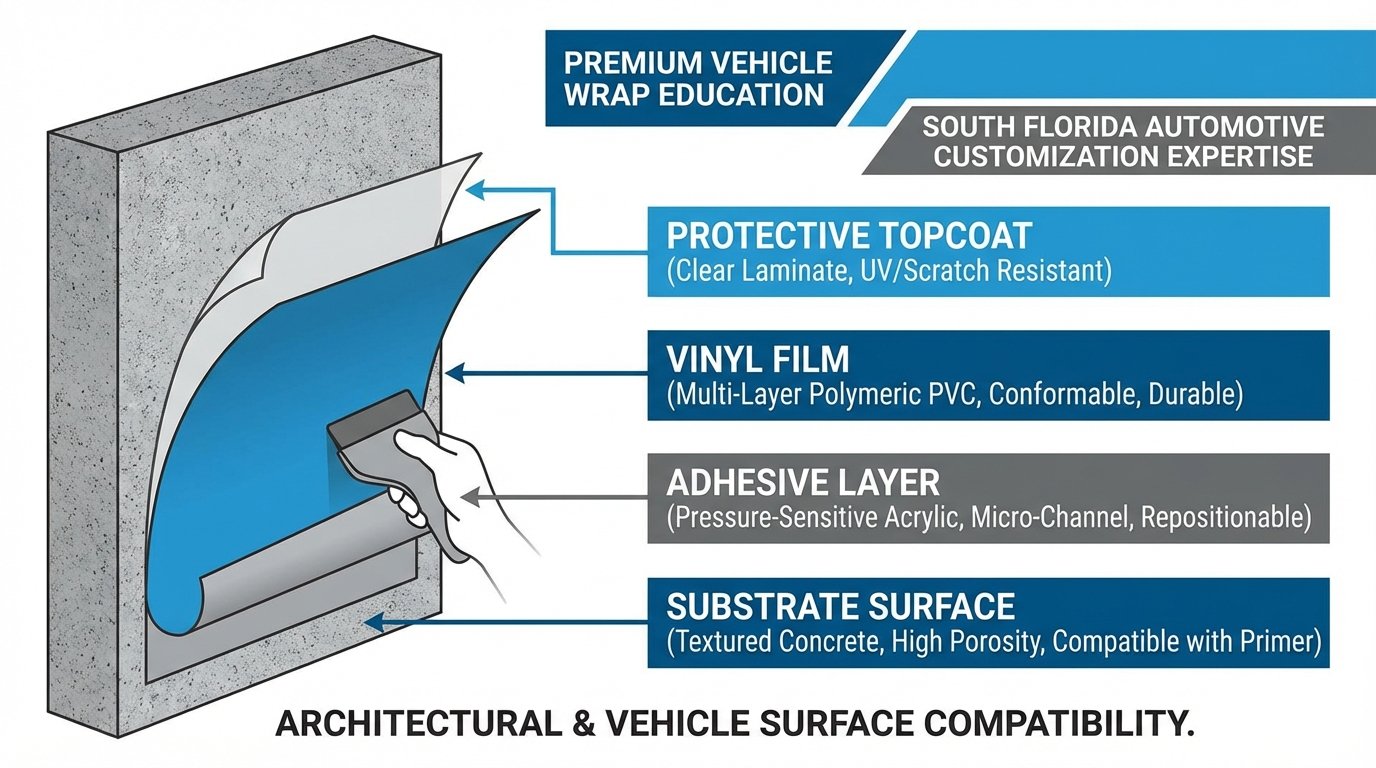
Wall wraps and floor graphics represent specialized applications within the broader vinyl wrap industry. Unlike vehicle wraps, architectural wraps must account for different surface textures, permanence requirements, and removal considerations. The materials differ fundamentally from standard signage products.
Professional-grade wall graphics use films with repositionable adhesives that bond securely to painted drywall, concrete, glass, and metal surfaces without damaging underlying finishes. 3M IJ180mC-114 and 3M Controltac graphics films dominate the commercial market because they incorporate air-release technology that prevents bubbling during installation and allows clean removal years later.
Floor graphics require entirely different engineering. High foot traffic demands materials that resist scuffing, maintain slip-resistance ratings, and endure cleaning chemicals. 3M Scotchcal IJ3555 overlaminate provides the necessary abrasion resistance, while textured surfaces ensure compliance with safety standards. These specifications matter tremendously—budget floor graphics may look acceptable initially but deteriorate within weeks under commercial traffic patterns.
Climate Considerations for South Florida Applications
South Florida’s climate creates unique challenges for architectural graphics. High humidity affects adhesive curing times and bonding strength. UV exposure through large windows can fade inferior inks within months. Salt air in coastal locations accelerates degradation of non-marine-grade materials.
Professional installations account for these factors through material selection and surface preparation protocols. Humidity-resistant adhesives prevent edge lifting that commonly occurs in air-conditioned spaces where temperature differentials create condensation. UV-stable latex inks maintain color fidelity despite intense sunlight exposure. These technical considerations separate temporary solutions from long-term installations that maintain appearance for 5-7 years.
Wall Wraps: Vertical Transformation Possibilities
Wall wraps deliver visual impact impossible through traditional decoration methods. A corporate lobby can display photographic murals at scales that command attention. Retail environments can create immersive brand experiences that change seasonally without construction. Medical offices can transform clinical spaces into calming environments with nature scenes or abstract designs.
The application versatility extends across diverse surfaces. Smooth painted drywall represents the ideal substrate, but experienced installers successfully wrap textured walls, concrete block, glass partitions, and even brick when proper techniques apply. Surface preparation determines longevity—professional installations include thorough cleaning, priming when necessary, and moisture testing that prevents future failure.
Design Considerations for Maximum Impact
Effective wall graphics require understanding spatial dynamics. A stunning design at desktop scale may fail when executed across a 20-foot wall if visual hierarchy gets ignored. Professional design services account for viewing distances, lighting conditions, and architectural features that affect composition.
Resolution requirements differ dramatically from standard printing. Large-format graphics displayed at distance can utilize lower resolutions than small graphics viewed closely. However, mixed viewing distances demand careful calculation—a restaurant wall graphic viewed from both entrance and dining areas needs resolution planning that balances file size with acceptable quality at all viewing positions.
Color matching presents another technical challenge. Digital representations on screens rarely match printed output exactly. Professional wrap companies use calibrated color management systems and provide physical samples before full production. This step proves critical for brand-conscious businesses where color consistency affects brand recognition.
Floor Graphics: Function Meets Branding
Floor graphics serve dual purposes: wayfinding utility and branding opportunity. Retail environments use floor graphics to guide customers through desired traffic patterns. Corporate spaces incorporate logos and branded elements into reception areas. Event venues create temporary branded environments that photograph dramatically.
The technical requirements for floor wraps exceed wall graphics significantly. Materials must achieve specific slip-resistance ratings—ASTM D2047 testing determines whether graphics meet safety standards. Installations without proper certification create liability concerns, particularly in public spaces where slip-and-fall incidents generate legal exposure.
Durability becomes paramount in commercial applications. Grocery stores experience shopping cart traffic, forklift movement in back areas, and constant foot traffic. Medical facilities demand compatibility with harsh disinfectants. Educational institutions need graphics that survive aggressive floor cleaning equipment. Each application requires material selection matching the specific wear pattern.
Installation Technique Differences
Floor graphics installation differs fundamentally from wall or vehicle applications. Proper substrate preparation includes not just cleaning but also chemical testing to ensure compatibility between floor finish and adhesive. Many floor failures result from silicone-based polishes that prevent proper adhesion—testing prevents expensive reinstallations.
The lamination process for floor graphics demands precision. Overlaminate must extend beyond printed graphics with perfect alignment to prevent edge lifting. Air elimination becomes critical since trapped air under heavy traffic will cause premature failure. Professional installers use specific techniques and tools designed for floor applications rather than adapting vehicle wrap methods.
Commercial Applications Across Industries
Retail environments exploit architectural graphics for seasonal campaigns without renovation costs. A clothing retailer can transform from summer to holiday themes overnight. Window graphics attract street traffic while maintaining interior visibility. Floor graphics highlight promotional areas and guide customers toward featured products.
Corporate offices use wall wraps to reinforce culture and values. Conference rooms display mission statements and core values. Collaborative spaces feature inspirational imagery. Private offices incorporate subtle branding that maintains professionalism while strengthening identity. These installations create environments that support organizational goals beyond mere decoration.
Healthcare facilities transform clinical spaces into healing environments. Pediatric areas feature colorful, engaging designs that reduce anxiety. Imaging departments use nature scenes to calm patients during procedures. Wayfinding graphics help visitors navigate complex facilities while maintaining consistent branding throughout multiple buildings.
Hospitality venues create Instagram-worthy moments through strategic graphic placement. Boutique hotels use wall wraps to establish distinctive character in each room or floor. Restaurants create themed environments that photograph dramatically, generating organic social media marketing. Event spaces offer customizable backdrops that adapt to different functions.
Cost Analysis: Renovation Alternative Economics
Traditional renovation costs escalate quickly when factoring construction labor, materials, and business interruption. A wall repaint with custom color might cost $2-4 per square foot, but requires multi-day drying times and produces chemical odors that prevent normal operations. Wallpaper installation achieves custom designs but involves longer installation times and difficult removal.
Professional wall wrap installation typically ranges $8-15 per square foot depending on complexity, surface conditions, and graphic intricacy. This premium over paint delivers several advantages: installation completes in hours rather than days, no odors or drying time prevents immediate use, designs achieve photographic quality impossible through paint, and future removal occurs without surface damage.
The calculation shifts further when considering adaptability. A painted wall requires complete repainting for design changes. Wall wraps remove cleanly, allowing seasonal updates or rebranding without underlying surface preparation. For businesses that value flexibility, this removability represents significant long-term value despite higher initial costs.
Floor graphics economics compare favorably against alternatives like tile replacement, stained concrete designs, or carpet inlays. Custom flooring installations require extensive downtime and permanent commitment to designs. Floor graphics achieve similar visual impact at fractions of the cost with installation measured in hours and clean removal when designs change.
Installation Process and Timeline Expectations
Professional architectural graphics installations follow systematic processes that ensure quality results. Initial consultations include site surveys where installers assess surface conditions, measure precisely, and identify potential challenges. This step prevents surprises during installation and ensures accurate project timelines.
Design development incorporates client vision with technical feasibility. Professional designers understand material limitations, recommend appropriate finishing options, and create files optimized for large-format printing. Mock-ups and physical samples allow clients to evaluate designs before full production commits significant resources.
Production timelines typically span 5-10 business days for custom projects, depending on complexity and current workload. Rush services accommodate urgent needs but may incur premium charges. This timeline includes printing, finishing with appropriate laminates, and quality inspection before installation.
Installation scheduling considers business operations. Many commercial projects occur after hours or during low-traffic periods to minimize disruption. A typical retail wall wrap installation covering 200-400 square feet completes within 4-6 hours. Floor graphics install faster—similar coverage area often completes in 2-3 hours since vertical working challenges don’t apply.
Maintenance and Longevity Factors
Properly installed architectural graphics require minimal maintenance while delivering years of service. Wall graphics need only periodic cleaning with mild soap and water. Avoid abrasive cleaners or excessive pressure that might damage laminates or lift edges. Most installations maintain excellent appearance for 5-7 years indoors, though high-UV environments may show fading sooner without UV-stable materials.
Floor graphics demand more aggressive maintenance due to traffic exposure. Regular cleaning with neutral pH cleaners maintains appearance without degrading adhesives. Periodic inspection identifies edge lifting early, allowing repairs before complete failure occurs. High-traffic floor graphics typically last 6-12 months, though protected areas or lower traffic locations can extend lifespan to several years.
Environmental factors significantly impact longevity. Climate-controlled indoor spaces with minimal UV exposure represent ideal conditions. Areas with direct sunlight, temperature fluctuations, or moisture exposure require premium materials and may necessitate earlier replacement. Professional installers provide realistic lifespan expectations based on specific environmental conditions rather than generic timeframes.
Choosing Professional Installation Services
The skill gap between DIY or budget installers and certified professionals becomes immediately apparent in architectural applications. Wall and floor surfaces present challenges different from vehicle wraps—irregular textures, large format requirements, and permanent installation environments demand specialized expertise.
3M Preferred Installers and certified wrap professionals bring training specific to architectural applications. They understand surface preparation protocols, material selection for different substrates, and techniques that ensure edges stay secured and graphics remain bubble-free. This expertise prevents the edge lifting, bubbling, and premature failure common with inexperienced installations.
Quality installations include warranties covering material failure and installation defects. These guarantees provide assurance that investments remain protected. Budget installers rarely offer meaningful warranties, leaving businesses liable for reinstallation costs when graphics fail prematurely. The warranty difference alone often justifies professional service costs.
Transform Your Space With Professional Architectural Graphics
Wall wraps and floor graphics deliver visual transformation impossible through traditional methods while maintaining operational continuity and preserving future flexibility. The technology has matured to where properly specified and installed graphics provide years of reliable service across demanding commercial environments.
Success requires partnering with experienced professionals who understand material science, installation techniques, and environmental factors specific to South Florida applications. The difference between adequate results and exceptional installations comes down to expertise, material quality, and attention to technical details that separate temporary fixes from long-term solutions.
Whether refreshing retail environments, strengthening corporate branding, or creating memorable hospitality experiences, architectural graphics offer renovation-quality results without construction timelines or costs. Contact professional wrap specialists to discuss how wall wraps and floor graphics can transform your business space while supporting operational and branding objectives.
