
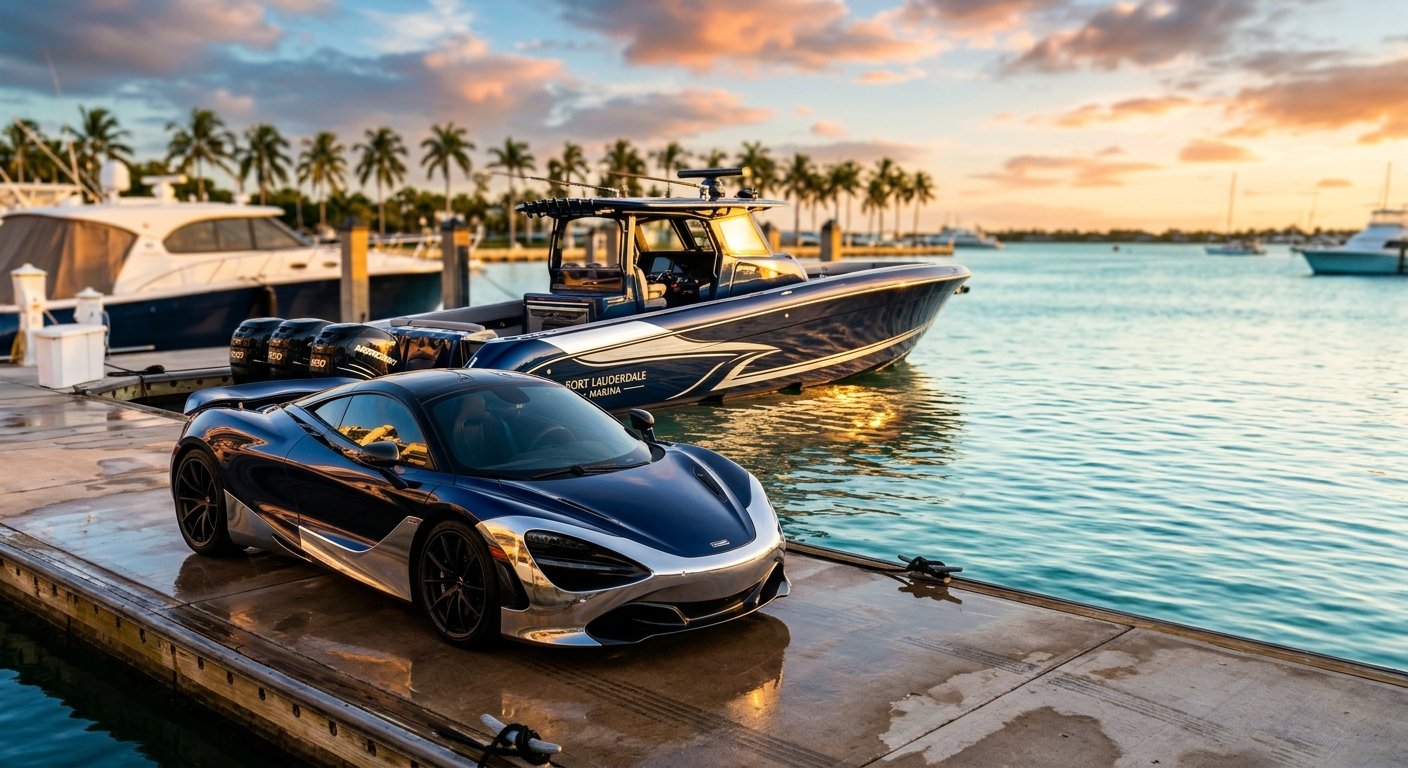
Yes — but only if the shop has genuine expertise in both disciplines. Wrapping a vehicle and wrapping a watercraft are fundamentally different processes involving different materials, surface preparation methods, and environmental stressors. A shop equipped to handle both will save South Florida owners time, money, and the frustration of inconsistent branding across their fleet and vessels.
- Marine and automotive wraps use different film formulations — using the wrong material on a boat will cause premature failure.
- Surface preparation on fiberglass and gelcoat differs significantly from painted automotive steel or aluminum panels.
- South Florida’s UV intensity and salt-air environment demand marine-grade materials and adhesive systems rated for those conditions.
- Working with one specialist for both car and boat wraps ensures consistent branding, color matching, and a single point of accountability.
- 3M Certified installation matters for both disciplines — certification reflects training in proper application across multiple substrate types.
Why the Two Disciplines Are Not Interchangeable
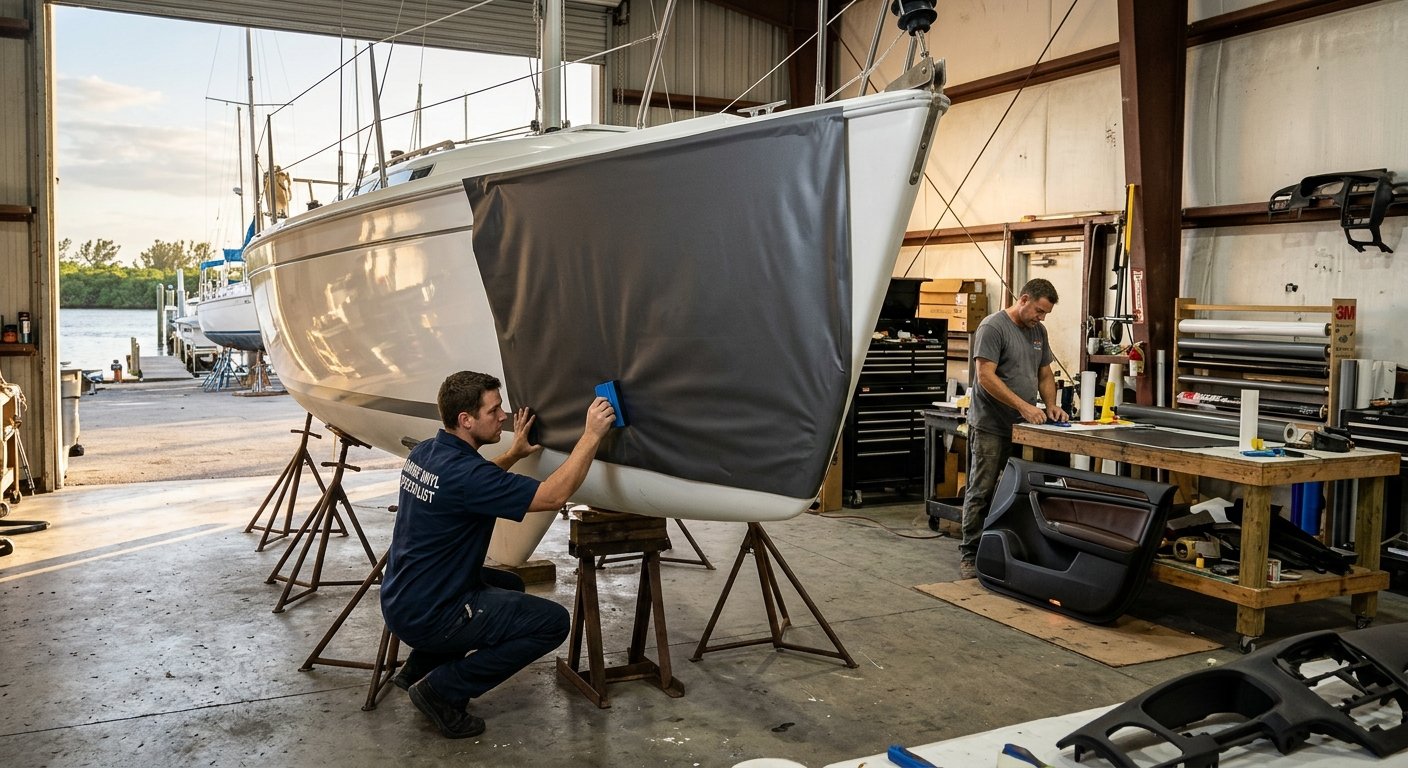
Many business owners assume that if a shop wraps vehicles, it can wrap boats. The logic is understandable — both involve applying vinyl film to a surface. But the practical reality is more nuanced. Automotive wraps are engineered for rigid, factory-painted metal or composite panels with predictable surface profiles. Marine wraps must conform to compound curves on fiberglass hulls, survive constant water immersion along the waterline, and resist the accelerated oxidation caused by salt air and relentless UV exposure.
A shop that installs car wraps without marine experience may reach for the same cast film it uses on a van and apply it to a hull. The result looks acceptable on day one. But within a season on South Florida water, the adhesive begins failing at seams, edges lift, and UV degradation accelerates where the film contacts moisture. This isn’t a material cost problem — it’s a specification problem. The right film was simply never selected for the right application.
3M’s marine-grade wrap films are formulated with UV-stabilizing technology and adhesive systems engineered for intermittent water contact. Using standard automotive cast film on a vessel hull is an installation shortcut that typically manifests as adhesive failure within the first 12–18 months in South Florida conditions.
Material Differences That Matter
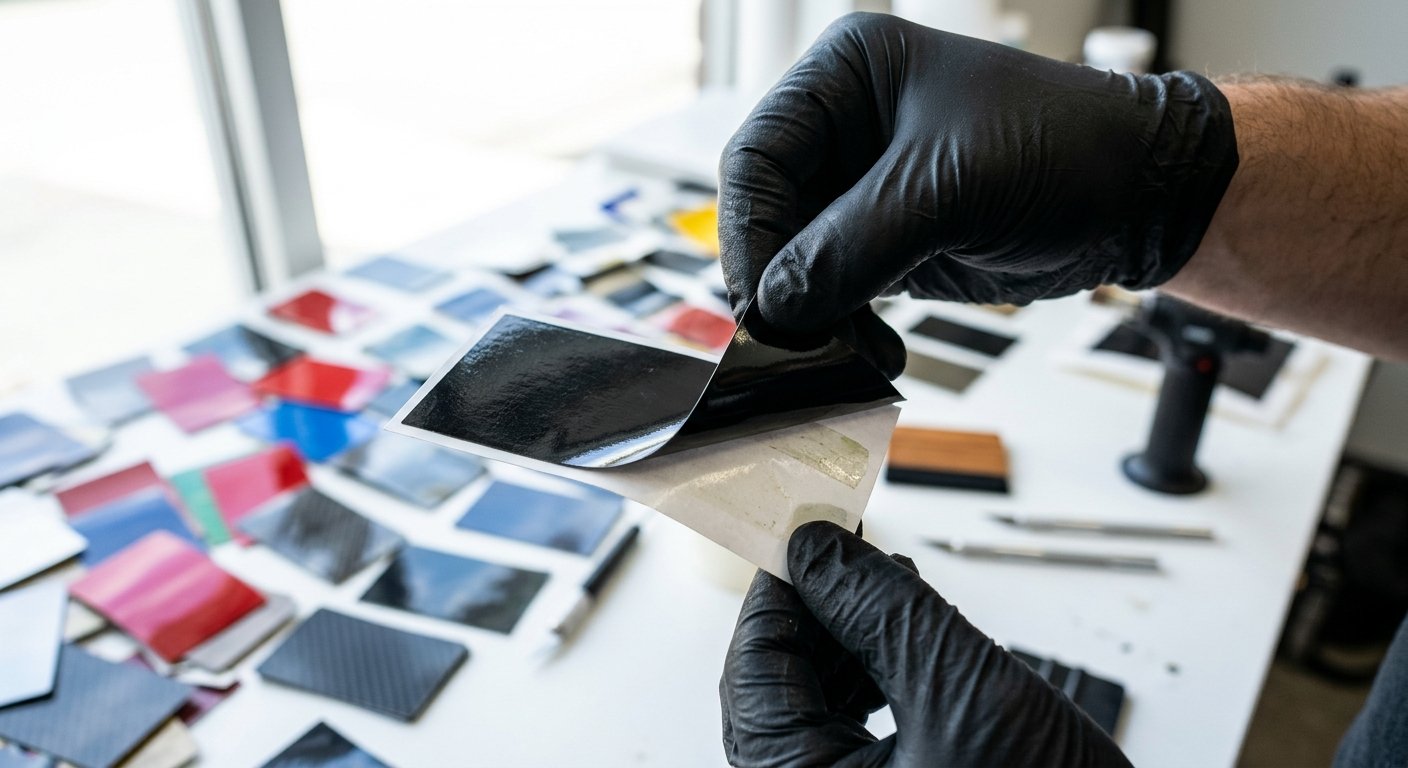
The vinyl film industry is not monolithic. Manufacturers like 3M, Avery Dennison, and Oracal produce distinct product lines for automotive, marine, and architectural applications — and those distinctions exist for reasons grounded in chemistry and physics.
Automotive Wrap Films
Automotive-grade cast vinyl is designed for conformability around body panels, door handles, and mirrors. It’s engineered to resist cracking, resist UV-induced fading on exposed horizontal surfaces like hoods and roofs, and release cleanly from painted substrates without damaging the underlying finish. Adhesive technology in these films is calibrated for the thermal expansion and contraction cycles a vehicle experiences — extreme heat buildup on dark-painted surfaces in direct Florida sun, followed by cooler overnight temperatures.
Marine-Grade Wrap Films
Marine applications demand a film that can endure what automotive films were never tested for: prolonged exposure to salt water, chlorinated water, tidal fluctuation, and the mechanical stress of wave impact. According to 3M’s marine graphics resources, films intended for watercraft applications require adhesive systems rated for wet environments and extended UV exposure — conditions that exceed the performance envelope of standard automotive products.
The conformability requirements also differ. Boat hulls, particularly on sportfishing vessels and center consoles popular throughout Fort Lauderdale and Miami, feature compound curves that demand a film with high elongation properties. Automotive films often lack the stretch characteristics needed to wrap a hull’s deadrise without introducing stress wrinkles or tunnel seams that become water infiltration points.
| Specification | Automotive Wrap Film | Marine Wrap Film |
|---|---|---|
| Primary substrate | Painted metal / composite panels | Fiberglass / gelcoat hulls |
| Adhesive system | Dry-environment pressure-sensitive | Marine-rated, moisture-resistant |
| UV resistance | High (above-waterline focus) | High (full-surface marine environment) |
| Conformability need | Moderate compound curves | High — hull deadrise, chines, fittings |
| Surface prep requirement | Degreased painted panel | Cleaned, oxidation-corrected gelcoat |
Surface Preparation: Where Most Failures Begin
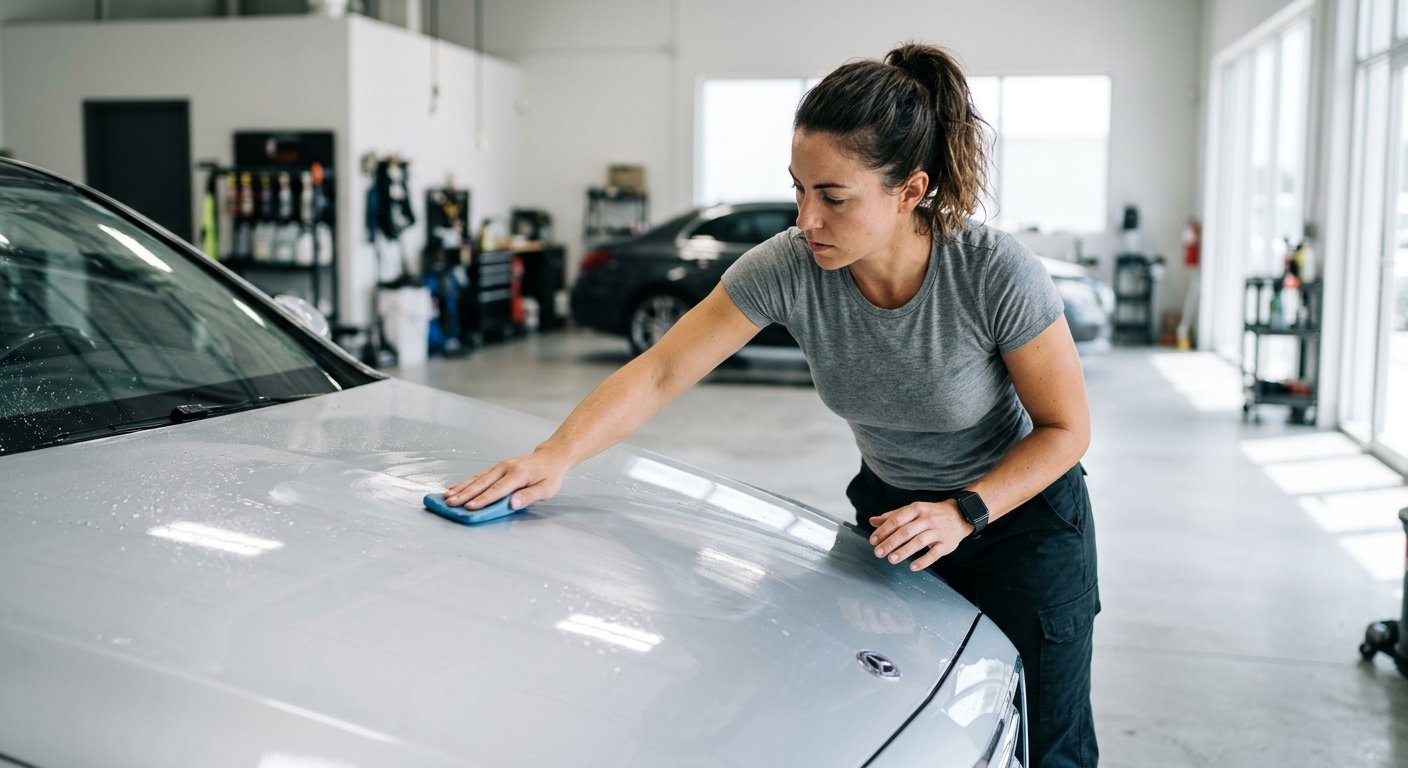
Regardless of whether a surface is automotive or marine, the single largest predictor of wrap longevity is surface preparation. This is where experience separates professionals from installers who have simply completed a basic training course.
On a vehicle, preparation involves thorough degreasing, clay-bar treatment on painted surfaces, and careful inspection of any body work or repaint areas that may have incompatible primer or clearcoat. Even small contamination points can cause adhesion failure that telegraphs through the film as bubbles or edge lift — issues worth understanding before any installation begins, as our guide on how to spot a wrap installer cutting corners explains in detail.
On a boat hull, preparation is considerably more involved. Gelcoat — the outer resin layer on most fiberglass vessels — is porous and prone to oxidation, especially on vessels moored in South Florida marinas exposed to year-round sun. Oxidized gelcoat must be polished and treated before any film is applied; failure to do so creates a boundary layer between the hull surface and the adhesive that guarantees premature delamination. Barnacle residue, antifouling paint boundaries, and through-hull fittings all create preparation challenges that an automotive-only installer has simply never encountered.
Applying vinyl wrap over oxidized or unconditioned gelcoat is one of the most common marine wrap failures. Always confirm that a prospective boat wrap company has a documented gelcoat preparation process before proceeding — ask to see examples of work on similar hull types.
The Branding Consistency Advantage
For South Florida business owners operating both land-based vehicles and watercraft — think marine contractors, charter fishing operations, waterfront real estate companies, or event services working the Intracoastal — visual brand consistency across every touchpoint is a legitimate business asset. A single specialist handling both your commercial fleet wraps and your vessel graphics eliminates the color-matching headaches that arise when two different shops produce the same logo in two subtly different hues.
Color consistency in wrap production depends on calibrated output from the same print system, the same ink set, and the same laminate stack. When two shops handle the job, they introduce two sets of variables. The Pantone reference your brand standards specify may translate differently on a matte automotive laminate than on a gloss marine film — unless the installer is managing both and actively controlling for that variance.
One specialist controlling both the vehicle and the vessel means one color profile, one quality standard, and one conversation when anything needs adjusting.
At Florida Car Wrap in Davie, Steve Hargittai’s team works across automotive, marine, and architectural graphics — which means the color science developed for a fleet of contractor vans in Pembroke Pines translates directly to the hull wrap on the same company’s bay boat. That continuity is not accidental; it’s a function of having production infrastructure and installation expertise that spans both disciplines.
Understanding how South Florida’s climate affects wrap longevity applies equally to vessels and vehicles — the UV index in Broward and Miami-Dade counties is among the highest in the continental United States, and both film selection and installation quality determine whether a wrap holds up for its intended service life.
What to Look for in a Dual-Capability Wrap Shop
Not every shop that lists “boat wraps” in its service menu has genuine marine wrap experience. The Specialty Graphic Imaging Association (SGIA) recognizes that marine and automotive graphics represent distinct technical competencies, and a shop with meaningful experience in both will be able to speak specifically to hull preparation, marine-rated film selection, and waterline treatment — not just show you photos of boats with graphics on the topsides.
Questions worth asking any prospective shop:
- What film product do you use for below-waterline or waterline-adjacent applications?
- How do you prepare oxidized gelcoat before installation?
- Are you 3M Certified for both automotive and marine installations?
- How do you manage color matching between vehicle and vessel graphics in the same brand family?
- Can you show completed work on hull types similar to mine?
A confident, experienced installer answers these questions without hesitation. Vague responses about “using quality vinyl” and “doing lots of boats” are not answers — they’re deflections.
Frequently Asked Questions
What’s the difference between a car wrap and a boat wrap?
Car wraps use automotive-grade cast vinyl engineered for painted metal and composite panels, with adhesive systems designed for dry-environment thermal cycling. Boat wraps require marine-grade films with moisture-resistant adhesives, higher UV stabilization, and greater conformability for fiberglass hull geometry. The surface preparation process also differs significantly — gelcoat requires different conditioning than automotive paint.
Can I use the same vinyl film on my boat as on my vehicle?
In most cases, no. Standard automotive cast film lacks the adhesive chemistry and UV resistance formulated for marine environments, particularly where film contacts water at or near the waterline. Using automotive film on a hull typically results in edge lifting and delamination within one to two seasons in South Florida conditions.
How do I ensure my boat and fleet vehicles match visually?
Work with a single shop that handles both. Color consistency depends on using the same print system, ink profile, and laminate for both applications. When two shops produce the same design independently, subtle color variation is common because each has different calibration standards. A unified production environment is the most reliable way to achieve brand-consistent graphics across vehicles and vessels.
Does the South Florida climate require special marine wrap materials?
Yes. The combination of intense UV radiation, salt air, and humidity in South Florida accelerates the degradation of films not specifically rated for marine use. Premium marine-grade films from manufacturers like 3M incorporate UV-stabilizing chemistry and moisture-resistant adhesives designed to perform in exactly these conditions. Selecting the correct specification for this environment is one of the most important decisions in any marine wrap project.
Is 3M Certification relevant for boat wraps?
Yes. 3M Certified installation reflects verified training in proper film selection, surface preparation, and application technique across multiple substrate types — including marine applications. Certification matters because it requires installers to demonstrate knowledge of the full product system, not just the ability to apply film. It’s one meaningful indicator of a shop’s technical baseline.
Ready to Wrap Both Your Fleet and Your Vessel?
Florida Car Wrap serves business owners and enthusiasts throughout Davie, Fort Lauderdale, Miami, Hollywood, Weston, and Pembroke Pines — with 3M Certified expertise across automotive, marine, and architectural graphics.
About Florida Car Wrap
Florida Car Wrap delivers premium vehicle wrap services specializing in commercial fleet branding, luxury car customization, and marine-grade wraps throughout South Florida. Led by award-winning wrap professional Steve Hargittai, the company combines 3M-certified materials with competition-proven craftsmanship to serve discerning business owners and automotive enthusiasts who value longevity and quality over price. Their expertise extends beyond vehicles to architectural graphics, wall wraps, and floor wraps, all executed with attention to South Florida's unique climate demands including UV exposure and salt air considerations. Visit floridacarwrap.com →
