
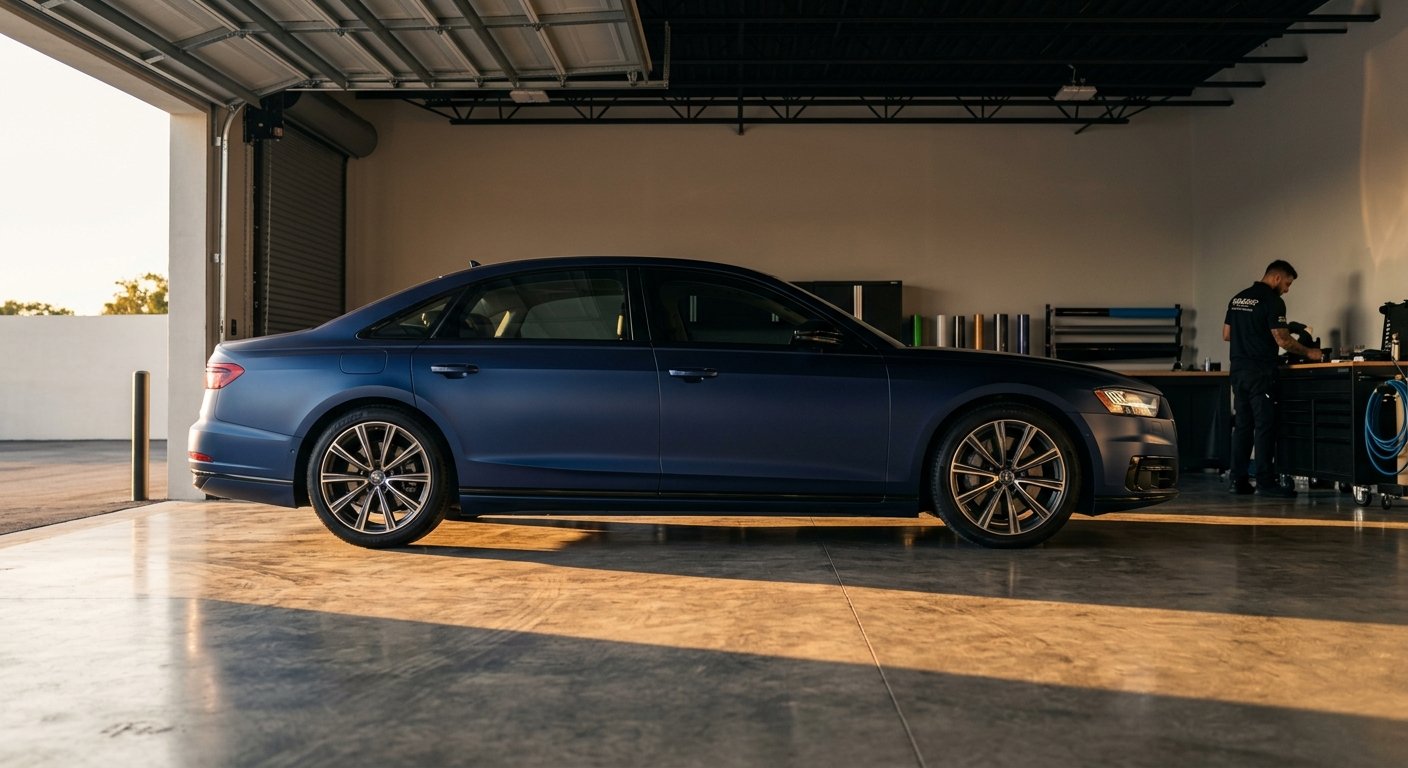
With premium cast vinyl and professional installation, a car wrap in South Florida realistically lasts five to seven years. Vehicles stored indoors may exceed that range; high-cycle commercial vehicles may see optimal appearance for three to five years. Material grade, installer certification, surface preparation, edge finishing, and ongoing care are the variables that determine where your wrap lands in that range.
- Cast vinyl outperforms calendered vinyl because it conforms to curves without the internal stress that causes shrinkage and edge lifting.
- 3M’s 1080 and 2080 series carry manufacturer warranties of up to seven years when installed to specified standards.
- Consistent covered storage can extend wrap life by 20–30% in high-UV climates like South Florida.
- South Florida’s UV index is among the highest in North America—material grade is the primary investment-protection decision.
- Hand washing, prompt removal of contaminants, and careful edge rinsing are the maintenance habits that matter most.
Whether you’re exploring custom car wraps for a luxury vehicle or outfitting a commercial fleet, durability depends on material quality, installation technique, environmental exposure, and post-installation maintenance. Cutting corners on any one of these factors can significantly shorten the life of your wrap.
The Material Foundation: Vinyl Grade Is Everything
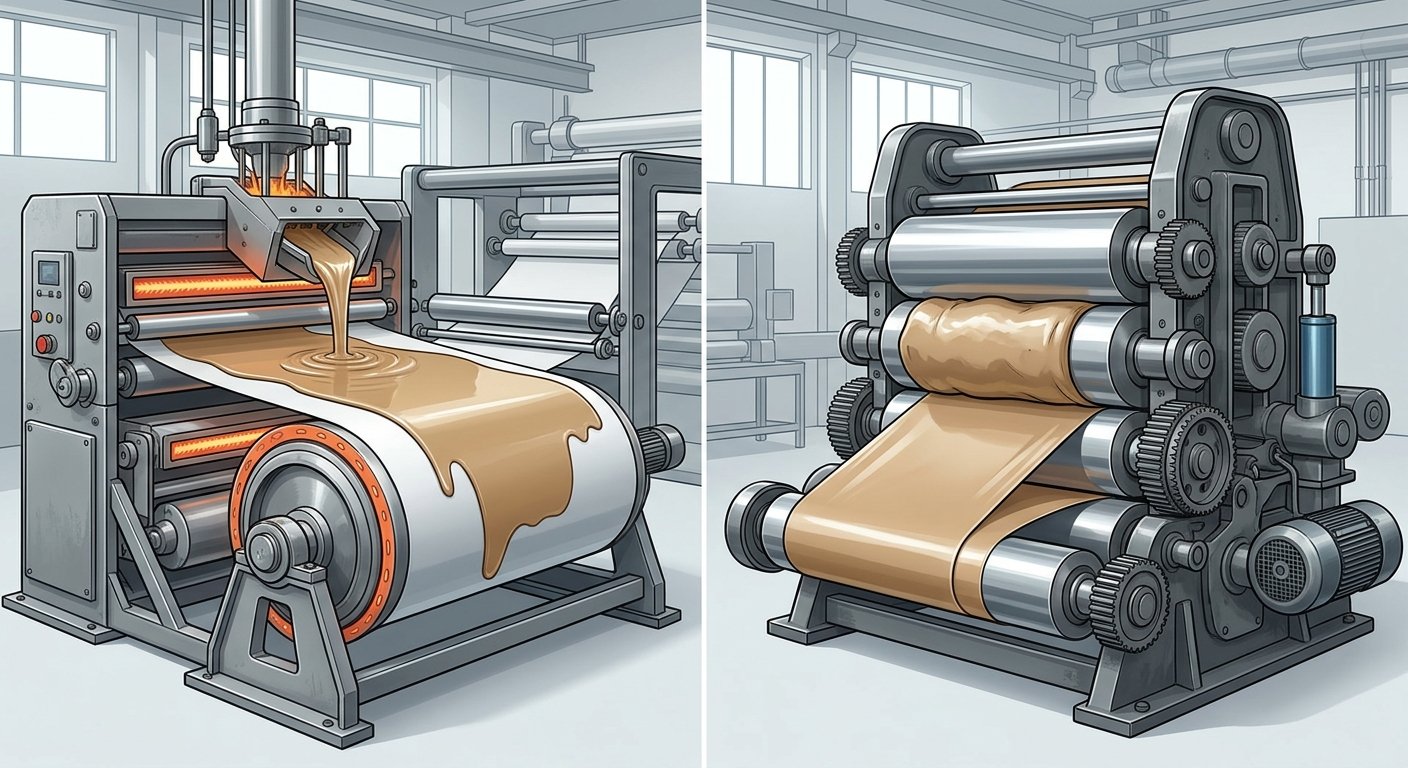
Not all vinyl is created equal. Walk into any wrap shop and you’ll encounter a wide spectrum of materials ranging from economy calendered films to premium cast vinyl. The difference isn’t just marketing—it’s chemistry and manufacturing process.
Cast vinyl is produced by pouring liquid PVC compound onto a casting sheet, which creates a film with molecular memory that conforms naturally to complex curves and contours. Calendered vinyl is produced by rolling heated PVC through a series of rollers, a process that introduces internal stress into the film. Over time, that stress causes shrinkage, lifting at edges, and premature failure—particularly on vehicles with compound curves.
3M vinyl wraps in Florida hold up differently than budget films because 3M’s cast vinyl products are engineered with UV inhibitors and plasticizers specifically designed to resist the aggressive sun exposure South Florida delivers year-round. When you’re evaluating a wrap provider, ask specifically what film series they’re using. The material specification isn’t a minor detail—it’s the foundation of everything that follows.
According to 3M’s graphics and signage documentation, premium cast films like those in the 1080 and 2080 series carry manufacturer warranties of up to seven years when properly installed—a benchmark that budget materials rarely approach.
| Criterion | Cast Vinyl | Calendered Vinyl |
|---|---|---|
| Manufacturing process | Poured onto casting sheet | Rolled through heated rollers |
| Internal stress | Minimal — natural molecular memory | High — stress baked in during rolling |
| Conformability | Conforms to compound curves | Struggles on complex contours |
| UV resistance | Engineered UV inhibitors & plasticizers | Limited protection |
| Typical lifespan | 5–7 years (premium, proper install) | Significantly underperforms benchmark |
| Manufacturer warranty | Up to 7 years (3M 1080/2080 series) | No comparable warranty |
Installation Quality: Where Craftsmanship Separates Results
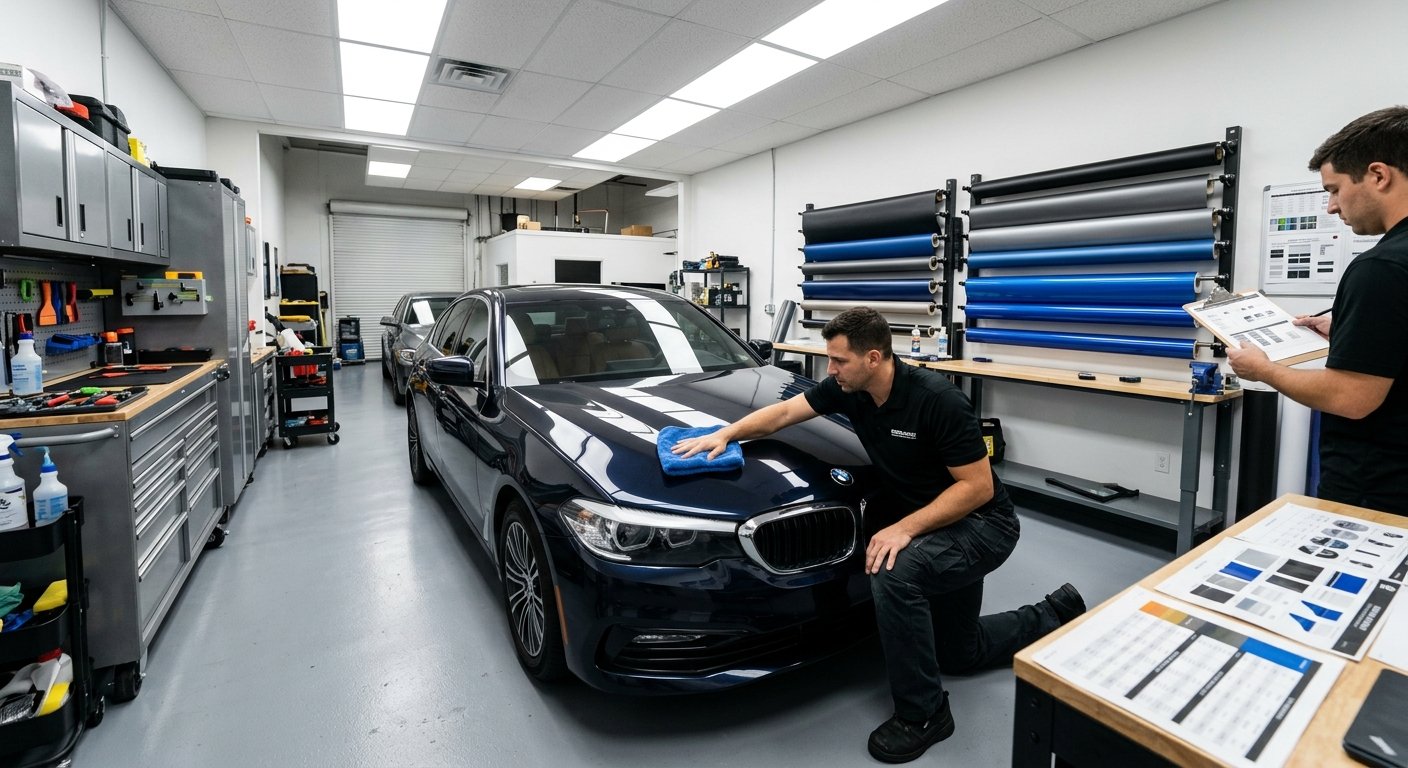
You can start with the best 3M wrap materials available in Florida and still end up with a wrap that fails early if the installation is compromised. Professional car wrap installation is a skill built over years of practice, and the difference between a competent installer and a truly experienced one shows up in the details.
Surface Preparation
Proper surface preparation is non-negotiable. Any contamination—wax, silicone, road tar, polish residue—creates a barrier between the adhesive and the paint, leading to lifting and bubbling within months. Professional preparation typically involves multiple cleaning stages, including isopropyl alcohol wipes and specific adhesion promoters on recessed areas and edges.
Application Technique
Film needs to be applied at the correct temperature and tension. Overstretching vinyl—particularly around bumpers and door handles—creates stress points that will eventually crack or lift. Experienced installers understand how to relieve tension through strategic relief cuts and heat application rather than forcing film around curves. 3M Certified Installation is particularly significant here: it represents a verified standard of technique and knowledge, not just brand familiarity.
Edge Sealing and Finishing
How edges are finished determines how long a wrap resists moisture infiltration. Tucking film under trim panels and door jambs—rather than leaving exposed edges—dramatically reduces the risk of lifting, especially in environments where vehicles are regularly washed or exposed to rain.
Tucking film under trim panels and door jambs—rather than leaving exposed edges—dramatically reduces the risk of lifting.
South Florida’s Environmental Demands
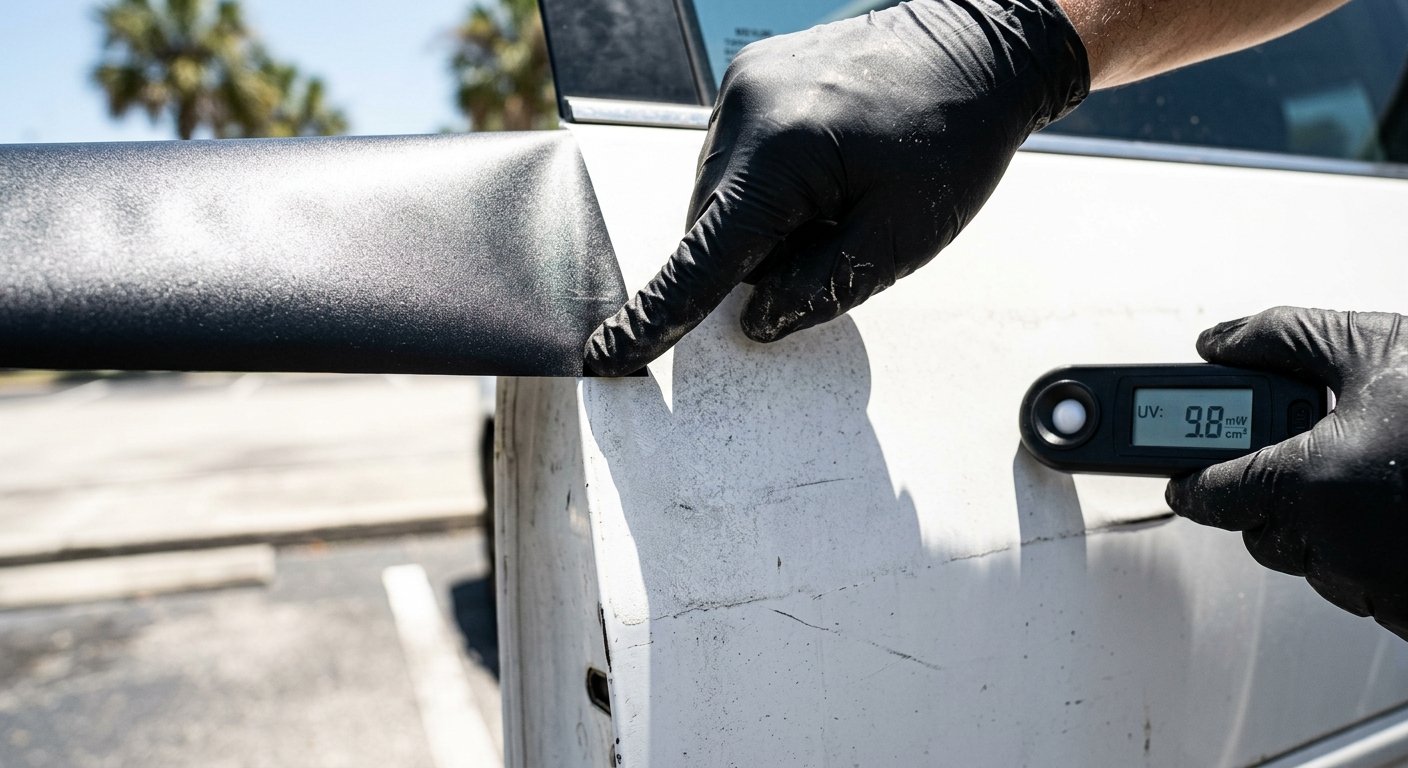
South Florida presents a specific set of challenges that wraps in other climates simply don’t face with the same intensity. UV index levels here are among the highest in North America, and sustained UV exposure is the single greatest accelerant of vinyl degradation over time.
Premium cast vinyl with quality UV inhibitors handles this stress meaningfully better than economy film. For vehicles parked outdoors consistently, the difference between a budget film and a properly spec’d 3M product can be several years of usable life. For commercial fleet wraps where vehicles are in constant use and outdoor exposure is unavoidable, material quality isn’t optional—it’s the primary investment protection strategy.
Salt air is a secondary but serious concern, particularly for vehicles near the coast or in marine applications. Salt accelerates corrosion at any exposed metal edge and can interact with adhesive layers if moisture finds its way under the film. Edge finishing technique and proper cleaning practices are especially critical in this region.
For boat applications, the demands escalate further. Marine environments require materials and adhesives specifically rated for constant moisture, UV, and saltwater exposure—a subject covered in more detail on the boat wraps page.
Vehicle Use Patterns and Parking Habits
A wrapped vehicle that lives in a covered garage will outlast an identical wrap on an identical vehicle parked outdoors every day. Consistent shade and temperature-controlled storage can extend wrap life by 20–30% in high-UV climates like South Florida, based on typical field observations.
Vehicle use patterns also affect wear patterns. Delivery vehicles experience high-frequency door cycling, cargo contact, and frequent washing—all of which create localized stress on specific panels. Luxury vehicles used occasionally and stored carefully face almost entirely UV-related degradation rather than mechanical wear.
Understanding your use case matters when planning a wrap. A business owner running a high-cycle delivery fleet should discuss panel-specific durability with their installer. A car enthusiast protecting a collectible vehicle has different priorities that point toward different film specifications and finishing techniques.
Post-Installation Care
Maintenance practices have a measurable impact on longevity. The basics are straightforward:
- Hand washing is preferable to automated brush washes, which can lift edges and introduce micro-abrasions over time.
- Use wrap-safe cleaning products without wax or silicone additives that can interfere with the film’s finish or accelerate edge lifting.
- Address bird droppings, tree sap, and fuel spills promptly. These contaminants can etch or stain vinyl if left on the surface for extended periods.
- Avoid high-pressure washing directly at panel edges or seams—angle the spray parallel to edges rather than perpendicular.
The Print and Graphics Imaging Association (PGIA) provides maintenance guidelines for professional graphics installations that align with best practices used by certified installers across the industry.
Consistency matters more than intensity. Vehicles that receive periodic care throughout the year maintain appearance and structural integrity meaningfully longer than those that receive occasional deep cleans between stretches of neglect.
Realistic Lifespan Expectations
With premium 3M materials, professional installation, and reasonable care, a full vehicle wrap in South Florida can realistically be expected to perform well for five to seven years on vehicles with typical exposure. Vehicles stored indoors or used seasonally may exceed that range. High-cycle commercial vehicles subjected to constant sun exposure and frequent washing may see optimal appearance for three to five years before a refresh is worth considering.
These ranges assume 3M-certified materials and installation—not economy vinyl. The warranty coverage on 3M wrap materials reflects the manufacturer’s confidence in their products under real-world conditions, but warranty applicability depends on professional installation meeting specified standards. An experienced installer will give you an honest assessment based on your specific vehicle, use patterns, and storage situation—not a single number that sounds good in a sales conversation.
Frequently Asked Questions
How long does a professional car wrap last in South Florida?
With premium cast vinyl and professional installation, most wraps in South Florida perform well for five to seven years. High UV exposure and outdoor storage can compress that range, while covered parking and regular maintenance can extend it. Economy vinyl and budget installations typically underperform those benchmarks significantly.
What is the 3M wrap warranty in Florida, and does it apply to my vehicle?
3M’s cast vinyl products like the 1080 and 2080 series carry manufacturer warranties of up to seven years for properly installed applications. The warranty applies when installation is performed by a certified installer following 3M’s specified preparation and application standards. Coverage does not extend to installations that deviate from those standards, which is why installer certification matters.
Does garage storage really make a difference for wrap longevity?
Yes, measurably so. UV exposure is the primary driver of vinyl degradation in South Florida. Consistent covered storage reduces cumulative UV load, which directly extends usable wrap life. For luxury or collectible vehicles, indoor storage paired with premium materials is the most effective combination for maximum lifespan.
Can a wrap protect my paint from UV damage?
A quality vinyl wrap does shield the underlying paint from direct UV exposure while it’s in place, which can help preserve paint condition over time. It provides a layer of protection against minor surface abrasion and environmental exposure—but it is not a substitute for dedicated paint protection film and should not be evaluated on that basis alone.
How do I know if I need a full rewrap or just partial panel replacement?
This depends on the extent and location of the wear or damage. Panels that receive disproportionate wear—like bumpers or door edges on a fleet vehicle—can often be replaced individually if the rest of the wrap remains in good condition. A professional assessment will help determine whether spot repairs are viable or whether a full refresh makes more practical sense.
Invest in the Variables You Can Control
Wrap lifespan isn’t a fixed number—it’s the outcome of decisions made before, during, and after installation. Material grade, installer certification, surface preparation, edge finishing, and ongoing care are all within your control. South Florida’s environment creates real demands, but they’re manageable when the right materials and techniques are applied from the start.
Get straight answers about your wrap project
Contact Florida Car Wrap for a consultation and an honest assessment based on your specific vehicle, use patterns, and storage situation.
About Florida Car Wrap
Florida Car Wrap delivers premium vehicle wrap services specializing in commercial fleet branding, luxury car customization, and marine-grade wraps throughout South Florida. Led by award-winning wrap professional Steve Hargittai, the company combines 3M-certified materials with competition-proven craftsmanship to serve discerning business owners and automotive enthusiasts who value longevity and quality over price. Their expertise extends beyond vehicles to architectural graphics, wall wraps, and floor wraps, all executed with attention to South Florida's unique climate demands including UV exposure and salt air considerations. Visit floridacarwrap.com →
