
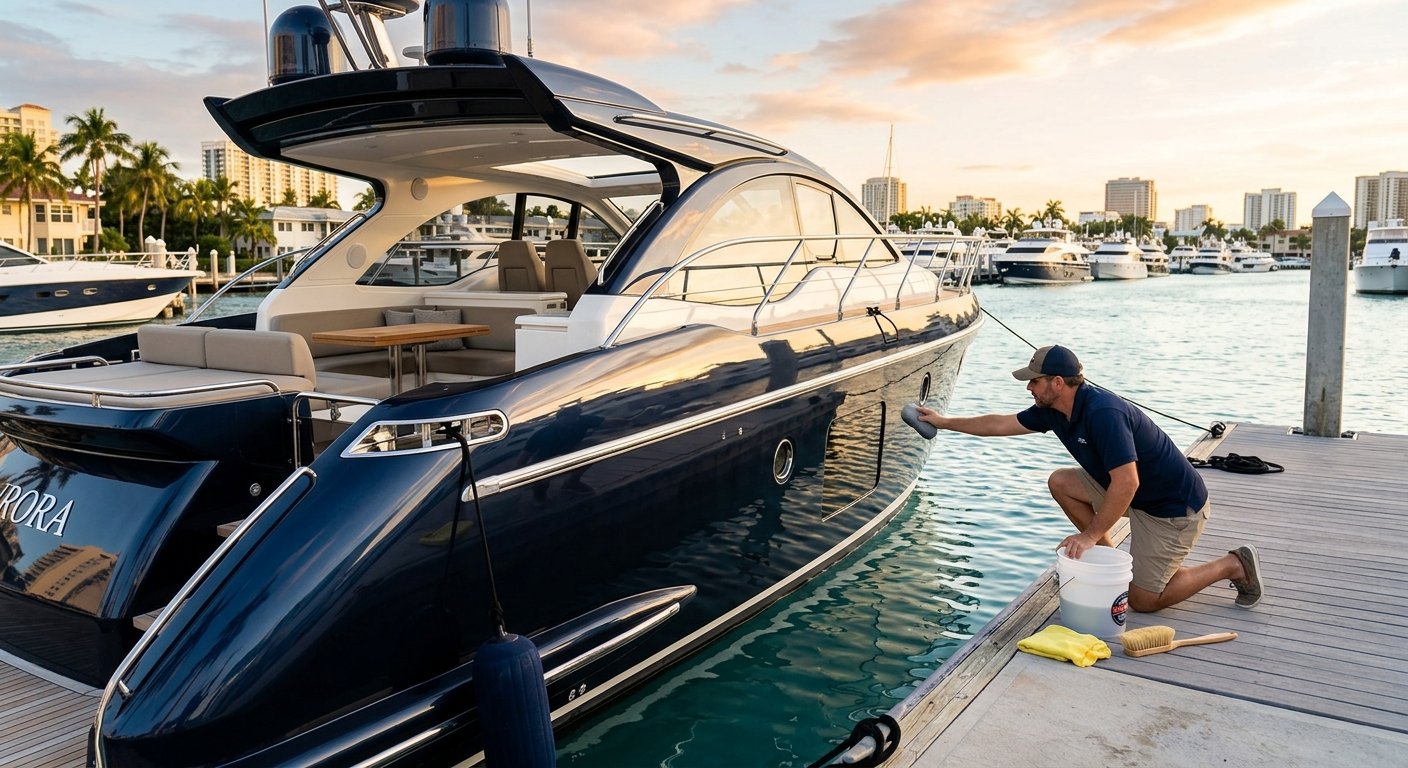
Properly maintained marine-grade vinyl wraps can retain their appearance and protective properties for years under South Florida’s demanding conditions. The key is a consistent routine: gentle washing with pH-neutral products, periodic UV protectant application, and knowing when professional attention is warranted. This guide covers every step boat and yacht owners in Fort Lauderdale, Miami, and surrounding areas need to protect their investment.
- Rinse your wrap with fresh water after every saltwater outing — salt residue is the leading accelerator of edge lifting and film degradation in South Florida.
- Use only pH-neutral, non-abrasive cleaners; petroleum-based products and solvent waxes damage vinyl film chemistry.
- UV protectant sprays formulated for vinyl add a meaningful layer of defense against South Florida’s high UV index.
- Inspect seams, edges, and graphic overlaps every 90 days — catching a small lift early prevents a large repair later.
- Professional re-lamination or spot repair is almost always more cost-effective than a full re-wrap when problems are caught early.
Why Marine Vinyl Demands a Different Maintenance Approach
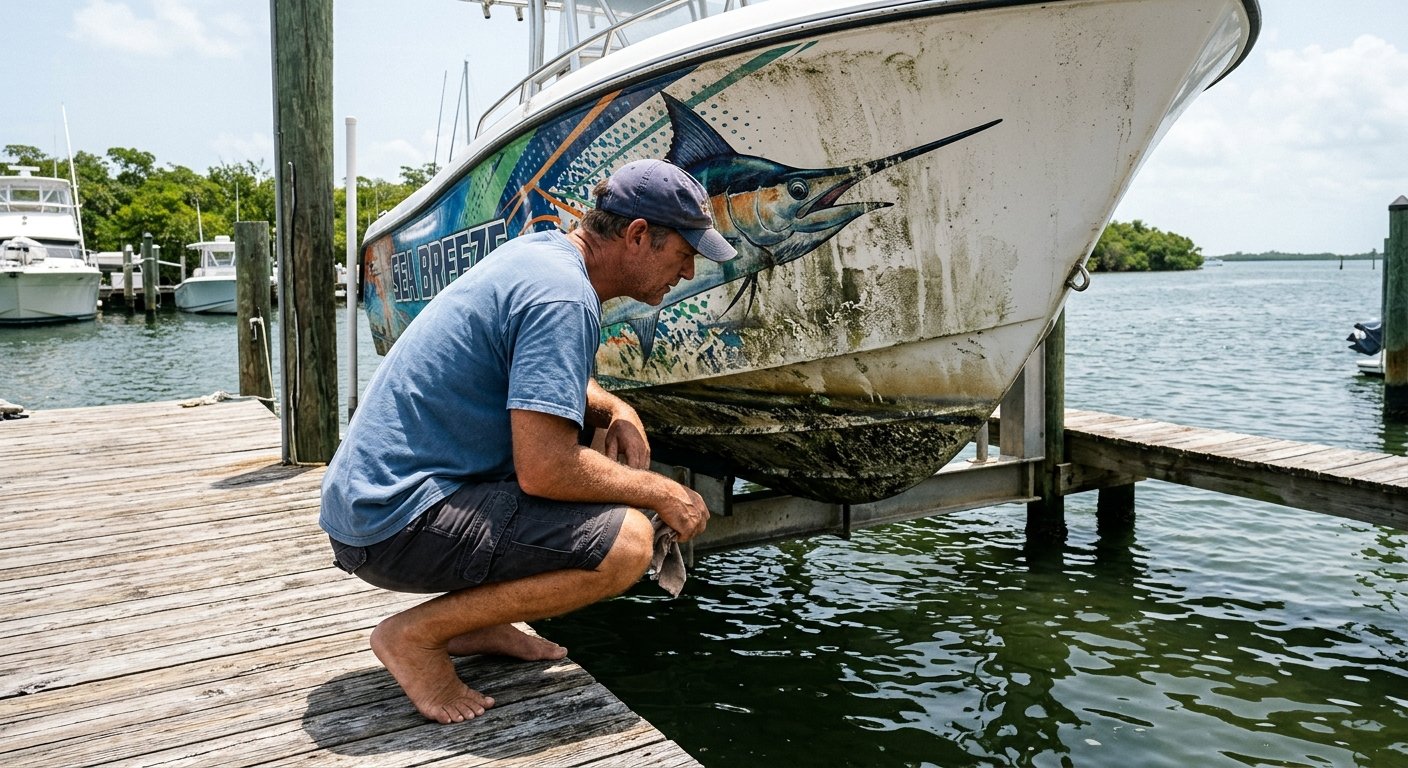
A boat wrap exists in a uniquely hostile environment. Unlike a vehicle wrap that sees sun and rain, a marine-grade vinyl graphic contends simultaneously with UV radiation, salt air, saltwater immersion at the waterline, wake spray, marine fuel vapors, and biological growth. Each of these stressors attacks the film, the adhesive layer, and the printed ink differently.
South Florida compounds every one of those stressors. Miami-Dade and Broward counties rank among the highest UV index regions in the continental United States. According to the U.S. Environmental Protection Agency’s UV Index Scale, a UV index above 11 is classified as “Extreme,” a rating South Florida reaches regularly during summer months. That level of radiation degrades unprotected vinyl noticeably faster than it would in a temperate climate, which is why the maintenance practices outlined here are non-negotiable for owners in this region.
The good news: marine-grade vinyl films — including the 3M-certified materials used in professional installations — are engineered to resist these conditions. But “engineered to resist” is not the same as “maintenance-free.” The film needs consistent, informed care to perform as intended throughout its service life.
Not all marine wraps are created equal. Films installed without proper surface preparation, edge sealing, or professional-grade adhesive will fail significantly faster regardless of how well you maintain them. If you’re evaluating a new wrap, understanding the signs that an installer is cutting corners is the most important pre-installation research you can do.
The Post-Outing Rinse: Your Single Most Important Habit
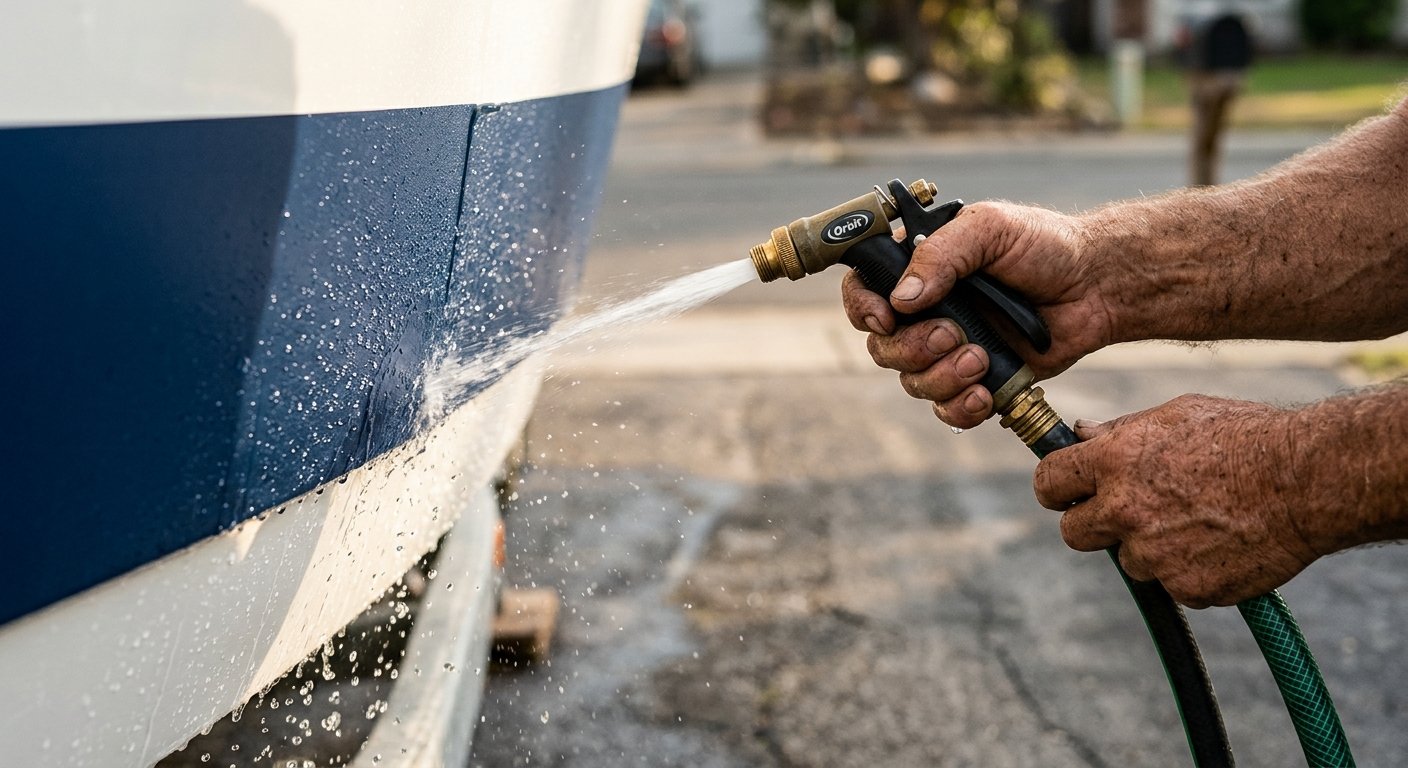
Every time a wrapped vessel returns from saltwater, a fresh water rinse should happen before the boat is stored or covered. Salt crystals are microscopic but mechanically aggressive — they work into film seams and edge terminations, accelerating the micro-lifting that eventually becomes visible peeling. They also act as a UV amplifier on the film surface, increasing localized degradation over time.
The rinse itself requires no special equipment. A standard garden hose at moderate pressure is ideal. Avoid pressure washers aimed directly at seams or graphic edges — the force can drive water beneath the film and compromise adhesion. Work from the top of the hull downward, allowing runoff to carry salt residue away from the surface naturally. Pay particular attention to waterline graphics, transom lettering, and any area that experienced spray or immersion.
Never use a rotating-tip or zero-degree pressure washer nozzle on wrapped surfaces. The concentrated stream can pierce the film or force water beneath edge terminations, creating conditions for adhesive failure that may not become visible for weeks.
Proper Washing Technique for Marine Wraps
Product Selection
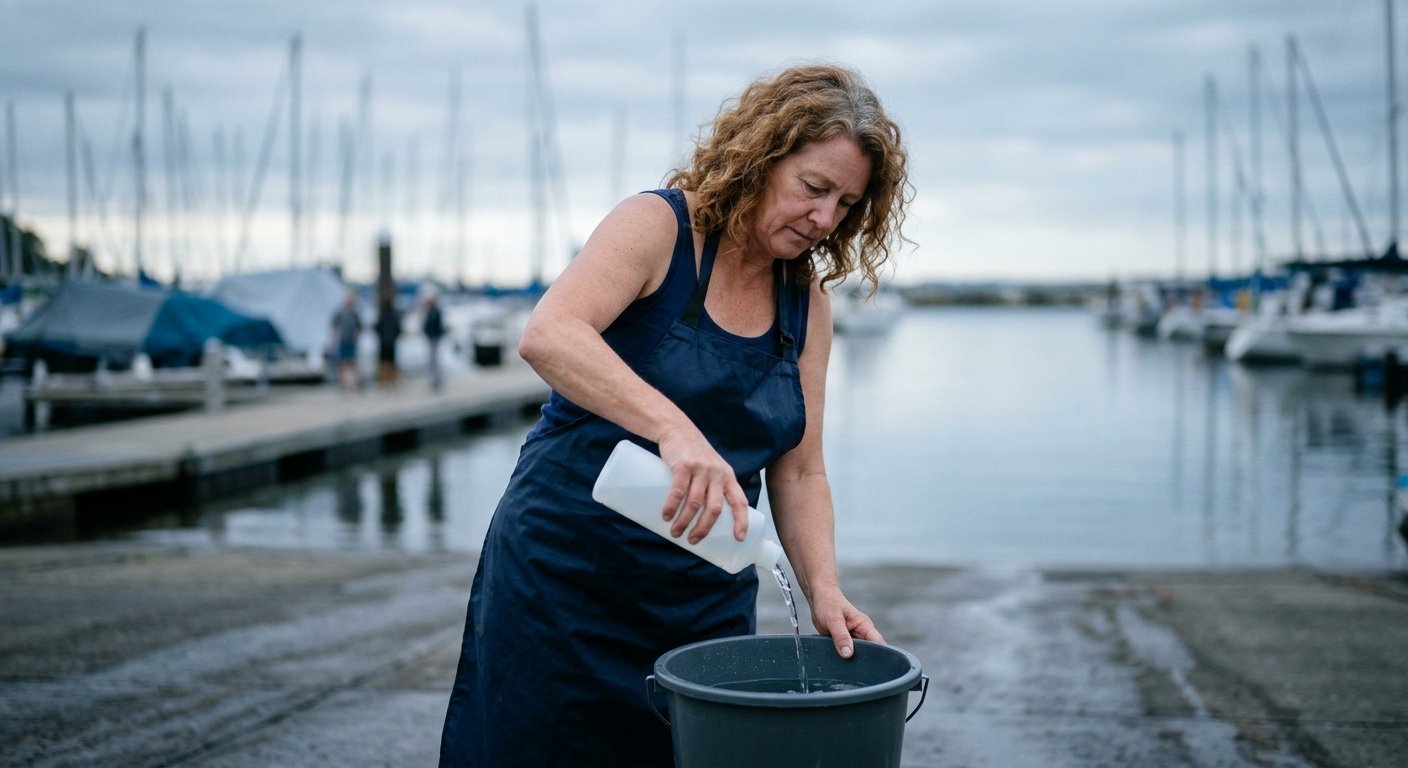
The vinyl film used in professional marine wraps has a specific pH tolerance. Products outside that range — including many common boat soaps, citrus degreasers, and hull cleaners — can leach plasticizers from the film, causing brittleness and premature fading. Choose products specifically labeled as safe for vinyl graphics or painted surfaces with a neutral pH (approximately 6–8).
Products to avoid include:
- Petroleum-based cleaners and engine degreasers
- Solvent-based waxes or polishes (compounds, rubbing compounds, Turtle Wax)
- Bleach or oxidation removers
- Abrasive hull cleaners designed for fiberglass or gelcoat
- Any product containing acetone, lacquer thinner, or MEK
For stubborn contamination — bird droppings, marine growth, fish blood — a small amount of isopropyl alcohol (IPA) at 70% concentration applied with a soft microfiber cloth is generally safe on most professional-grade vinyl films. Test an inconspicuous area first and do not allow it to dwell on printed areas for extended periods.
Wash Process
Pre-rinse
Thoroughly wet the entire wrapped surface with fresh water to loosen and float surface debris before any contact washing begins.
Apply soap solution
Use a soft natural or synthetic sponge — never a scrub pad or brush with stiff bristles. Work in straight, overlapping strokes rather than circular motions to avoid micro-scratching the film surface.
Rinse completely
Remove all soap residue from the surface, paying close attention to edges, overlaps, and recessed areas where detergent can collect and concentrate.
Dry with clean microfiber
Air-drying allows water spots and mineral deposits to form on the film surface. A clean, soft microfiber towel removes water before it can leave residue.
UV Protection: The Overlooked Maintenance Step
Washing removes contaminants. UV protectant products actively slow the photodegradation process itself. For South Florida boat owners, applying a vinyl-safe UV protectant every 60 to 90 days is a meaningful investment in wrap longevity.
Look for spray-on protectants specifically formulated for vinyl graphics rather than general automotive waxes. Products containing PTFE or silicone-free UV inhibitors are generally appropriate; silicone-based products can interfere with any future adhesive work or repairs. Apply the protectant to a cool, dry surface in the shade — never in direct sun, which causes the product to flash-dry unevenly before it can bond to the film surface.
The difference between a wrap that looks great at year three and one that looks tired at year one is almost always maintenance consistency, not material quality.
This matters especially for watercraft with graphics that extend below the waterline. Submersion itself is not the primary threat to properly installed marine film — UV exposure on the portions above the waterline does most of the accelerated aging. Protecting those exposed surfaces is where the maintenance return on investment is highest.
Seasonal and Periodic Inspection
Every 90 days, conduct a deliberate inspection of the wrap’s condition rather than relying on casual observation during washing. The goal is to catch edge lifting, micro-cracks, print fading, or adhesive bubbling while each issue is still minor and addressable with spot repair rather than full replacement.
Focus on these high-risk areas:
- Bow and chine areas — high flex zones where film is most likely to develop stress cracks or seam separation
- Waterline graphics — constant wet-dry cycling stresses both the adhesive and the film edge
- Transom lettering — often installed across complex curves; edge seals here are under consistent mechanical stress
- Areas beneath dock lines or fenders — physical abrasion accelerates film wear in these contact zones
Understanding how South Florida’s environment affects vinyl film longevity more broadly applies equally to watercraft and vehicles alike — the same UV and humidity variables that determine how long a vehicle wrap lasts in Florida’s climate are at work on your hull graphics, often with even greater intensity.
Photograph your wrap’s condition during each quarterly inspection. Date-stamped images give you a visual baseline to identify whether a small edge lift is new or has been stable for months — that distinction matters when deciding between monitoring and repair.
When to Consult a Professional
Some maintenance tasks are genuinely within reach of a diligent boat owner. Edge re-sealing, spot repairs, and even partial panel replacement, however, require professional-grade equipment, properly matched film inventory, and the technical knowledge to maintain color and finish consistency across a repair boundary.
Contact a professional installer when you observe any of the following:
- Edge lifting that extends more than a few millimeters from the termination point
- Large-format bubbling that did not resolve after gentle heat application
- Visible print cracking or significant color shift in a localized area
- Any physical damage that exposes the substrate beneath the film
- Waterline graphics with biological adhesion that cannot be removed with standard cleaning
For boat and yacht owners seeking professional marine wrap care in Davie, Fort Lauderdale, Hollywood, Miami, Weston, or Pembroke Pines, the expertise required for quality repairs goes beyond the installation itself. The Specialty Graphic Imaging Association recognizes that proper film matching, adhesive compatibility, and substrate preparation are distinct technical disciplines — which is why repair work should always go back to a certified professional installer rather than a general detailing service.
Florida Car Wrap’s marine wrap services are designed for owners who understand that proper care is an ongoing responsibility, not a one-time transaction. Our team works exclusively with professional-grade films and 3M-certified installation practices developed specifically for South Florida’s coastal environment. Explore our full boat and yacht wrap services to learn more about what professional marine-grade wrapping involves from the first consultation through long-term care.
Frequently Asked Questions
How often should I wash my boat wrap?
After every saltwater outing, rinse with fresh water. A full wash with pH-neutral soap is appropriate weekly for boats used regularly, or any time visible contamination — bird droppings, marine growth, fuel residue — is present. Waiting longer allows contaminants to chemically bond to the film surface and become significantly harder to remove safely.
Can I wax my boat wrap to protect it?
Standard marine waxes containing solvents or abrasive compounds are not safe for vinyl film. Use only vinyl-specific protectant products. Some products marketed as “vinyl wax” are appropriate, but verify they are silicone-free and specifically compatible with printed graphics, not just solid-color film.
Will keeping my boat covered extend the wrap’s life?
Yes, meaningfully. A quality, breathable boat cover that blocks UV exposure when the vessel is not in use can significantly slow photodegradation, particularly for boats stored outdoors in South Florida. The cover must be breathable — non-breathable covers trap moisture and can accelerate biological growth and adhesive issues at film edges.
Is marine vinyl wrapping different from standard vehicle wrapping?
The films used in professional marine applications share the same base vinyl chemistry as automotive films but are selected for greater resistance to continuous moisture exposure, biological growth, and waterline immersion. Installation techniques also differ, particularly in edge sealing and substrate preparation on fiberglass hulls. A professional with marine-specific wrapping experience understands these distinctions; a general automotive shop may not.
What is a 3M wrap warranty, and does it apply to boat wraps in Florida?
3M’s warranty terms for graphic films cover manufacturing defects in the film itself under defined installation and care conditions. Coverage specifics depend on the product series used and the application type. A 3M-certified installer can provide accurate information about which warranty terms apply to your specific installation. What a warranty does not replace is proper ongoing maintenance — the two work together, not interchangeably.
Protect Your Marine Investment
Reach out to Florida Car Wrap’s South Florida team for a professional assessment of your vessel’s current wrap condition, a repair consultation, or a full marine wrap project.
About Florida Car Wrap
Florida Car Wrap delivers premium vehicle wrap services specializing in commercial fleet branding, luxury car customization, and marine-grade wraps throughout South Florida. Led by award-winning wrap professional Steve Hargittai, the company combines 3M-certified materials with competition-proven craftsmanship to serve discerning business owners and automotive enthusiasts who value longevity and quality over price. Their expertise extends beyond vehicles to architectural graphics, wall wraps, and floor wraps, all executed with attention to South Florida's unique climate demands including UV exposure and salt air considerations. Visit floridacarwrap.com →
