

The difference between a vehicle wrap that elevates your brand and one that looks like an afterthought comes down to the design process. As a 3M Certified wrap professional, I’ve watched countless business owners and vehicle enthusiasts struggle with understanding what separates a compelling wrap design from one that fails to deliver results. The truth is, professional vehicle wrap design services involve far more than simply slapping a logo on vinyl—it’s a sophisticated process that balances aesthetics, engineering requirements, and material science.
In South Florida’s demanding environment, where UV intensity and humidity test every material decision, the design phase determines whether your investment lasts five years or begins degrading within months. This guide walks you through the professional approach to custom vinyl car wraps, from initial concept through production-ready files.
Understanding the Vehicle Wrap Design Framework
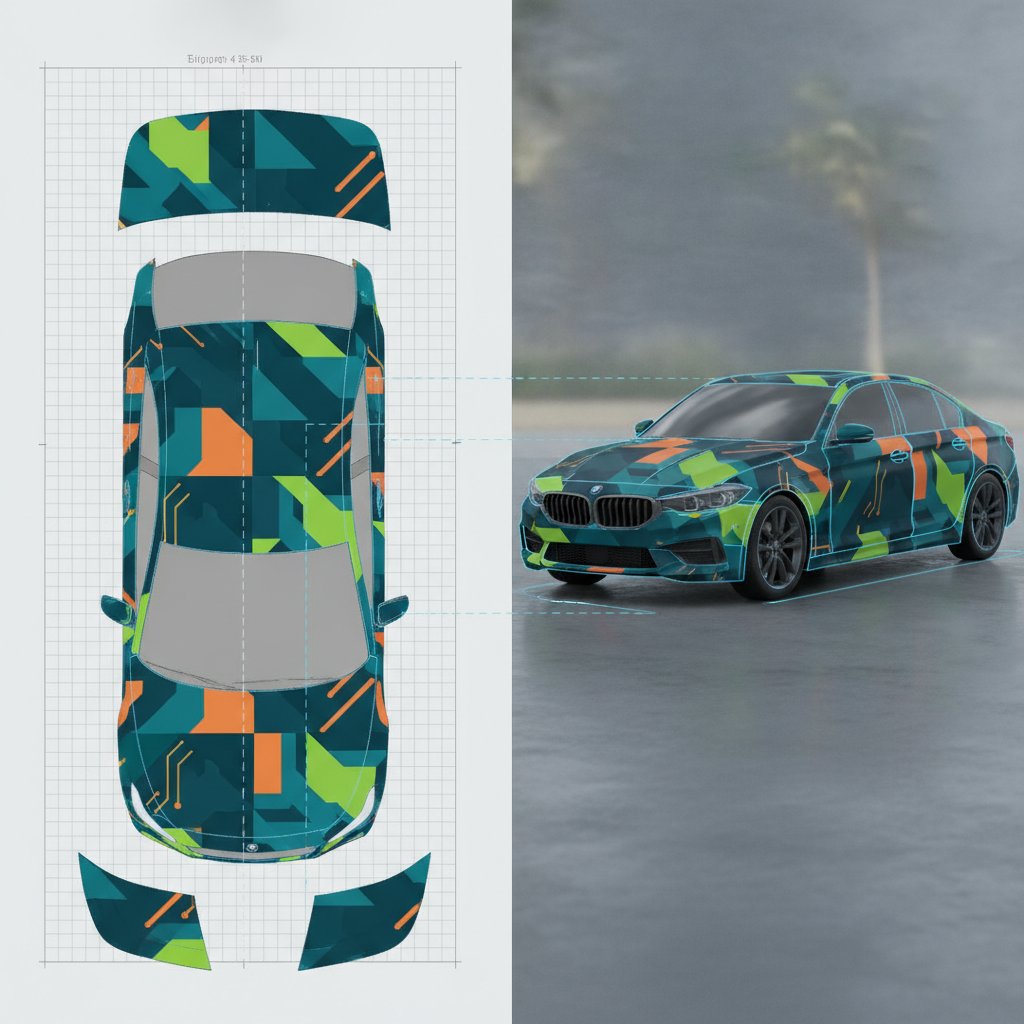
Professional wrap design differs fundamentally from traditional graphic design. While a billboard designer works with a flat rectangular canvas, vehicle wrap designers must account for three-dimensional surfaces, compound curves, complex body lines, and functional elements like door handles, mirrors, and fuel doors.
The design process begins with precise vehicle templates. These aren’t generic outlines—they’re manufacturer-specific technical drawings that account for every body panel contour, trim piece, and surface transition. According to 3M’s wrap installation standards, accurate templates prevent design elements from being lost in panel gaps or distorted across curves.
At Florida Car Wrap, we utilize professional-grade templates that include all critical measurements. This precision matters because a logo positioned perfectly on a flat template might end up stretched, compressed, or split across a body line when applied to the actual vehicle surface. This attention to detail separates professional car wrap installation from amateur attempts that ignore these engineering realities.
The Discovery Phase: Defining Design Objectives
Before any design work begins, we conduct a thorough discovery session with clients. For commercial fleet applications, this involves understanding brand guidelines, target audience, viewing distances, and marketing objectives. A delivery van needs bold, readable graphics visible from 100 feet away during traffic. A luxury vehicle wrap for a high-end exotic demands subtlety and craftsmanship that complement the car’s existing lines.
Key discovery questions include:
- What’s the primary purpose—branding visibility, aesthetic customization, or paint protection with visual enhancement?
- Where will the vehicle operate most frequently—highways requiring distance legibility or urban environments with close viewing?
- Does your brand have specific Pantone colors or logo specifications that must be maintained?
- What’s your timeline and budget alignment with material quality expectations?
These conversations reveal whether clients understand the relationship between objectives and material choices. A client wanting mirror chrome finishes needs to understand both the visual impact and the premium cost of specialty films. This educational approach prevents disappointment and ensures design decisions align with realistic expectations.
Material Selection and Design Integration
The design phase and material selection are inseparable. Different vinyl films offer distinct characteristics that impact design possibilities. Cast vinyl films from 3M, which we exclusively use for professional applications, provide superior conformability around curves and vehicle contours compared to calendared films.
For commercial fleet wraps, we typically recommend 3M’s Controltac films with Comply adhesive technology. These materials allow repositioning during installation, critical for maintaining design alignment across multiple panels. The texture and finish—whether gloss, matte, satin, or specialty finishes—must be decided during design because they affect color appearance and visual impact.
South Florida’s intense UV exposure influences material choices significantly. The coastal environment demands films with enhanced UV inhibitors and adhesive systems resistant to salt air degradation. These aren’t marketing claims—the ASTM International standards for graphic film durability provide measurable performance criteria that separate professional-grade materials from budget alternatives.
Color selection involves more complexity than choosing from a swatch book. Metallic and pearlescent finishes shift appearance dramatically based on viewing angle and lighting. What looks perfect in a design mockup under office lighting may appear completely different in direct sunlight. Award-winning wrap professionals understand these variables and guide clients toward choices that deliver consistent visual impact across varied conditions.
Digital Color Management
For printed wraps incorporating photographic elements, gradients, or complex color blends, color management becomes critical. Professional vehicle wrap design services utilize calibrated monitors and standardized color profiles to ensure design files translate accurately to printed vinyl.
We work within the RGB color space during design but convert to CMYK for print production, understanding that certain vibrant RGB colors cannot be reproduced in CMYK. Setting expectations during design prevents the disappointment of receiving printed material that doesn’t match screen colors. This technical knowledge separates professional operations from those learning these limitations at the client’s expense.
Design Development and Client Collaboration
Once objectives and materials are established, actual design work begins. Professional designers create multiple concept directions, typically presenting three distinct approaches that interpret the client’s vision differently. This isn’t about indecision—it’s about exploring the full range of possibilities before committing to production.
Mockups are presented as photorealistic renderings showing the design on the actual vehicle in realistic environments. Generic template backgrounds don’t convey how graphics will actually appear. We create renderings that show the vehicle from multiple angles, demonstrating how design elements flow across panels and remain cohesive when viewed from different perspectives.
For custom car wraps on luxury and exotic vehicles, this visualization stage often reveals that less is more. A Ferrari’s sculptural body lines can be enhanced with subtle accent stripes or color blocking rather than overwhelming graphics. The design should complement the vehicle’s inherent beauty, not compete with it.
Client feedback drives refinement. We typically go through two to three revision rounds, adjusting colors, repositioning elements, and fine-tuning proportions. This collaborative process ensures the final design reflects the client’s vision while incorporating our technical expertise about what will actually work during installation and long-term wear.
Technical File Preparation for Production
Once design approval is secured, files must be prepared for production. This technical phase requires expertise that many designers lack. Files must be constructed at actual size—a full vehicle wrap file might be 20 feet long, creating massive file sizes that require powerful computers and specialized software.
Bleed areas must extend beyond trim lines to account for material overlap and trimming during installation. Panel separation must align with vehicle body lines and seams. Complex designs often require panel-by-panel printing with precise registration marks ensuring alignment during installation.
For color-change wraps using solid-color films rather than printed graphics, templates guide material cutting but also help installers plan panel layout to minimize seams in visible areas. Strategic seam placement—along body lines, trim edges, and natural panel breaks—makes seams virtually invisible while maintaining structural integrity.
Prototyping and Pre-Installation Review
For complex commercial projects or high-value custom car wrap installations, we often produce small-scale print samples or mock up specific design sections. This allows clients to see actual material, verify colors under natural lighting, and confirm that specialty finishes meet expectations.
This step catches issues before full production. I’ve seen specialty metallic films that looked perfect digitally appear too subdued in person, requiring color intensification before final printing. Spending 30 minutes reviewing physical samples can prevent thousands in wasted materials and client disappointment.
Installation Considerations Built Into Design
Professional wrap designers think beyond aesthetics to installation practicality. Certain design elements create installation challenges that increase labor time and potential failure points. Understanding these factors allows designers to make informed trade-offs between visual ambition and practical execution.
Complex graphics with intricate details may look stunning digitally but can be nearly impossible to install perfectly on compound curves where material must stretch significantly. Award-winning installers can accomplish remarkable feats, but design should support rather than fight the installation process.
For example, designs that require perfect alignment across door gaps, body seams, and panel breaks increase complexity exponentially. While achievable, they demand premium installation time, directly impacting custom car wrap cost. Clients deserve transparency about these relationships during design rather than surprise cost increases later.
South Florida Climate Considerations in Design
South Florida’s environment influences design decisions in ways that might not be immediately obvious. Dark colors, particularly matte black, absorb tremendous heat in direct sunlight, potentially affecting adhesive performance on certain vehicle surfaces. This doesn’t mean dark wraps aren’t viable—3M car wraps in South Florida perform excellently when properly specified—but installers must account for heat-related expansion during application.
Salt air affects material selection more than design aesthetics, but the combination matters. Marine environments demand premium adhesive systems, and design should avoid excessive edge complexity that creates potential lifting points where salt intrusion could begin degradation.
UV intensity fades colors over time, but not uniformly. Horizontal surfaces like hoods and roofs receive more UV exposure than vertical doors and fenders. Premium cast vinyls include UV inhibitors that slow this process dramatically, but design choices around color intensity and contrast ratios should anticipate some gradual change over a wrap’s five-to-seven-year lifespan.
Cost Factors in Custom Vehicle Wrap Design
Understanding custom car wrap cost requires recognizing which design decisions drive expenses. Material choices represent the most significant variable—specialty finishes like brushed metal, carbon fiber, or color-shifting films cost substantially more than standard solid colors or basic printed graphics.
Design complexity affects both material costs and installation labor. A simple two-color design with clean separations installs faster than intricate graphics requiring precise alignment across multiple panels. Full wraps covering every surface including door jambs and interior edges cost more than partial wraps focusing on primary visible panels.
Professional vehicle wrap design services themselves represent an investment. While some shops include basic design in their overall pricing, complex custom work requiring extensive client collaboration, multiple revisions, and detailed technical file preparation may involve separate design fees. This investment prevents costly errors and ensures results that justify the overall project expense.
The Value of Professional Design Expertise
The difference between adequate and exceptional vehicle wraps often traces directly to design quality. A professionally designed wrap considers vehicle proportions, viewing angles, color psychology, brand consistency, material characteristics, installation practicality, and environmental durability simultaneously.
Amateur design attempts frequently fail in predictable ways: logos sized improperly for viewing distance, color combinations lacking sufficient contrast for readability, graphics positioned where body lines create visual disruption, or files constructed incorrectly causing production problems. These failures waste money and create frustration that proper initial design would have prevented.
Professional designers working within established wrap shops bring specific expertise that general graphic designers lack. They understand material behavior, installation limitations, and the technical requirements of translating digital files into physical installations. This specialized knowledge protects your investment and ensures results that meet professional standards.
Frequently Asked Questions
How long does the vehicle wrap design process typically take?
Professional vehicle wrap design services generally require two to four weeks from initial consultation through final file approval. Simple designs with straightforward objectives might be completed faster, while complex projects requiring extensive client collaboration, multiple revision rounds, or custom illustration work may extend to six weeks. Rushing design to meet aggressive timelines often results in compromised results that fail to meet expectations.
Can I provide my own design for professional installation?
Yes, but client-provided designs typically require technical refinement before production. Files must be properly sized, include appropriate bleed areas, account for three-dimensional vehicle surfaces, and meet print production specifications. Most professional shops will review client designs and recommend modifications to ensure successful installation. This technical preparation is distinct from creative design and ensures your vision translates properly to the actual vehicle.
What’s the difference between printed wraps and solid color-change wraps in terms of design?
Printed wraps allow photographic images, gradients, complex graphics, and unlimited color combinations within a single design. Color-change wraps use solid-color vinyl films and create visual interest through panel blocking, accent placement, and material finish combinations. Printed wraps offer maximum creative flexibility but typically cost more due to printing expenses. Color-change designs can achieve stunning results with lower material costs but work within the constraint of solid colors and physical panel separations.
How do you ensure the wrap design will look good as the vehicle ages?
Professional designs account for longevity through material selection, color choices, and structural decisions. We specify premium cast vinyls with enhanced UV protection, avoid color combinations that show fading disproportionately, and design panel layouts that allow future replacement of high-wear sections without full rewraps. Proper maintenance, which we educate clients about during design consultation, extends appearance retention significantly. Quality 3M materials in South Florida’s climate maintain excellent appearance for five to seven years when properly maintained.
Moving Forward With Your Vehicle Wrap Project
Understanding the professional vehicle wrap design process empowers you to approach your project with realistic expectations and informed decision-making. Whether you’re developing commercial fleet branding that builds market visibility or creating a distinctive custom automotive statement, the design foundation determines long-term satisfaction.
Professional design represents an investment in results that justify your overall project expense. The difference between adequate and exceptional comes down to expertise, material knowledge, and the collaborative process that translates vision into reality.
At Florida Car Wrap, our design process reflects decades of installation experience and award-winning craftsmanship standards. We understand how design decisions affect installation success, longevity, and visual impact in South Florida’s demanding environment. Our 3M Certified approach ensures your project benefits from materials and methods proven to deliver lasting results.
Ready to explore what’s possible for your vehicle? Contact Florida Car Wrap to begin a conversation about your vision, objectives, and how professional vehicle wrap design services can create results that exceed expectations. We’ll walk you through the process, answer your questions, and develop a design approach tailored to your specific needs and quality standards.
