
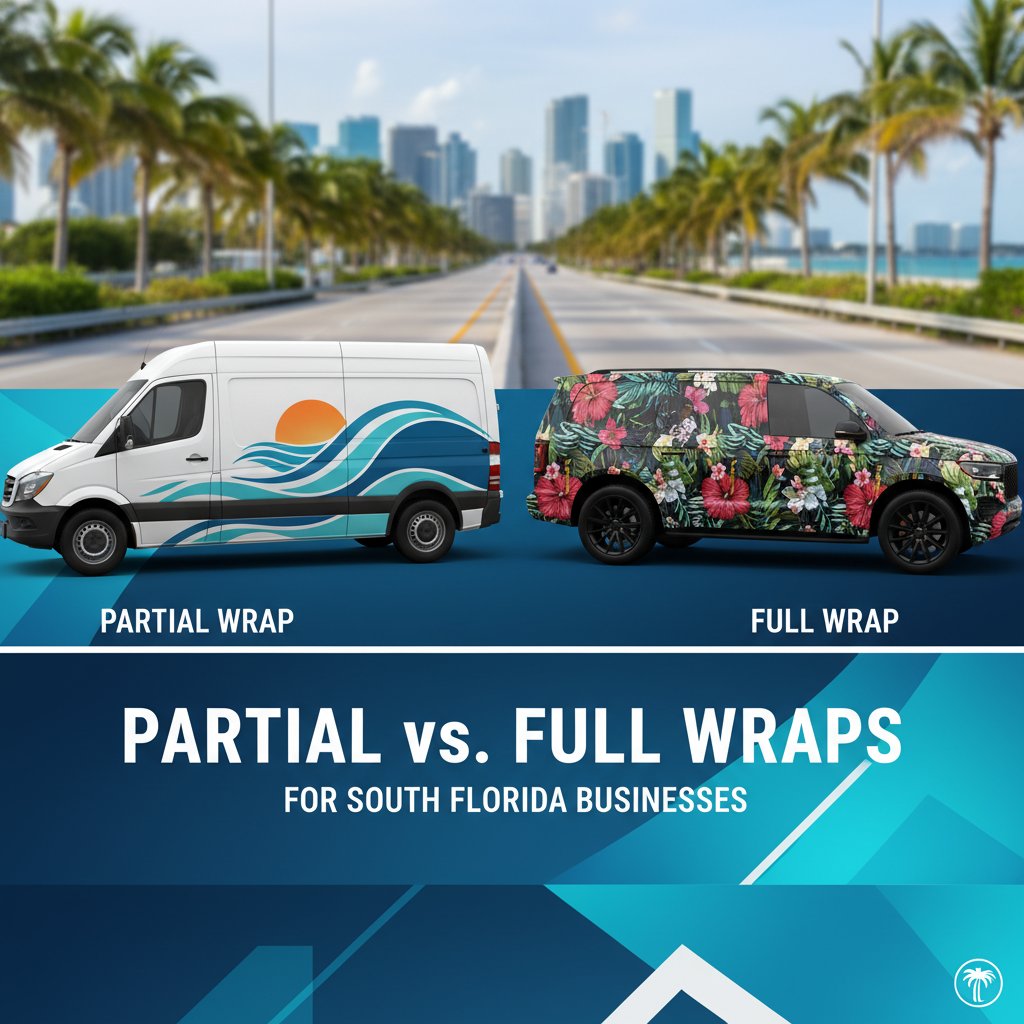
The decision between partial and full vehicle wraps represents one of the most strategic branding choices South Florida business owners face. Both options transform commercial vehicles into mobile billboards, yet each delivers distinct advantages depending on your budget, branding objectives, and fleet requirements. Understanding the technical differences, cost implications, and visual impact of each approach ensures your investment delivers maximum return while withstanding South Florida’s demanding coastal environment.
Understanding Full Vehicle Wraps
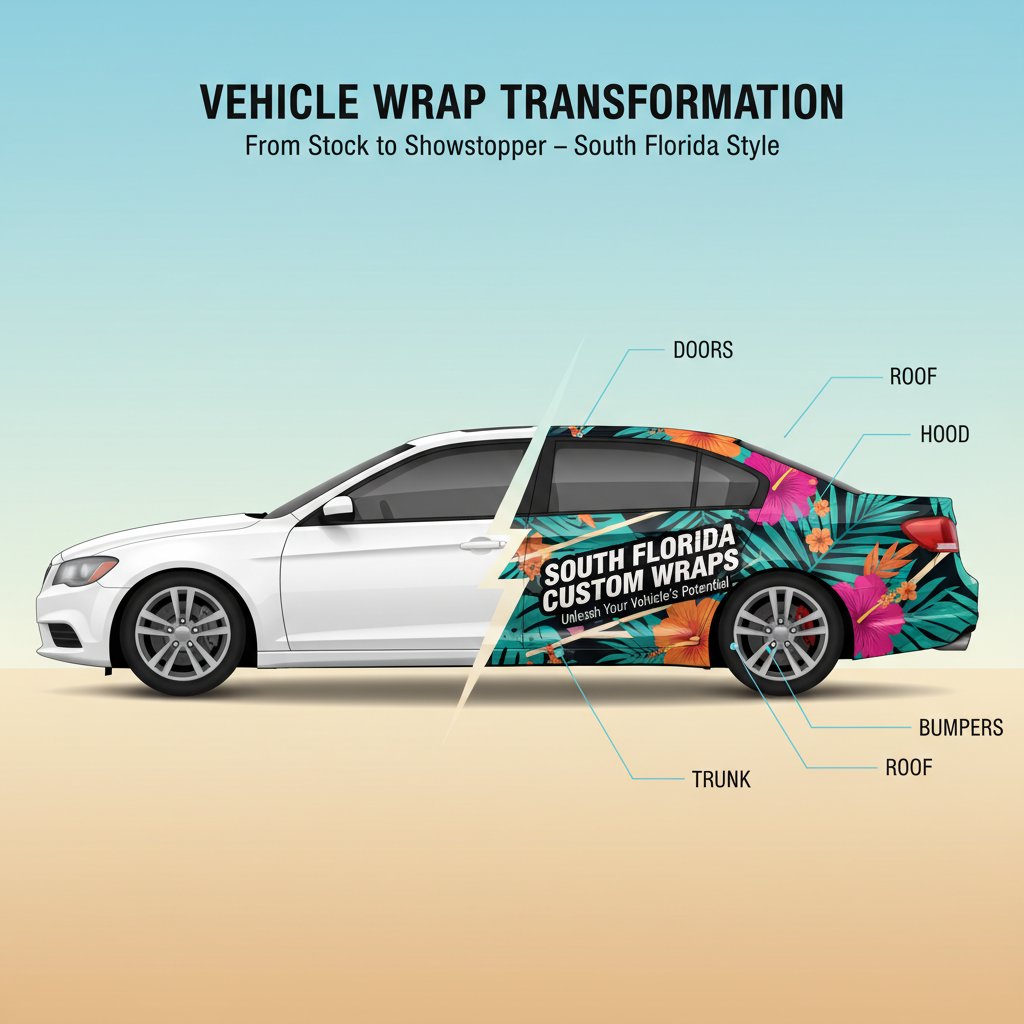
A full vehicle wrap covers every painted surface of your vehicle, including doors, hood, roof, trunk, and bumpers. This comprehensive approach creates a complete canvas for your brand message, transforming the entire vehicle into a cohesive marketing asset. Full wraps utilize premium cast vinyl materials—typically 3M or Avery Dennison products—that conform to complex curves, recessed areas, and body lines with precision.
The installation process for full wraps demands exceptional skill and experience. Professional installers must remove door handles, side mirrors, and trim pieces to wrap edges properly and create seamless transitions. This meticulous approach prevents lifting, ensures longevity, and delivers the flawless finish that distinguishes professional installations from amateur attempts.
For South Florida applications, full wraps offer superior paint protection against UV exposure, salt air, and environmental contaminants. The complete coverage acts as a protective barrier, preserving your vehicle’s original paint while creating maximum visual impact across Miami-Dade, Broward, and Palm Beach counties.
The Partial Wrap Alternative
Partial wraps strategically cover portions of your vehicle—typically the sides, rear, or specific panels—while leaving other sections in their original color or finish. This approach focuses on high-visibility areas that deliver the strongest visual impact during typical viewing angles. Common partial wrap configurations include half wraps, three-quarter wraps, or spot graphics that highlight specific vehicle sections.
The technical execution of partial wraps requires careful planning to create natural-looking transitions between wrapped and unwrapped areas. Experienced designers incorporate the vehicle’s body lines, window edges, and natural breaks to disguise wrap boundaries. When executed properly, partial wraps create a finished appearance that doesn’t look incomplete or budget-driven.
Smart partial wrap designs integrate the vehicle’s existing color into the overall aesthetic. A white vehicle might feature bold graphics that intentionally leave white sections exposed, creating visual breathing room while maintaining brand impact. This strategic approach maximizes coverage efficiency without compromising professional appearance.
Cost Considerations and Budget Reality
Custom car wrap cost varies significantly between partial and full applications. Full wraps for commercial vans or trucks typically require 250-300 square feet of material and 16-24 hours of professional installation time. Partial wraps reduce material usage by 40-60% and cut installation time proportionally, creating substantial budget savings.
However, cost differences extend beyond initial installation. Full wraps provide better long-term value through comprehensive paint protection and potentially longer lifespan since edges remain protected under trim pieces and moldings. Partial wraps may experience more edge wear at exposed transitions, particularly in South Florida’s intense sun and salt environment.
The price differential between options shouldn’t drive your decision in isolation. Consider the total value equation: brand visibility, paint protection, longevity expectations, and marketing impact. A strategic partial wrap often delivers better ROI than a poorly designed full wrap that fails to communicate your message effectively.
Brand Visibility and Marketing Impact
Full wraps dominate visual attention from every angle. Your branded vehicle becomes a 360-degree marketing asset visible from front, rear, and both sides. This omnidirectional presence proves invaluable for businesses operating in high-traffic South Florida corridors where vehicles approach from multiple directions.
Studies consistently show that vehicle wraps generate 30,000-70,000 daily impressions depending on route and location. Full wraps maximize this exposure by ensuring your message remains visible regardless of viewing angle or parking position. Every stoplight, parking lot, and highway merge becomes a branding opportunity.
Partial wraps concentrate your budget on strategic impact zones. Side panels capture the most extended viewing time as other drivers travel alongside your vehicle. Rear graphics dominate attention in stop-and-go traffic where vehicles stack behind yours. Smart partial wrap design focuses resources where they generate maximum impression value.
Industry-Specific Considerations
Service industries like plumbing, HVAC, and electrical contractors often benefit most from full wraps. These businesses park at customer locations for extended periods, where vehicles function as temporary billboards announcing your presence to entire neighborhoods. The 360-degree visibility ensures neighbors see your company name regardless of parking orientation.
Delivery and transportation companies may find partial wraps more practical for large fleets. Wrapping the high-visibility sides and rear of twenty vehicles creates broader market presence than fully wrapping ten vehicles. This fleet multiplication strategy extends brand reach across South Florida’s sprawling geography.
Real estate professionals and luxury service providers often choose full wraps to project premium positioning. The comprehensive coverage signals quality, attention to detail, and substantial business investment—all attributes that resonate with affluent South Florida clientele seeking high-end services.
Material Selection for South Florida Climate
Whether choosing partial or full coverage, material quality proves non-negotiable in South Florida’s brutal environment. Premium cast vinyl from manufacturers like 3M withstands UV exposure, salt air, and temperature extremes that destroy inferior calendared vinyl within months.
3M certification ensures installers understand proper surface preparation, application techniques, and material handling specific to high-performance vinyl. This expertise becomes critical for vehicle wraps miami installations where environmental factors accelerate any installation deficiency. Improper edge sealing or inadequate surface prep leads to premature failure regardless of coverage extent.
Full wraps utilize the same material grade as partial installations—the coverage area doesn’t change material requirements. Both approaches demand professional car wrap installation using premium materials designed for seven-year exterior durability. Attempting to economize through inferior vinyl negates any cost savings when wraps fail prematurely.
Design Strategy for Maximum Impact
Effective vehicle wrap design services approach partial and full wraps with different strategies. Full wraps allow comprehensive storytelling with multiple messages, service listings, and detailed graphics distributed across expansive surface area. This canvas accommodates complex designs without overwhelming viewers.
Partial wraps demand ruthless message discipline. Limited space requires focusing on essential elements: company name, primary service, phone number, and website. The most successful partial designs embrace bold simplicity—strong typography, high-contrast colors, and minimal graphics that register instantly at highway speeds.
Color psychology plays differently across both formats. Full wraps can incorporate multiple brand colors in sophisticated combinations that build recognition gradually. Partial wraps benefit from high-contrast combinations—dark graphics on light vehicles or vice versa—that maximize visibility against South Florida’s bright ambient light.
Installation Complexity and Timeframe
Full wrap installation requires 2-3 days for proper execution on commercial vehicles. Installers must work methodically across all surfaces, ensuring consistent tension, eliminating air pockets, and creating seamless seams where panels meet. Rushing this process compromises quality and longevity regardless of material grade.
Partial wraps typically complete within 1-2 days depending on coverage extent and design complexity. However, reduced installation time doesn’t imply reduced skill requirements. Creating invisible transitions and natural-looking boundaries demands equal expertise to full wraps—the challenge simply concentrates on fewer surfaces.
Vehicle downtime considerations affect fleet operations differently. Full wraps remove vehicles from service longer but deliver comprehensive coverage in single appointments. Partial wraps minimize individual vehicle downtime, potentially allowing faster fleet completion when scheduling multiple vehicles sequentially.
Maintenance and Longevity Factors
Both partial and full wraps require regular maintenance for optimal longevity in South Florida conditions. Hand washing with pH-neutral soap, avoiding automated car washes, and parking in shade when possible extends wrap life regardless of coverage extent. The coastal environment demands extra vigilance—salt accumulation accelerates vinyl degradation if left unaddressed.
Full wraps provide superior edge protection since most perimeters tuck under trim pieces and moldings. This configuration shields vulnerable edges from direct environmental exposure and physical contact. Partial wraps expose more edges to elements, requiring careful monitoring for lifting or peeling at transition points.
Professional installations using 3M-certified techniques achieve 5-7 year lifespan expectations for both full and partial applications. The determining factors involve material quality, installation expertise, and maintenance consistency rather than coverage extent. Budget installations using inferior materials or improper techniques fail within 1-2 years regardless of whether they cover half or all of your vehicle.
Making Your Strategic Decision
Choose full wraps when comprehensive paint protection, maximum brand visibility, and premium positioning align with your business objectives. This approach suits service businesses parking at customer locations, luxury brands projecting quality through complete customization, and companies seeking maximum impression generation per vehicle.
Select partial wraps when fleet size multiplication matters more than individual vehicle coverage, when strategic high-impact areas deliver sufficient brand exposure, or when vehicle aesthetics intentionally incorporate existing paint color into design strategy. This option excels for delivery fleets, businesses with consistent route patterns maximizing side-panel visibility, and brands with simple, bold messages requiring limited space.
The wrong choice isn’t partial versus full—it’s compromising on materials, installation quality, or design strategy to meet artificial budget constraints. A professionally installed partial wrap using premium materials always outperforms a poorly executed full wrap using inferior vinyl. Quality and craftsmanship transcend coverage decisions.
Professional Consultation Makes the Difference
Evaluating your specific vehicle types, brand objectives, budget parameters, and operational requirements demands expertise that only experienced wrap professionals provide. The right choice depends on factors unique to your business—factors that become clear through professional consultation rather than generic online advice.
South Florida car graphics professionals understand local environmental challenges, typical viewing angles on regional highways, and design approaches that resonate with diverse South Florida demographics. This localized expertise ensures your investment—whether partial or full—delivers maximum return through strategic planning rather than default assumptions.
Quality-focused car wrap services florida providers assess your complete situation before recommending solutions. They consider your competitive landscape, target audience, fleet composition, and growth trajectory to develop comprehensive strategies that extend beyond single-vehicle decisions into fleet-wide branding systems.
The choice between partial and full vehicle wraps represents a strategic investment in your brand’s mobile presence across South Florida’s competitive markets. Whether you maximize coverage or concentrate impact strategically, professional materials, expert installation, and thoughtful design separate temporary vehicle decoration from lasting marketing assets that generate returns for years. Contact experienced wrap professionals who prioritize your success over quick sales, understand South Florida’s unique environmental demands, and deliver the craftsmanship that transforms vehicles into powerful brand ambassadors worthy of representing your business throughout Miami, Fort Lauderdale, West Palm Beach, and beyond.
