
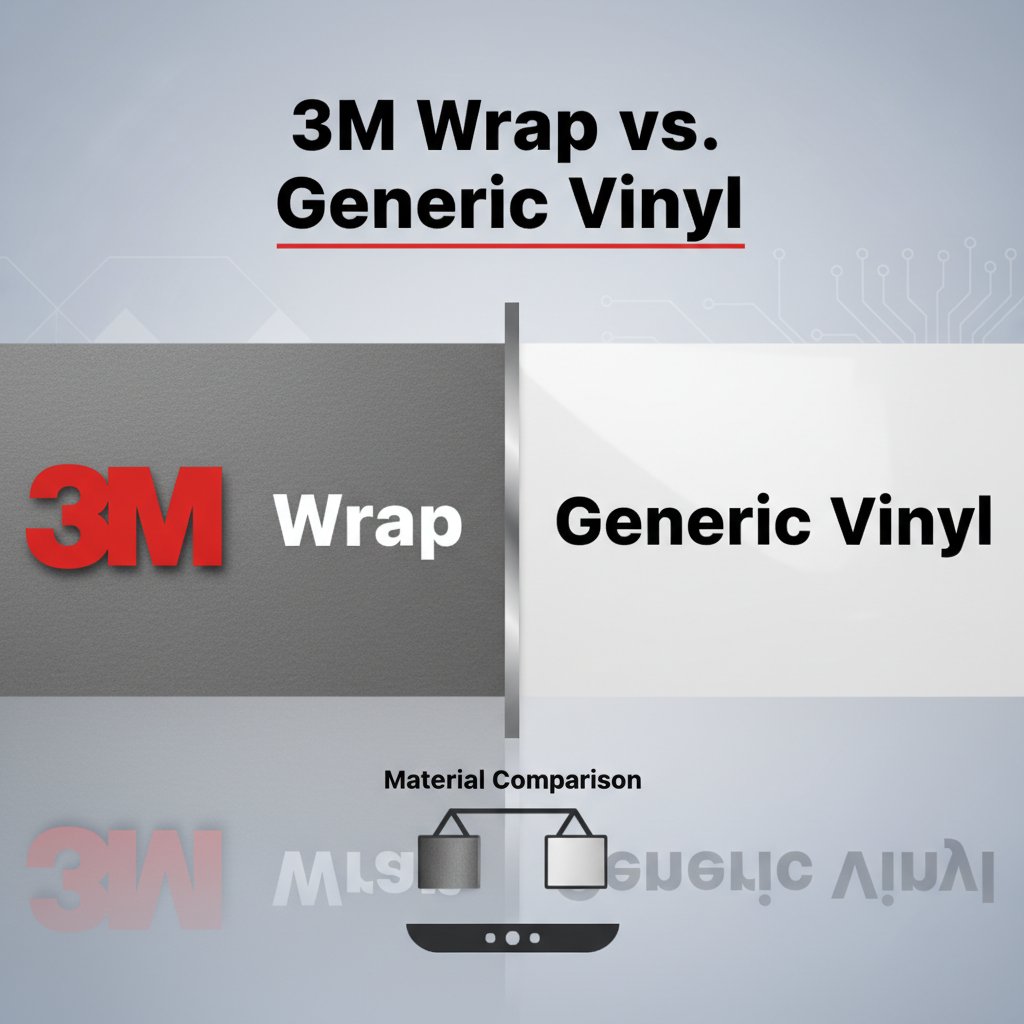
The vinyl wrap market spans from $200 budget specials to $6,000 premium installations, and the material quality explains most of that price difference. When business owners research wrap options for their South Florida fleets or luxury car enthusiasts consider customizing their vehicles, they encounter vastly different material grades that perform dramatically differently under real-world conditions. Understanding these differences prevents costly mistakes and premature failures.
Material Engineering: What Separates Premium From Budget
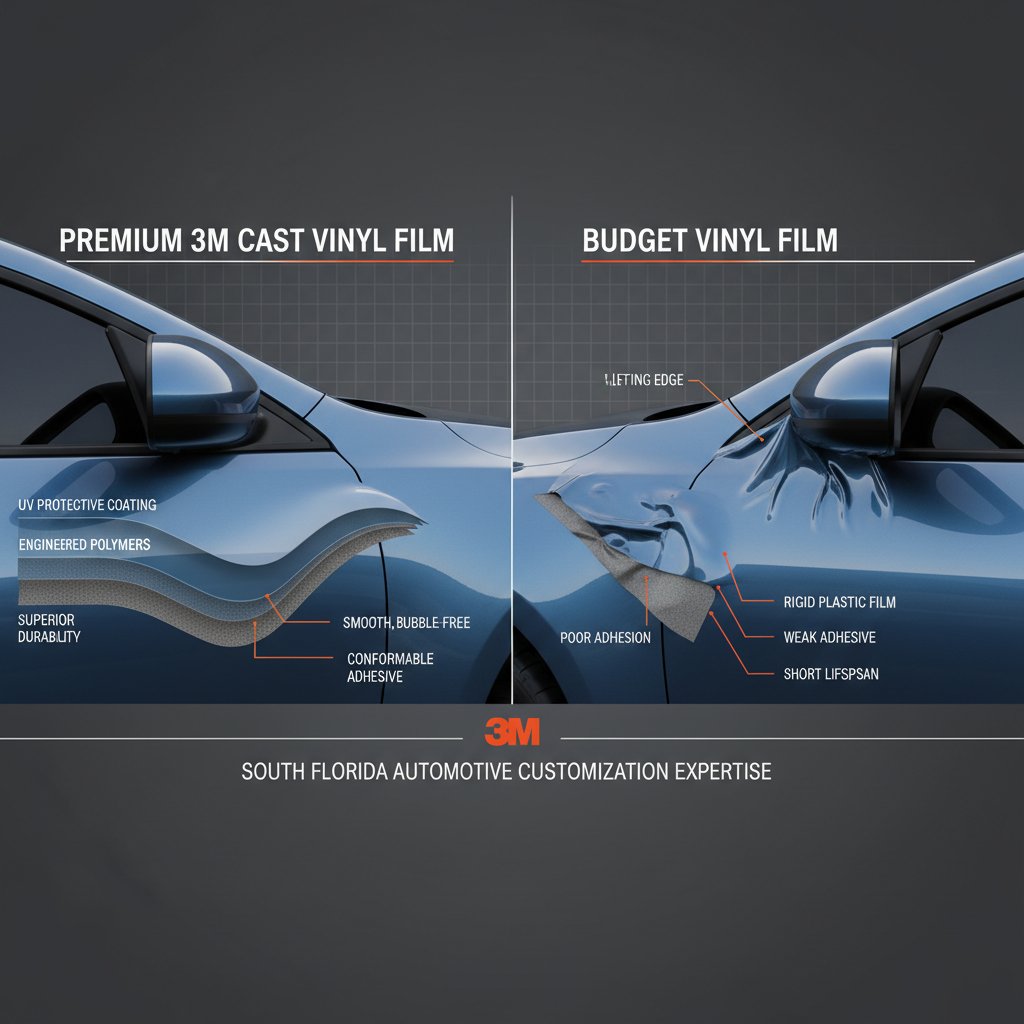
3M pioneered vehicle wrapping with engineered cast vinyl films designed specifically for automotive applications. These materials undergo rigorous development addressing dimensional stability, UV resistance, adhesive chemistry, and conformability around complex curves. Generic vinyl manufacturers often repurpose materials originally designed for signage or architectural applications, applying them to vehicle wrapping without the specialized engineering required.
Cast vinyl manufacturing creates superior materials. The process involves mixing liquid vinyl components, casting them onto a moving web, and processing them through ovens where solvents evaporate. This produces thin, stable films with molecular structures that resist shrinkage. Premium 3M vinyl wraps Florida installers use exclusively cast materials because they maintain dimensional stability across temperature fluctuations common in South Florida’s climate.
Calendered vinyl takes a different approach. Manufacturers force semi-liquid vinyl through rollers that squeeze it into sheets. This mechanical process creates internal stresses within the material. Calendered films cost less to produce but exhibit higher shrinkage rates, reduced conformability, and shorter outdoor durability. Most generic vinyl falls into this category.
Film Thickness and Consistency
Premium cast films measure between 2.0 and 2.5 mils thick with consistent thickness across entire rolls. This uniformity ensures predictable installation behavior and appearance. Generic materials often vary in thickness, creating visible inconsistencies after installation and complicating the application process.
Thicker doesn’t mean better in wrap materials. Some budget manufacturers produce 3-4 mil calendered films and market thickness as a quality indicator. However, thicker calendered vinyl proves harder to conform around curves and rivets, increasing installation difficulty while offering no durability advantages over properly engineered cast films.
Adhesive Technology: The Hidden Performance Factor
Adhesive chemistry determines whether a wrap survives or fails in demanding conditions. 3M ControlTac wraps feature proprietary adhesive systems engineered for repositionability during installation and secure bonding after application. The air-release channels allow installers to achieve bubble-free results on large panels, critical for professional results on commercial fleets.
Premium adhesives must balance competing requirements. They need initial tack for positioning, air egress channels for bubble elimination, strong final adhesion for durability, and clean removal without residue after years of service. This balancing act requires sophisticated chemistry that generic manufacturers rarely match.
Generic vinyl adhesives often perform adequately in ideal conditions but fail when stressed. High heat causes edge lifting. Salt air exposure, relevant for South Florida boat wraps and coastal vehicle storage, accelerates adhesive degradation in budget materials. Temperature cycling between air-conditioned garages and midday sun creates expansion-contraction cycles that inferior adhesives cannot withstand long-term.
Conformability Around Complex Curves
Vehicle surfaces present challenging three-dimensional curves, deep recesses, and compound angles. Premium cast vinyl with advanced adhesive systems conforms to these surfaces without bridging, tunneling, or leaving voids where moisture penetrates. The 3M car wraps South Florida professionals install demonstrate this conformability on exotic car body lines and commercial van corrugations alike.
Generic materials often bridge across recessed areas or refuse to conform around tight curves without excessive heat application. Overheating during installation can damage budget vinyl, causing discoloration or adhesive failure. Installers face a catch-22: insufficient heat prevents proper adhesion while excessive heat damages the material.
Outdoor Durability and UV Resistance
South Florida’s intense UV exposure reveals material quality differences quickly. Premium 3M wrap materials Florida include UV stabilizers throughout the film structure and in protective clear coats. These additives absorb and dissipate UV energy that would otherwise break down vinyl polymers and fade pigments.
3M warranties reflect confidence in outdoor durability. Their premium films carry warranties up to seven years for vertical exposure, with specific ratings for horizontal surfaces like hoods and roofs that receive maximum UV exposure. These warranties cover color stability, gloss retention, and film integrity when properly maintained.
Generic vinyl warranties, when offered, typically cover one to two years and include numerous exclusions. Many budget materials show visible fading within 18 months under Florida sun. Color shifts, chalking, and loss of gloss signal polymer degradation that accelerates toward complete failure.
Weather Resistance Beyond UV
South Florida weather includes intense heat, sudden thunderstorms, high humidity, and salt air near coastal areas. Premium materials resist all these environmental stressors through comprehensive engineering. Heat resistance prevents softening and distortion. Water resistance protects edges and seams from moisture infiltration. Salt air resistance matters critically for marine applications and vehicles stored near beaches.
Generic materials typically address only basic water resistance. They lack the comprehensive environmental protection that premium films provide, leading to premature failure in demanding South Florida conditions.
Color Consistency and Finish Quality
Professional custom vinyl car wraps require color consistency between rolls and consistent finish quality. 3M maintains tight color tolerances across production batches. A business wrapping a 20-vehicle fleet can confidently order materials over several months knowing the color will match precisely.
Generic manufacturers show greater color variation between production runs. Fleet managers discover this problem when expanding wrapped vehicle counts months after initial installations. The “same” color looks noticeably different, creating unprofessional appearance inconsistencies.
Finish quality separates premium from budget materials. Gloss films should exhibit deep, mirror-like reflections. Matte finishes require sophisticated formulation to achieve even sheen without fingerprint visibility or streaking. Specialty finishes like brushed metal, chrome, or color-flip options demand advanced manufacturing capabilities. Generic manufacturers attempting specialty finishes often produce inconsistent results with premature degradation.
Installation Experience and Efficiency
Material quality directly impacts installation efficiency and final results. Premium films allow installers to work faster with better outcomes. Repositionability lets professionals adjust placement without adhesive building up. Air release technology eliminates bubbles without excessive squeegee pressure that might stretch material. Memory properties allow film to return to original shape if accidentally stretched during application.
Generic vinyl fights installers throughout the process. Poor repositionability means incorrect placement requires removing and discarding material. Lack of air release channels requires meticulous squeegee work, increasing labor time. Excessive memory causes film to pull back from edges. Insufficient memory means stretched areas remain distorted permanently.
Installation time differences accumulate significantly across full vehicle wraps. A professional car wrap installation using premium materials might require 16-20 hours for a complete color change on a sedan. The same vehicle with generic materials could require 25-30 hours as installers fight material limitations, assuming acceptable results are achievable at all.
Removal Characteristics and Surface Protection
Premium wraps protect original paint during their service life and remove cleanly afterward. High-quality adhesives release from properly prepared surfaces without leaving residue or causing paint damage. This clean removal proves essential for leased vehicles, fleet vehicles returning to service with different branding, or personal vehicles where owners want to change colors.
Generic vinyl removal often creates problems. Adhesive residue requires additional labor and solvents for removal. In worst cases, inferior adhesives bond too aggressively to paint, causing clear coat damage during removal. Some budget materials become brittle after UV exposure, breaking into small pieces during removal rather than peeling off in sheets.
Paint Protection Value
Beyond appearance customization, quality wraps provide paint protection against stone chips, light scratches, and UV fading. Premium films offer this protection effectively throughout their rated lifespan. Generic materials may protect initially but deteriorate to the point where the wrap itself damages paint through adhesive degradation or trapped moisture.
Total Cost of Ownership Analysis
Initial price differences between premium and generic wraps seem significant. A full vehicle wrap with 3M materials might cost $3,500-$6,000 depending on vehicle size and complexity, while generic alternatives quote $2,000-$3,000. However, total cost of ownership tells a different story.
Premium wraps lasting 5-7 years with maintained appearance provide value throughout their lifespan. Business fleet wraps generate brand exposure daily. Personal vehicle wraps maintain resale value through paint protection. Marine wraps survive harsh saltwater environments without premature failure.
Generic wraps failing after 18-24 months require replacement twice as frequently. If budget materials last half as long, they cost more over equivalent timeframes despite lower initial prices. Failed wraps also carry hidden costs: damaged paint requiring correction, business reputation harm from deteriorated fleet graphics, or emergency replacements for special events when wraps fail prematurely.
Certification and Installer Expertise
3M Preferred Installer certification requires extensive training and proven competency. Certified installers understand material properties, proper surface preparation, application techniques, and post-installation care. This expertise ensures materials perform to their full potential. The certification also provides access to technical support and warranty backing.
Generic material installers often lack formal training or certification programs. Without manufacturer support and standardized training, installation quality varies dramatically between providers. Some possess excellent skills developed through experience, while others produce substandard results that reflect poorly on the wrapping industry.
Making the Right Material Choice
Material selection should align with project requirements and performance expectations. Commercial fleets generating daily brand exposure justify premium materials through extended lifespan and professional appearance retention. Luxury vehicle owners demand quality matching their investment. Marine applications require materials specifically rated for saltwater exposure.
Generic materials might suit extremely short-term applications like weekend event vehicles or temporary promotional wraps with planned removal after weeks rather than years. However, even these applications benefit from premium materials’ installation characteristics and removal properties.
South Florida’s demanding environment amplifies material quality differences. The same generic wrap performing adequately in temperate climates fails rapidly under intense UV exposure, heat, humidity, and salt air. Regional considerations make premium materials even more important in this market.
Get Professional Material Guidance
Understanding material differences provides the foundation for smart wrap investments. However, seeing and feeling material samples, discussing specific application requirements, and learning about proper maintenance creates confidence in your decision. Professional wrap specialists help match materials to intended uses, ensuring your investment delivers expected performance and longevity. Contact experienced installers who work with premium 3M vinyl wraps Florida to discuss your project and experience material quality differences firsthand.
