
Not all vinyl is created equal—and in South Florida, the difference between 3M-certified wrap film and generic vinyl isn’t just a matter of brand preference. It’s the difference between a wrap that holds up through years of intense UV exposure, salt air, and humidity, and one that starts lifting at the edges before the first rainy season is over.
If you’re a business owner evaluating commercial fleet branding, an exotic car enthusiast considering a color change, or a boat owner looking for marine-grade solutions, understanding this distinction will save you from costly mistakes. This guide breaks down exactly what separates professional-grade 3M wrap film from generic alternatives, and why that separation matters so much in our specific climate.
What “Generic Vinyl” Actually Means
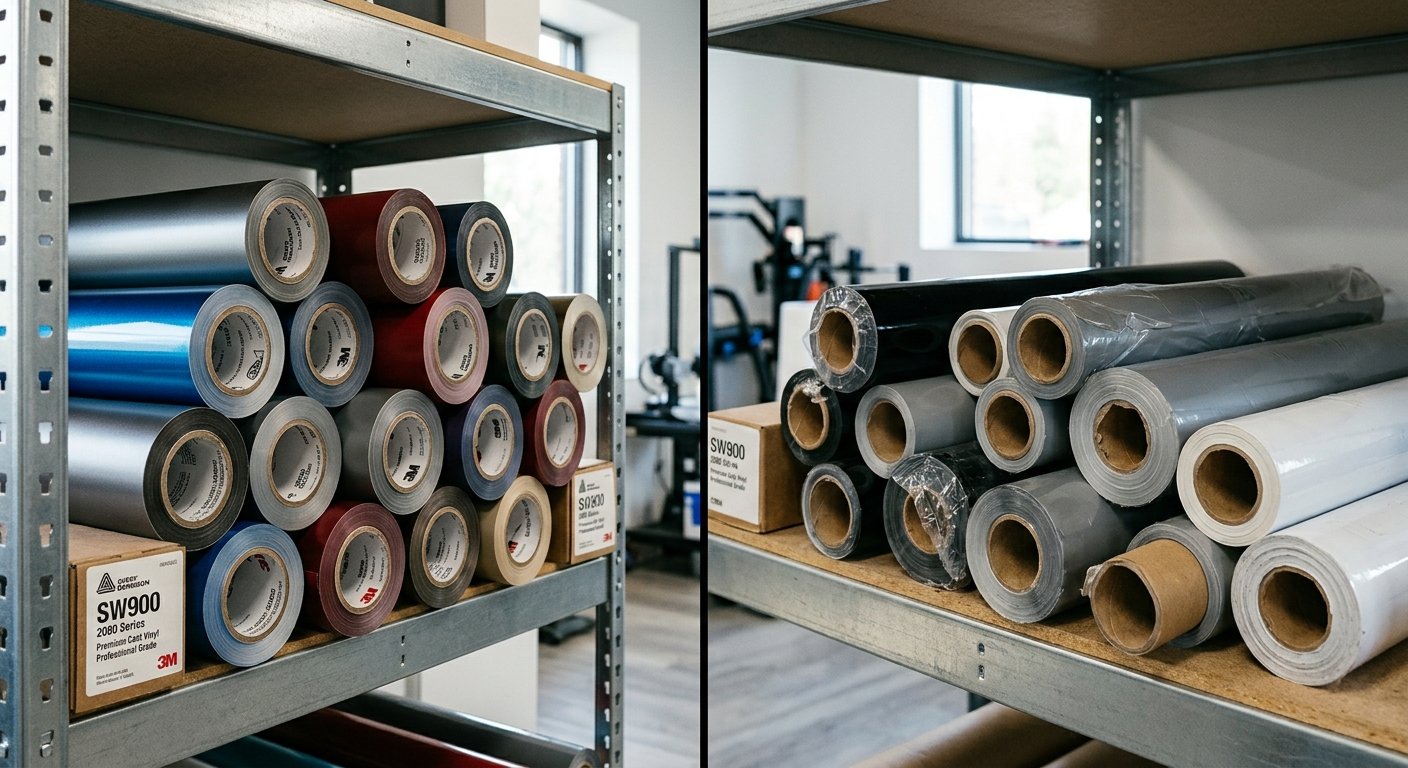
The vinyl wrap market has expanded rapidly over the past decade, and with that growth has come a flood of lower-cost films from manufacturers with limited track records. “Generic vinyl” doesn’t necessarily mean a product sold under a suspicious brand name—it describes any wrap film not manufactured to the exacting standards of established leaders like 3M, and not supported by documented performance data, material consistency guarantees, or professional warranty programs.
These films are often produced offshore, sold through distributors with little technical support, and marketed primarily on price. They may look similar in a sample swatch, but their performance characteristics—adhesive chemistry, UV inhibitors, conformability, and dimensional stability—frequently fall short of commercial-grade standards.
The installers using these films aren’t always cutting corners knowingly. Sometimes the cost pressure of a competitive bid drives the material selection. But the vehicle owner, fleet manager, or boat owner pays the price later.
The 3M Advantage: Science, Not Just Branding
3M’s wrap films—primarily the Scotchprint series and the ControlTac lineup—are engineered products backed by decades of materials science research. According to 3M’s own product performance documentation, their wrap films undergo rigorous testing for UV resistance, adhesive strength, dimensional stability, and color retention under accelerated weathering conditions.
What does that mean practically? Consider a few specific advantages:
- 3M ControlTac Adhesive Technology: The microscopic air-channel adhesive used in ControlTac films allows for repositionable installation, dramatically reducing the risk of bubbles and misalignment. This matters enormously on complex curves and compound surfaces.
- UV-Stabilized Pigmentation: 3M’s films use pigments that are chemically engineered to resist the degradation caused by UV radiation—a major consideration when vehicles are parked outdoors in South Florida daily.
- Consistent Cast Film Construction: Cast films hold their dimensional stability over time, meaning they conform to curves without memory tension pulling edges away from the substrate. Generic calendered films often lack this characteristic.
- Documented Warranty Programs: 3M Scotchprint wrap films come with manufacturer-backed warranties—real ones with documented terms, not verbal assurances from a distributor.
These aren’t marketing talking points. They’re engineering specifications that directly affect how a wrap performs on a fleet vehicle sitting in the Miami sun or a center console boat docked in salt air.
South Florida’s Unique Demands on Wrap Film
The South Florida environment is among the most challenging on the continent for any exterior coating or graphic material. The combination of high UV index, coastal salt air, high ambient humidity, and frequent rain followed by intense heat creates stress conditions that expose the weaknesses in lower-quality materials quickly.
UV degradation is the most visible failure mode. Generic vinyl films with inadequate UV inhibitors will begin chalking, fading, or developing a hazy surface appearance within 12 to 18 months under typical South Florida sun exposure. The color shift is often uneven, meaning one panel looks noticeably different from another—exactly what you don’t want on a branded fleet vehicle or a luxury color-change wrap.
Salt air affects adhesive chemistry. In marine and coastal environments, wrap films are exposed to salt-laden moisture that can penetrate edge seals and accelerate adhesive failure on films not formulated for this exposure. For clients with boat wraps, this is especially critical—the difference between a marine-grade wrap film and a generic alternative can mean the difference between a wrap that lasts three seasons and one that begins delaminating after the first.
Thermal cycling—the daily expansion and contraction of a vehicle’s substrate as it heats up and cools down—also stresses adhesive bonds. Films with low-quality adhesives will develop edge lifting at panel joints and around trim pieces as this cycling continues.
What 3M Certified Installation Actually Means
Using 3M film is only half the equation. The material performs to its rated specifications only when installed by a trained professional who understands the correct surface preparation, application temperatures, heat activation protocols, and edge sealing techniques.
A 3M Certified Wrap Installer has completed documented training through 3M’s authorized program, demonstrating proficiency with the full range of 3M wrap films and installation methodologies. This certification matters because improper installation—even with premium film—can produce premature failures that look identical to material failures. Bubbles, lifting edges, and stretch distortion are often installation errors, not film defects.
The Professional Decal Application Alliance (PDAA) also maintains certification standards for the professional graphics installation industry, reflecting the industry-wide recognition that installer skill is inseparable from material performance.
At Florida Car Wrap, Steve Hargittai brings both 3M Certified Installation credentials and competition-proven craftsmanship to every project. The same standards that earn recognition in competitive wrap installations are applied to commercial fleet work and custom car wraps alike. For clients considering custom car wraps, this level of technical precision is what separates a show-quality result from a mediocre one.
The Real Cost Calculation
The price difference between a 3M Scotchprint wrap and a generic vinyl wrap can appear significant on an initial quote. But the calculation changes substantially when you factor in longevity and replacement costs.
A professionally installed 3M wrap on a commercial fleet vehicle, maintained properly, can deliver five to seven years of performance in South Florida conditions. A generic vinyl wrap on the same vehicle might require replacement in two to three years—and that replacement involves labor, downtime, and the cost of removing the failed wrap before the new one can be applied.
For a fleet of ten vehicles, that replacement cycle math becomes significant quickly. For a single luxury vehicle where the wrap is part of a premium customization, a premature failure is both financially frustrating and aesthetically damaging. The value of the 3M warranty program—an actual manufacturer warranty, not just an installer’s promise—provides documented protection that generic films simply cannot offer.
Fleet managers and business owners researching commercial fleet wraps should request specific material specifications from any wrap provider, not just pricing. Ask for the film manufacturer, the product line, and the warranty documentation. A professional installer will provide this without hesitation.
Frequently Asked Questions
What is the difference between 3M ControlTac and 3M Scotchprint?
3M Scotchprint is the broader brand umbrella covering 3M’s graphics and wrap film products for commercial and vehicle applications. ControlTac refers specifically to 3M’s proprietary adhesive technology—the microscopic air-channel system that allows repositionable application and reduces the risk of installation bubbles. Many Scotchprint wrap films incorporate ControlTac adhesive as part of their construction.
How long do 3M wraps last in South Florida?
With proper surface preparation, professional installation, and reasonable maintenance, 3M Scotchprint wrap films can deliver five to seven years of performance in South Florida’s demanding climate. Variables include how often the vehicle is parked in direct sun, whether it’s garaged, and how regularly the wrap is cleaned. Marine applications may have shorter expected lifespans depending on exposure conditions.
Does a 3M wrap warranty cover installation issues or just the film?
3M’s manufacturer warranty covers film defects—issues with the material itself such as cracking, delamination, or color failure under normal use. Installation-related issues fall under the installer’s workmanship warranty. This is why choosing a 3M Certified Wrap Installer matters: a certified installer has the training to minimize installation errors and typically stands behind their workmanship separately.
Can generic vinyl wraps look as good as 3M wraps initially?
Yes—at installation, a generic vinyl wrap can appear visually similar to a 3M wrap. The differences become evident over time, as UV exposure, thermal cycling, and humidity reveal the limitations of lower-quality pigmentation, adhesives, and cast film construction. Initial appearance is not a reliable indicator of long-term performance.
Is 3M film the only professional-grade wrap option?
3M is among the most recognized and widely certified professional wrap film manufacturers, but the professional-grade category also includes other established brands with documented performance data and warranty programs. The key is using a film from a manufacturer with proven specifications, professional installer support, and a real warranty—not simply the lowest-cost option available.
Making the Right Choice for Your Project
Whether you’re branding a commercial fleet, transforming a luxury vehicle, or protecting a boat, the material and installer you choose determine the outcome—not just on day one, but over years of South Florida exposure. The technical gap between 3M-certified wrap films and generic alternatives is real, measurable, and ultimately visible in how your investment ages.
Florida Car Wrap brings 3M Certified Installation expertise and award-winning craftsmanship to every project in South Florida. If you want a wrap that’s built to last in this climate, reach out to discuss your project. The right conversation starts with understanding what you’re actually getting—and what you deserve.
