
A professionally installed marine wrap represents a serious investment—one that transforms your vessel’s appearance, protects the underlying gelcoat, and communicates your brand or personal style every time you hit the water. But here’s a reality that not every boat wrap company in Florida will tell you upfront: even the highest-quality 3M marine-grade vinyl requires consistent care to reach its full lifespan potential. In South Florida’s uniquely aggressive environment—relentless UV radiation, salt air, and near-daily heat cycling—the difference between a wrap that looks great for seven years and one that degrades in three often comes down to maintenance habits, not just installation quality.
This guide covers what actually works in 2026, drawing on current best practices for marine vehicle wrapping and reflecting the real-world conditions that South Florida boaters face every season.
Why Marine Wrap Maintenance Is Different
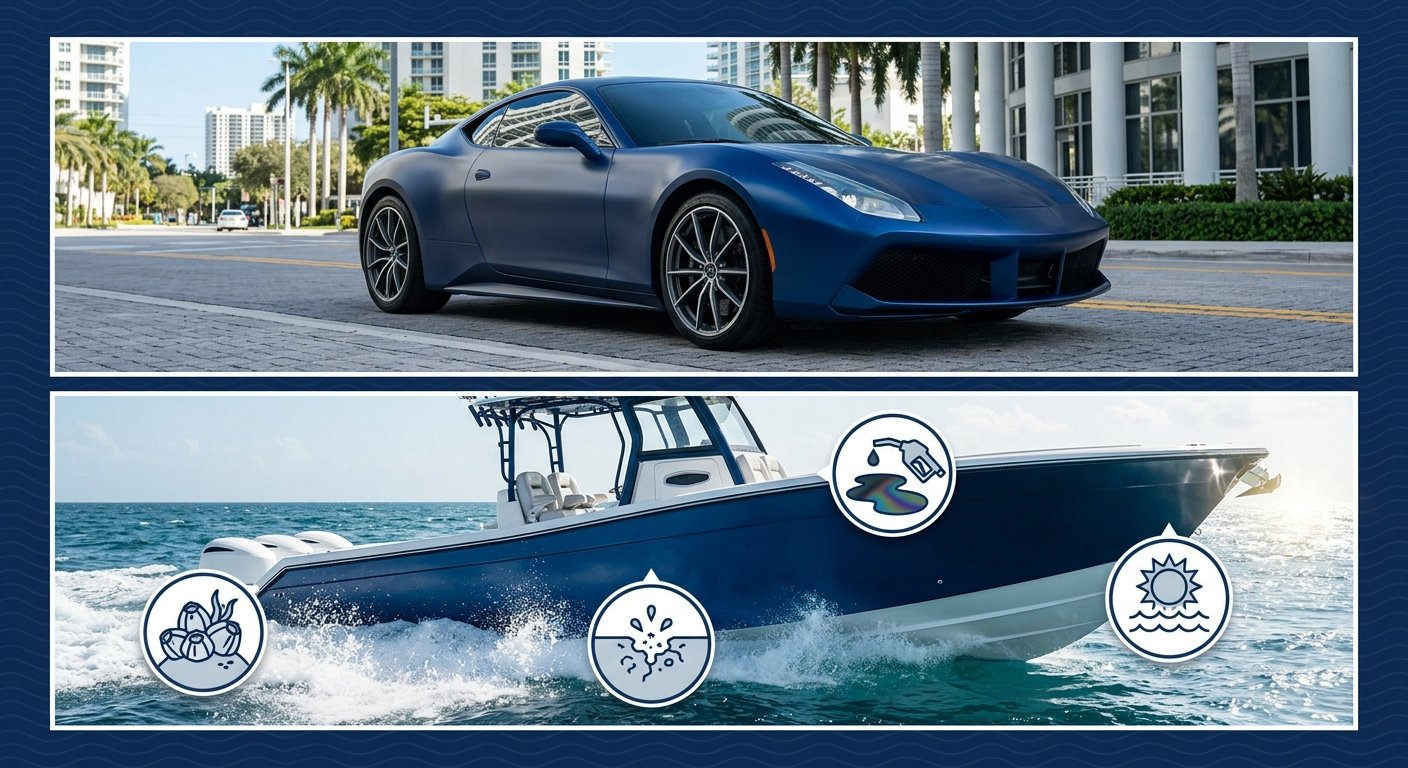
Caring for watercraft vehicle graphics is fundamentally different from maintaining a wrapped car or commercial vehicle. The marine environment is uniquely punishing. Salt air is corrosive. Fuel and oil contact the hull. Biological growth like algae and barnacles can begin adhering to surfaces faster than most boat owners expect. Add South Florida’s UV index—regularly among the highest in the continental United States—and you have a material science challenge that requires thoughtful responses.
According to the EPA’s UV Index resources, sustained UV exposure is one of the primary environmental stressors degrading outdoor materials. For marine wraps, this means the laminate layer protecting the printed ink face or the colored cast vinyl is working hard every hour the vessel sits in the sun. That work has a limit, and maintenance practices directly extend it.
Understanding this context is the foundation of good wrap care. You’re not just cleaning a surface—you’re managing a multi-layer protective system.
Rinse Frequency: The Underrated First Line of Defense
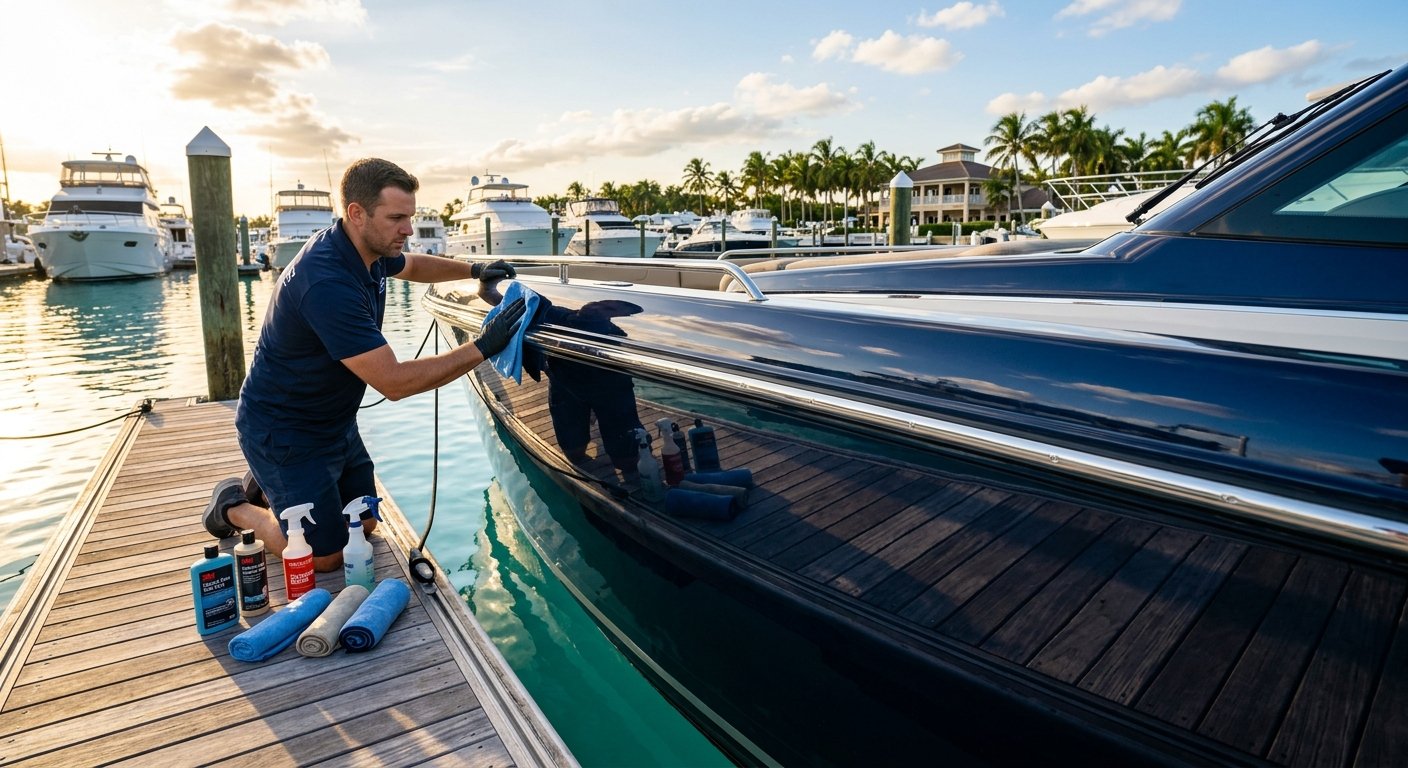
Ask any experienced boat car wrap installer what single habit most extends wrap life, and the answer is almost always the same: rinse thoroughly after every outing. Salt crystals are abrasive and hygroscopic—they draw moisture and expand. Left on a wrap surface, they accelerate edge lifting, dull the film’s finish, and can eventually compromise adhesion in vulnerable areas like seams, rivets, and panel edges.
The rinse protocol is straightforward but must be done correctly:
- Use fresh water only—never recycled or brackish water
- Apply low pressure; high-pressure washing can force water under wrap edges
- Rinse from top to bottom, allowing water to carry salt deposits downward and off
- Pay particular attention to hardware contact points, trim lines, and any area where the wrap meets a hard edge
- Allow the surface to air dry or use a clean microfiber towel—never a rough chamois
This fifteen-minute routine after every use is genuinely more protective than an occasional deep clean. Consistency matters more than intensity.
Choosing the Right Cleaning Products
Not all cleaning products are appropriate for marine wraps. This is an area where well-intentioned boat owners often cause unintentional damage. Petroleum-based cleaners, solvent-heavy compounds, and abrasive polishes can strip laminate coatings, dull cast vinyl finishes, and accelerate oxidation of the underlying layers.
For routine cleaning, the best approach is a pH-neutral, non-abrasive marine wash diluted in water. Products specifically formulated for vinyl graphics are ideal. Avoid anything containing:
- Acetone or ketone-based solvents
- Alcohol concentrations above 30%
- Citrus degreasers (effective on grease but harsh on vinyl laminates)
- Abrasive wax compounds not rated for vinyl surfaces
For fuel and oil contamination—common on hull wraps near outboard mounts—a small amount of isopropyl alcohol (under 30% concentration) on a microfiber cloth applied to the affected area is generally safe for most 3M marine films. Always test on an inconspicuous area first, and apply with light pressure rather than scrubbing.
UV Protection: Proactive Rather Than Reactive
Once a wrap shows UV degradation, the process cannot be fully reversed. The goal is prevention, and South Florida boaters need to take this more seriously than owners in less sun-intense markets.
Several strategies work well together:
Vinyl-Compatible Sealants
A non-wax, vinyl-safe sealant applied quarterly creates a sacrificial barrier between UV radiation and the wrap surface. These products are not traditional boat waxes—they’re typically polymer-based sealants that bond to the vinyl’s surface texture. They enhance gloss, repel water, and provide meaningful UV attenuation without the silicone or petroleum content that degrades vinyl over time.
Shade and Storage
When the vessel is not in use, covered storage is the single most effective UV protection strategy available. A marine cover, enclosed slip, or boat house dramatically reduces cumulative UV exposure. For boats stored outdoors, UV-blocking covers that fit over the hull portion—not just the deck—extend wrap life significantly.
Ceramic Coating Compatibility
Professional ceramic coatings formulated for vinyl are increasingly popular and genuinely effective in marine environments. When applied by a certified installer over a properly prepared wrap surface, ceramic coatings provide hydrophobic protection, reduce the adhesion of marine growth, and add measurable UV resistance. This is a professional service—not a consumer-grade spray product—and the distinction matters in terms of longevity and performance.
Biological Growth and Antifouling Considerations
Below the waterline presents a unique challenge for marine vehicle wrapping. Traditional antifouling paints rely on biocides that are chemically incompatible with vinyl wraps. This means below-waterline wrap applications require specific product selection and a clear understanding of their limitations.
The BoatUS Foundation’s guidance on antifouling systems offers useful context on how different approaches interact with hull materials. For wrapped vessels, the most practical current strategy involves:
- Selecting marine-grade wrap films specifically rated for below-waterline exposure
- Hauling and inspecting the hull at regular intervals—at minimum annually in South Florida waters
- Removing biological growth with soft brushes and appropriate biological cleaners before it hardens and requires scraping
- Avoiding metal scrapers or abrasive pads that will damage the wrap surface
For most recreational and sport fishing vessels where the wrap ends at or above the waterline, these concerns are manageable with standard maintenance. It becomes more complex on full-hull wraps on larger vessels, which is why professional consultation before installation is essential.
Inspecting for Early Damage
Regular visual inspection is a maintenance practice that’s easy to skip but critically important. Catching edge lifting, micro-cracking at flex points, or delamination early allows for targeted repairs before a small issue becomes a full panel replacement.
Inspect quarterly, or more frequently if the vessel sees heavy use. Look carefully at:
- All seams and panel edges, particularly at the bow and stern where flex stress is highest
- Areas around hardware penetrations—cleats, navigation lights, drain fittings
- Any area that regularly contacts dock lines, fenders, or other abrasive contact
- Transition points between above and below waterline film if applicable
When you find a lifted edge, the correct response is professional attention—not consumer adhesive products. Using the wrong adhesive under a lifted wrap edge traps contamination, makes future repair harder, and often worsens the outcome.
When to Call a Professional
Marine wrap maintenance is largely an owner responsibility, but there are moments when professional involvement is not optional—it’s protective. Significant edge lifting, bubbling across a panel, color fading inconsistent with the wrap’s age, or physical damage from dock contact or debris all warrant a professional assessment.
Working with an experienced boat car wrap installer means access to the correct materials for spot repairs, proper surface preparation protocols, and the judgment to distinguish between a repairable issue and one that signals broader adhesion failure. If you’re in South Florida and working with a 3M Certified installation professional, that relationship should extend beyond the initial install into the life of the wrap.
Our boat wraps page covers the full scope of what marine-grade installation involves, including material selection for South Florida’s specific conditions.
Frequently Asked Questions
How often should I wash my boat wrap?
Rinse with fresh water after every outing to remove salt and debris. A full wash with vinyl-safe cleaner should be done every two to four weeks depending on use frequency. Quarterly, apply a vinyl-compatible polymer sealant for UV and water protection.
Can I use a pressure washer on my boat wrap?
Low-pressure washing at 800–1200 PSI at a safe distance is generally acceptable, but standard high-pressure washing is risky. High pressure can force water under wrap edges, particularly at seams and hardware cutouts, leading to adhesion failure. A gentle garden hose with good volume is safer for routine rinsing.
How long does a marine boat wrap last in South Florida?
With professional installation using marine-grade 3M films and consistent maintenance, above-waterline boat wraps typically last five to seven years in South Florida conditions. UV exposure and salt air are the primary degrading factors, which is why proactive UV protection and regular rinsing are so important in this market.
What’s the difference between a boat wrap and a car wrap in terms of maintenance?
Marine wraps face biological growth, prolonged water submersion in some cases, salt air corrosion, and high UV exposure simultaneously—challenges that car and commercial fleet wraps don’t typically face. The material specifications for marine vehicle wrapping are higher, and maintenance needs are more frequent. Our custom car wraps and commercial fleet wraps follow different care protocols suited to road-use environments.
Can boat wraps be repaired if damaged, or does the whole wrap need replacement?
Targeted panel repairs are often possible when damage is caught early and confined to specific sections. The feasibility depends on how well the existing wrap film has aged—color consistency between new and existing material becomes harder to match as the wrap ages. A professional assessment is the only reliable way to determine whether repair or replacement is the better long-term value.
Protecting Your Investment in 2026
The marine wrap industry has made meaningful advances in film technology, laminate chemistry, and installation methodology. But no material advancement eliminates the need for owner diligence. The boats we see maintaining beautiful, professional-grade graphics year after year share one thing in common: their owners treat the wrap as a system to be maintained, not a one-time application to be forgotten.
If you’re ready to discuss marine-grade wrap options for your vessel, or if your current wrap needs professional evaluation, contact Florida Car Wrap to speak with Steve Hargittai directly. As South Florida’s award-winning wrap specialists with 3M Certified installation expertise, we bring both the materials and the craftsmanship to deliver results that hold up where it matters most—on the water.
