
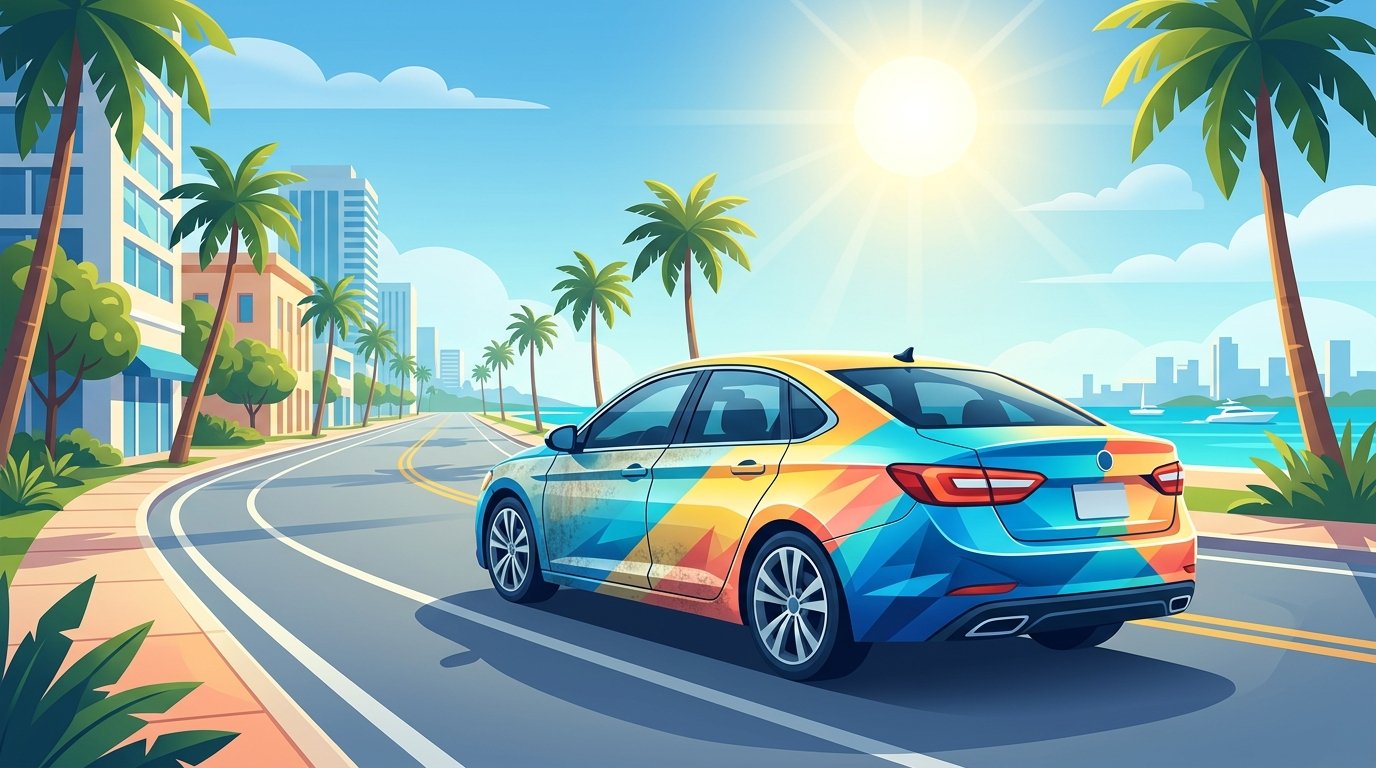
A professionally installed vehicle wrap is a significant investment—and one of the first questions any informed buyer asks is: how long will it actually last? The honest answer depends on several variables, and in South Florida, those variables carry more weight than almost anywhere else in the country. Intense UV radiation, salt air along the coast, and high ambient temperatures create an environment that challenges even premium-grade materials.
Understanding car wrap lifespan means understanding materials, installation quality, and maintenance practices together. Here’s what you need to know to set realistic expectations and protect your investment.
Typical Car Wrap Lifespan: The Baseline
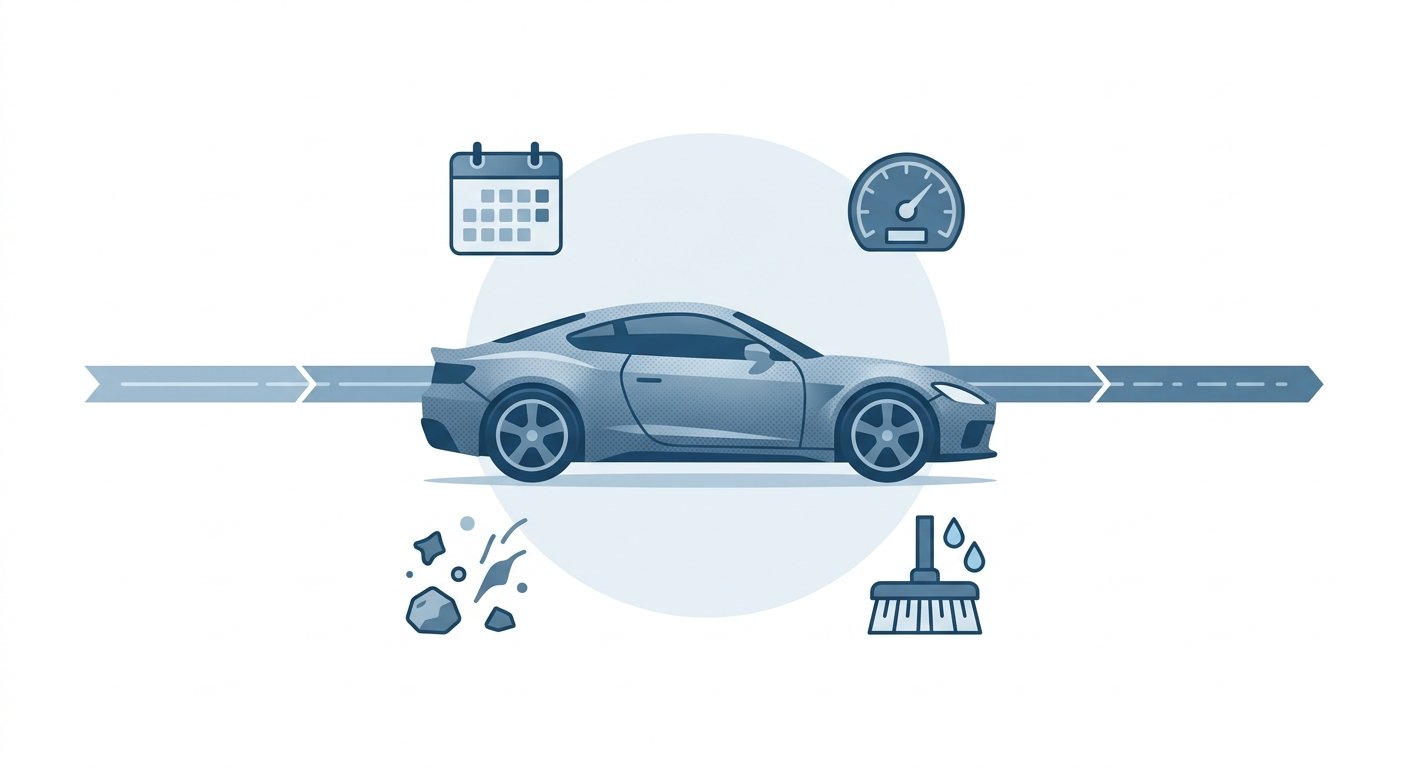
Under standard conditions, a professionally installed vehicle wrap using premium materials typically lasts between five and seven years. Fleet wraps on commercial vehicles often fall in the five-year range due to higher mileage, more frequent washing, and greater exposure to road debris. Luxury or collector vehicles that are garaged and driven selectively can see wraps perform well beyond six years with proper care.
These are realistic expectations—not guarantees. Wrap longevity is never a fixed number because no two vehicles live the same life. A delivery van parked in the sun eight hours a day ages differently than a weekend sports car stored in a climate-controlled garage. That distinction matters when budgeting for a wrap program.
What the Industry Standards Say
3M, one of the most trusted names in wrap film technology, publishes durability ratings for their Wrap Film Series products based on vertical and horizontal surface exposure testing. Their premium series films are rated for five to seven years under normal outdoor conditions. According to 3M’s product documentation, these ratings are established through rigorous environmental simulation—but real-world performance depends heavily on application quality and post-installation care.
As a 3M Certified Installation professional, Steve Hargittai and the Florida Car Wrap team use materials that meet these performance standards, applied with the techniques those standards require. Certification isn’t just a credential—it’s a commitment to installation methods that maximize the rated lifespan of every film.
South Florida’s Impact on Vehicle Wrap Longevity
South Florida’s climate is not average. The region consistently ranks among the highest in the U.S. for UV index readings, and coastal areas add salt air exposure to the equation. Both factors accelerate the aging of any exterior coating—paint, clear coat, or wrap film.
UV Exposure and Film Degradation
Ultraviolet radiation is the primary driver of wrap degradation. UV breaks down the adhesive layer beneath the film and attacks the topcoat above it, leading to color shift, surface haziness, and eventual lifting at edges. South Florida’s solar intensity means a wrap here experiences the equivalent of more annual UV stress than the same wrap would in a northern climate.
Premium cast films—the type used in professional installations—include UV inhibitors and are significantly more resistant to this degradation than economy calendered films. Choosing the right material class is not a luxury preference; in South Florida, it’s a durability requirement. According to U.S. Department of Energy research on UV transmission, UV exposure varies dramatically by geography—reinforcing why material specifications appropriate for Miami or Fort Lauderdale differ from those sufficient in cooler, less sunny regions.
Salt Air and Coastal Considerations
Coastal salt air is particularly relevant for vehicles and vessels operating near the water. Salt particles accelerate adhesive breakdown at wrap edges, especially on vehicles with minor pre-existing paint issues or improper surface preparation. For our boat wrap clients, marine-grade films and meticulous surface prep are non-negotiable—but even for commercial fleet vehicles parked near the coast, these considerations shape our material choices and installation process.
Thorough surface decontamination before installation removes salt residue and oxidation that would otherwise compromise adhesion from day one. This step alone significantly extends wrap lifespan in coastal South Florida environments.
Factors That Determine How Long Your Wrap Lasts
Beyond geography and materials, four core factors determine actual vehicle wrap longevity in the field.
1. Film Quality and Grade
Not all wrap films are created equal. Cast films—manufactured through a process that embeds stability into the material itself—outperform calendered (stretched) films in durability, conformability, and resistance to shrinkage. For complex curves on luxury vehicles or constant outdoor exposure on fleet vehicles, cast film is the professional standard. Economy films may cost less upfront but typically degrade faster in South Florida’s conditions, leading to premature replacement that erases any initial savings.
2. Surface Preparation Quality
A wrap is only as durable as the surface it adheres to. Paint contamination, surface irregularities, or moisture trapped beneath the film will cause lifting and bubbling long before the film itself fails. Professional preparation involves thorough decontamination, panel inspection, and in some cases paint correction to ensure the substrate is ready. This is one of the clearest distinctions between professional-grade and budget wrap services—rushed prep work shortens lifespan significantly.
3. Installation Technique
Precision installation—proper tension management, correct heat application, thorough edge sealing—directly affects how long a wrap performs. Overworked film or improperly sealed edges are weak points where degradation begins. Award-winning wrap craftsmanship isn’t about aesthetics alone; technically sound installation is what allows a premium film to achieve its rated lifespan.
4. Ongoing Maintenance
Wraps require consistent, appropriate care. This means hand washing or using touchless wash systems rather than automatic brushes, using pH-neutral soaps, and applying wrap-safe sealants periodically. Vehicles left unwashed in coastal environments accumulate salt and contaminants that work at adhesive edges over time. For commercial fleet wraps, establishing a wash protocol for your drivers or fleet manager is a practical step that meaningfully extends the investment.
Commercial Fleet Wraps vs. Custom Car Wraps: Different Lifespans
Commercial fleet vehicles live harder lives than personal vehicles. Higher daily mileage, more frequent pressure washing, and greater exposure to road hazards all affect wrap longevity. A realistic lifespan target for a fleet wrap in active commercial use in South Florida is four to six years. For custom car wraps on enthusiast or luxury vehicles with more careful handling and storage, six to eight years is achievable with quality materials and maintenance.
Fleet operators should view wraps as part of a defined marketing cycle rather than a permanent solution. Many fleet clients re-wrap on a schedule aligned with lease cycles or brand refresh timelines—typically every four to five years—which keeps branding fresh while managing costs predictably.
Signs Your Wrap Is Approaching End of Life
Knowing when a wrap has run its course helps you plan replacement before it affects brand presentation or vehicle appearance. Watch for these indicators:
- Edge lifting: Corners, door edges, or trim lines beginning to separate from the surface
- Color fading or shift: Noticeable change in saturation, particularly on horizontal surfaces like hoods and roofs that receive maximum UV
- Surface haziness: Loss of gloss on gloss films or a roughened texture on matte finishes
- Cracking or silvering: Film brittleness causing surface fractures, especially in older wraps
- Adhesive ghosting: Residue patterns visible through the film indicating adhesive breakdown
Catching these signs early allows for planned removal rather than urgent replacement, which also protects the underlying paint. According to the Print and Graphics Scholarship Foundation, proper wrap removal by trained professionals preserves the factory paint beneath—one of the lasting value propositions of a professional wrap program.
Frequently Asked Questions
How long does a car wrap last in South Florida specifically?
In South Florida’s high-UV, coastal environment, a professionally installed wrap using premium cast film typically lasts five to seven years. Vehicles with heavy daily use may see closer to four to five years, while garaged luxury vehicles with proper maintenance can reach six to eight years. Material quality and installation technique are the most influential factors after geography.
Does a car wrap protect the paint underneath?
Yes—a professionally installed wrap acts as a protective layer over factory paint, shielding it from UV exposure, minor abrasions, and environmental contaminants. When removed correctly by a trained installer, the paint beneath is typically preserved in its original condition. This is one of the reasons luxury car owners choose wraps over paint for color changes.
What’s the difference between cast and calendered wrap film?
Cast films are manufactured through a process that produces a dimensionally stable, conformable material with superior UV resistance and longevity. Calendered films are less expensive but more prone to shrinkage, edge lifting, and faster degradation—particularly in South Florida’s heat and UV conditions. Professional installations use cast film; it’s the standard required for 3M Certified Installation work.
How should I maintain a vehicle wrap in South Florida?
Hand washing or touchless washing is recommended over automatic brush washes, which can damage edges and film surface. Use pH-neutral soap, rinse thoroughly to remove salt and road grime, and apply a wrap-compatible sealant every few months. For coastal vehicles, more frequent washing helps prevent salt accumulation at edges. Consistent, appropriate care measurably extends wrap lifespan.
Can a car wrap be repaired if part of it is damaged?
In many cases, yes. Localized damage—a scuff, a torn panel section, or lifting on a specific door—can often be addressed by replacing just the affected panel rather than the entire wrap. This is one advantage of professional installation with documented material sourcing; matching the original film is far more achievable when the installer has records of the exact product used.
Making the Most of Your Wrap Investment
Vehicle wrap longevity in South Florida comes down to three decisions: choosing the right material, working with a qualified installer, and committing to proper maintenance. These aren’t optional upgrades—in this climate, they’re what separate a wrap that looks sharp for years from one that becomes a liability in two.
If you’re evaluating a wrap for your fleet, your personal vehicle, or a marine application, the conversation starts with understanding what you’re asking the wrap to do and where it will live. That context shapes every material and process decision that follows.
Florida Car Wrap brings 3M-certified expertise and South Florida–specific experience to every project. Contact us to discuss your vehicle, your goals, and what a properly specified wrap can realistically deliver for you.
