
Most vehicle owners spend considerable time researching wrap installation — the materials, the design, the installer. Far fewer think about what happens at the other end of that wrap’s lifecycle. Yet how a wrap comes off matters just as much as how it goes on. Poor removal technique can leave adhesive residue baked into clear coat, cause paint lifting on factory or previously repainted panels, and add hundreds of dollars in paint correction to what should have been a clean transition.
In South Florida specifically, the removal process carries added complexity. Intense UV exposure, high humidity, and salt air don’t just affect the wrap itself — they influence how adhesive bonds to the vehicle’s surface over time. Understanding what professional wrap removal actually involves helps you make informed decisions, whether you’re refreshing a commercial fleet, updating a personal vehicle, or preparing a boat for a new marine wrap.
Why Professional Wrap Removal Matters
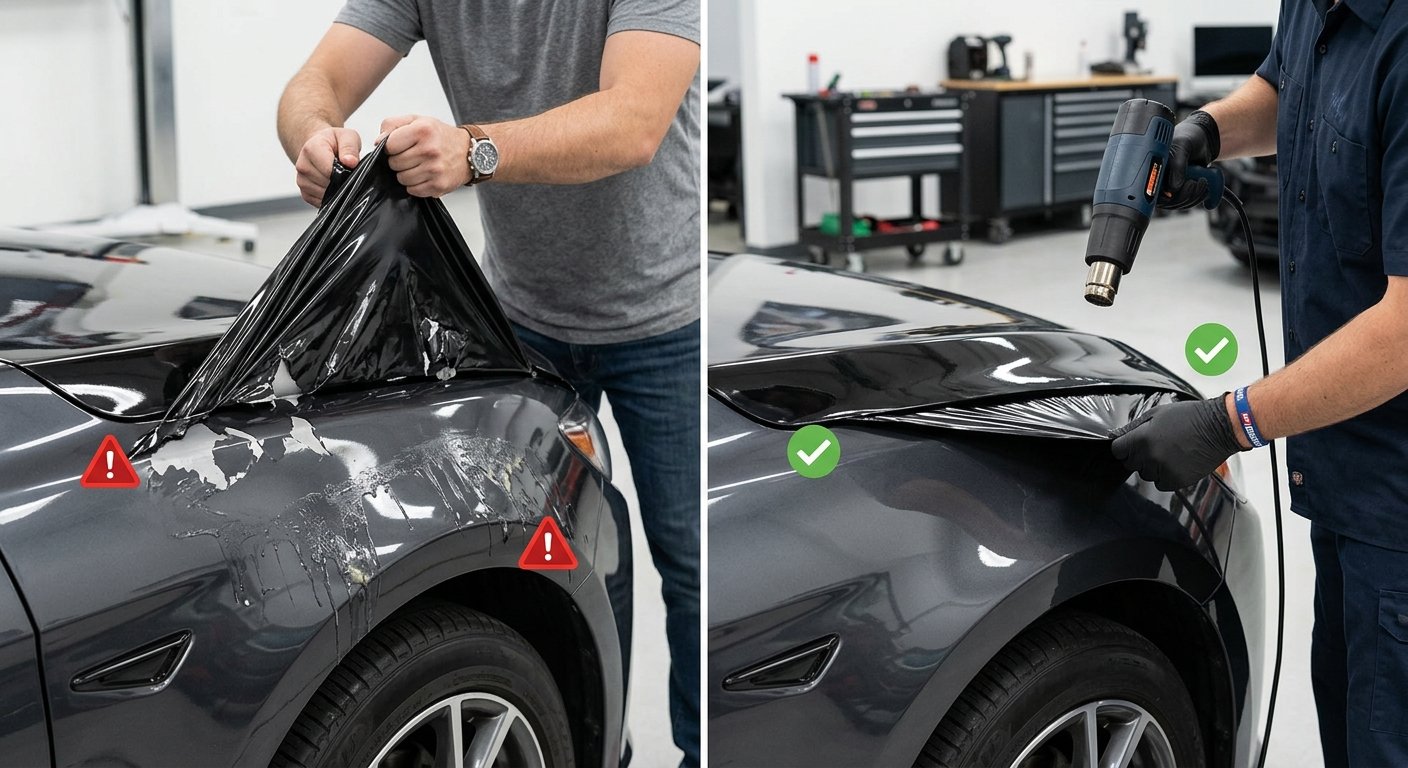
Vinyl wrap removal looks deceptively straightforward. Apply heat, peel, done — right? In practice, the process demands a detailed understanding of material behavior, adhesive chemistry, and panel-specific risks. Rushing it, or skipping professional oversight, creates problems that cost significantly more to fix than the removal itself.
When a wrap has been installed correctly using professional-grade materials like 3M’s Wrap Series films, the vinyl and adhesive are engineered to release cleanly within the product’s intended service window — typically five to seven years under normal conditions. However, South Florida’s UV index regularly ranks among the highest in the continental United States, which accelerates the breakdown of both the film and the adhesive layer. A wrap left beyond its optimal lifespan in this climate becomes more difficult to remove cleanly, sometimes requiring additional chemical release agents and significantly more labor time.
According to the EPA’s UV Index guidance, prolonged UV exposure at high index levels causes rapid polymer degradation — exactly the mechanism that makes aged vinyl brittle and prone to tearing during removal rather than peeling cleanly in long strips.
The Professional Car Wrap Removal Process
Step 1: Pre-Removal Assessment
A thorough removal starts before anyone touches the vehicle. An experienced installer examines the wrap’s current condition — how well it’s adhering, whether there are lifting edges, signs of adhesive migration, or areas of film degradation. This assessment determines the approach: standard heat-and-peel, or a more delicate method for aged or fragile films.
Panel history matters here too. Repainted panels, panels with pre-existing clear coat damage, or sections where body filler is present require extra caution. The assessment protects you from surprises and allows the installer to quote accurately.
Step 2: Controlled Heat Application
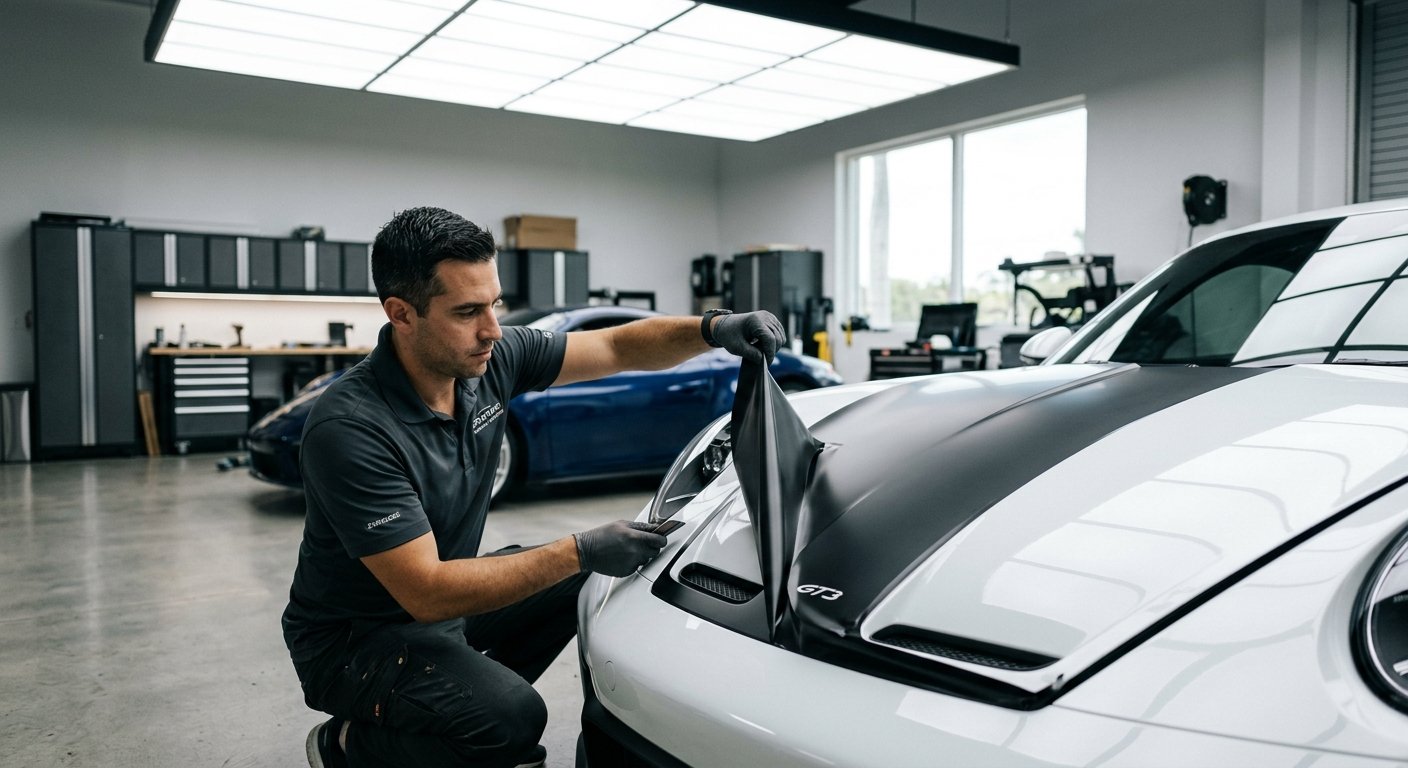
Heat is the primary tool in any professional removal. Wrap films are thermoplastic — they become pliable when warmed, which relaxes the adhesive bond and allows the film to stretch and release rather than tear. Professional installers use heat guns calibrated to appropriate temperature ranges. Excessive heat risks damaging paint; insufficient heat leads to film fracturing and adhesive transfer.
The technique involves consistent, even passes rather than concentrated heat on a single point. Panels are worked in sections, maintaining the film at optimal peel temperature throughout. This is more art than formula, and it’s where years of hands-on experience directly translate to better outcomes.
Step 3: Film Removal
Once at optimal temperature, the film is peeled at a controlled angle — typically between 15 and 45 degrees — at a pace that matches the adhesive’s release rate. Too fast and the film tears; too slow and it cools before releasing cleanly. On a properly installed, well-maintained wrap within its service life, large sections often peel in single pulls. On degraded material, this phase requires patience and methodical panel-by-panel work.
Step 4: Adhesive Residue Removal
Even quality films leave some adhesive behind, particularly on vehicles wrapped for several years in South Florida’s climate. Professional-grade adhesive removers dissolve the residue without attacking the underlying clear coat. This step requires the right product chemistry matched to the vehicle’s surface — what works on factory clear coat may not be appropriate on aftermarket paint or specialty finishes on luxury vehicles.
Mechanical methods such as rubber erasers or plastic scrapers may also be employed carefully on stubborn areas. The goal is a clean, residue-free surface ready for either paint correction, new wrap installation, or delivery back to the owner.
Step 5: Surface Inspection and Prep
After removal, every panel is inspected under proper lighting. Any micro-scratches from the removal process are identified, and if paint correction is needed before a new wrap goes on, that’s addressed at this stage. For clients planning a fresh wrap, this inspection determines whether the surface is ready to receive new film without trapping contamination beneath it.
Car Wrap Removal Cost in South Florida
Vehicle wrap removal pricing varies based on several factors specific to your situation. Understanding these variables helps set realistic expectations before requesting a quote.
Factors That Influence Removal Cost
- Vehicle size and type: A compact car requires significantly less labor than a full-size cargo van, box truck, or SUV with complex body lines. Commercial fleet vehicles and larger formats carry higher removal costs accordingly.
- Wrap age and condition: A two-year-old wrap in good condition removes faster and more cleanly than a five-plus-year wrap that has degraded under South Florida sun. Aged wraps often require more labor hours and chemical treatment.
- Film quality of the original wrap: Premium 3M or equivalent professional films release more predictably than budget films, which can fracture or leave difficult adhesive. If you don’t know what film was originally installed, that uncertainty factors into the estimate.
- Coverage area: Full wraps take longer to remove than partial wraps or decal sets. Fleet vehicles with complex graphic layouts may have multiple film layers in certain areas.
- Paint condition concerns: Panels with pre-existing clear coat issues require extra care and may necessitate additional post-removal paint correction services.
As a general range in the South Florida market, professional removal for a standard passenger vehicle typically falls between $300 and $600. Larger commercial vehicles, trucks, and vans range higher — often $500 to $1,200 or more depending on complexity. These figures reflect professional-grade work with proper technique and materials; they are not comparable to informal removal services that skip critical steps.
The Professional Decal Application Alliance (PDAA), an industry association that sets standards for professional wrap installation, consistently emphasizes that removal performed without proper training and equipment is a leading cause of preventable paint damage claims across the industry.
South Florida-Specific Considerations
South Florida’s environment accelerates every aspect of a wrap’s lifecycle. UV intensity, salt air from coastal exposure, and high ambient temperatures mean wraps here age faster than identical applications in more temperate climates. For boat wraps specifically, removal requires additional care — marine surfaces often involve fiberglass, gel coat, and antifouling paint zones, each requiring a tailored approach. Florida Car Wrap’s experience with marine-grade wraps extends to understanding how those surfaces behave during removal, not just installation.
For commercial fleet operators, timing removal strategically — before a wrap reaches the end of its optimal service window rather than after — results in cleaner removal, lower labor costs, and a surface in better condition for the next round of fleet branding. Proactive fleet wrap management is simply better economics.
Luxury and exotic car owners face a different concern: protecting the original paint or specialty finish beneath the wrap. On vehicles where factory paint condition significantly affects resale value, professional removal with meticulous attention to adhesive residue and surface preparation is non-negotiable. For those considering updated aesthetics, the removal appointment is also the ideal time to discuss options with our team about custom car wrap designs for the next installation.
Frequently Asked Questions
Can I remove a car wrap myself?
Technically possible, practically risky. Without professional equipment, calibrated heat sources, and knowledge of adhesive chemistry, DIY removal commonly results in film tearing, adhesive transfer, and in worst cases, clear coat lifting — particularly on vehicles where the wrap has aged in South Florida’s UV-intense environment. The cost of correcting paint damage typically exceeds what professional removal would have cost.
Will wrap removal damage my car’s paint?
When performed by a trained professional on a vehicle with sound factory paint and a properly installed wrap, removal should not damage the underlying surface. Risk increases with wrap age, pre-existing paint condition issues, and the quality of the original installation. A pre-removal assessment identifies risk areas before work begins.
How long does professional wrap removal take?
A standard passenger car typically requires a full business day. Larger commercial vehicles, trucks, or complex fleet graphics may require additional time. Wrap age and condition are significant variables — degraded film requires more methodical work and cannot be rushed without risking surface damage.
Is removal included if I’m getting a new wrap installed?
Not automatically. Removal is a separate service with its own labor requirements. However, many clients who are transitioning directly to a new wrap benefit from coordinating both services together, allowing for seamless surface inspection and preparation between the two processes. Discuss this with your installer when requesting a quote.
What happens to the removed vinyl?
Used vinyl wrap film is typically not recyclable through standard municipal programs due to adhesive contamination. 3M’s sustainability documentation provides guidance on responsible material handling, and professional installers are familiar with appropriate disposal practices in compliance with local regulations.
Making the Right Choice for Your Vehicle
Vehicle wrap removal is a process that rewards patience, proper technique, and genuine material expertise. In South Florida’s demanding climate, the gap between careful professional removal and a rushed job shows clearly — in the condition of your paint, the ease of the next installation, and ultimately in the long-term value of your vehicle.
Whether you’re managing a commercial fleet transition, protecting the finish on a luxury vehicle, or preparing a boat for fresh marine graphics, Florida Car Wrap brings 3M-certified expertise and award-winning craftsmanship to every stage of the wrap lifecycle — including removal. Contact our team to schedule a pre-removal assessment and receive an accurate quote based on your specific vehicle and situation.
