
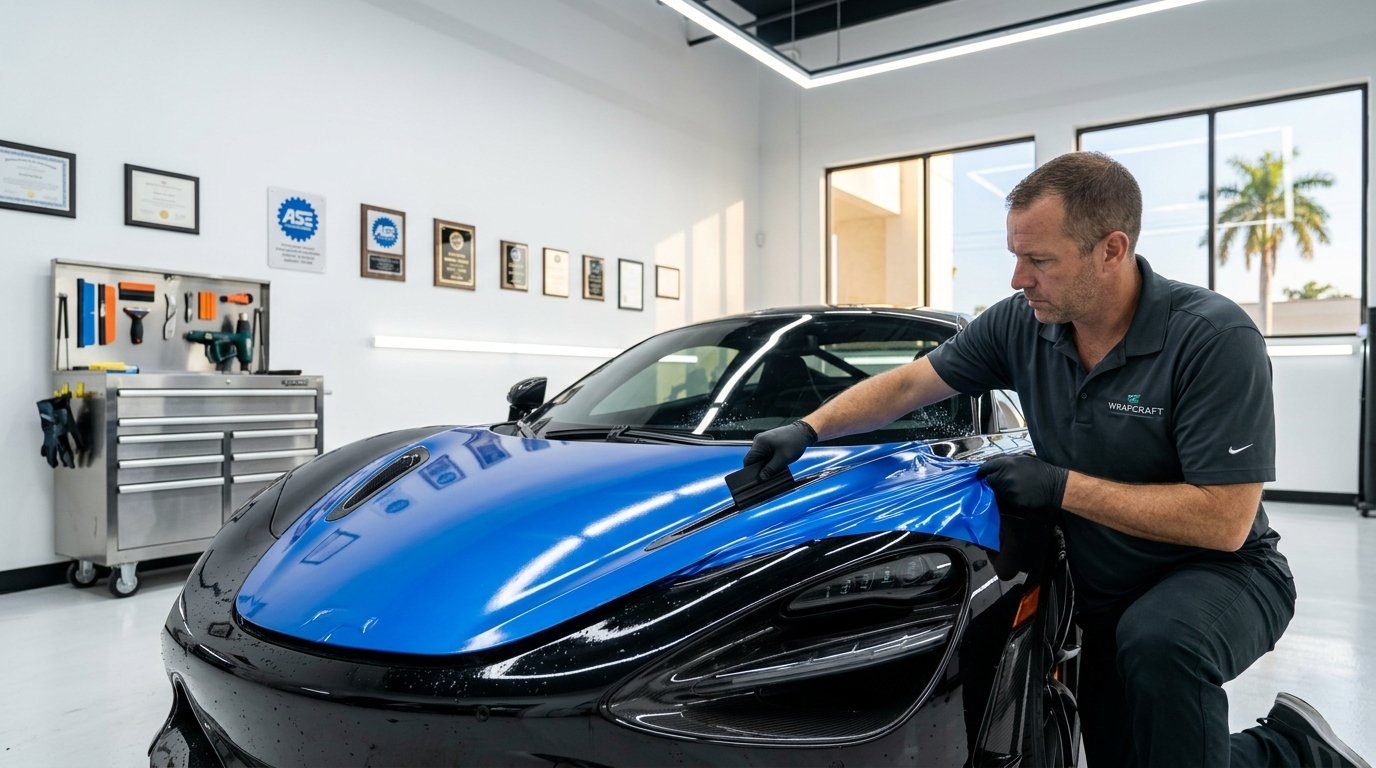
Not every vinyl wrap is created equal—and neither is every installer. In South Florida’s competitive wrap market, the phrase “professional installation” gets used loosely, sometimes by shops that have never earned formal certification from the manufacturers whose materials they claim to use. For business owners investing in fleet branding, exotic car enthusiasts protecting a six-figure paint job, or yacht owners needing marine-grade graphics that survive salt air and UV, the difference between a certified and an uncertified installer isn’t cosmetic. It’s the difference between a wrap that performs for years and one that fails in months.
This guide walks you through exactly what 3M certification means, why it matters specifically in South Florida’s demanding environment, and what to look for—and ask—before trusting anyone with your vehicle or vessel.
What Does 3M Certified Installation Actually Mean?
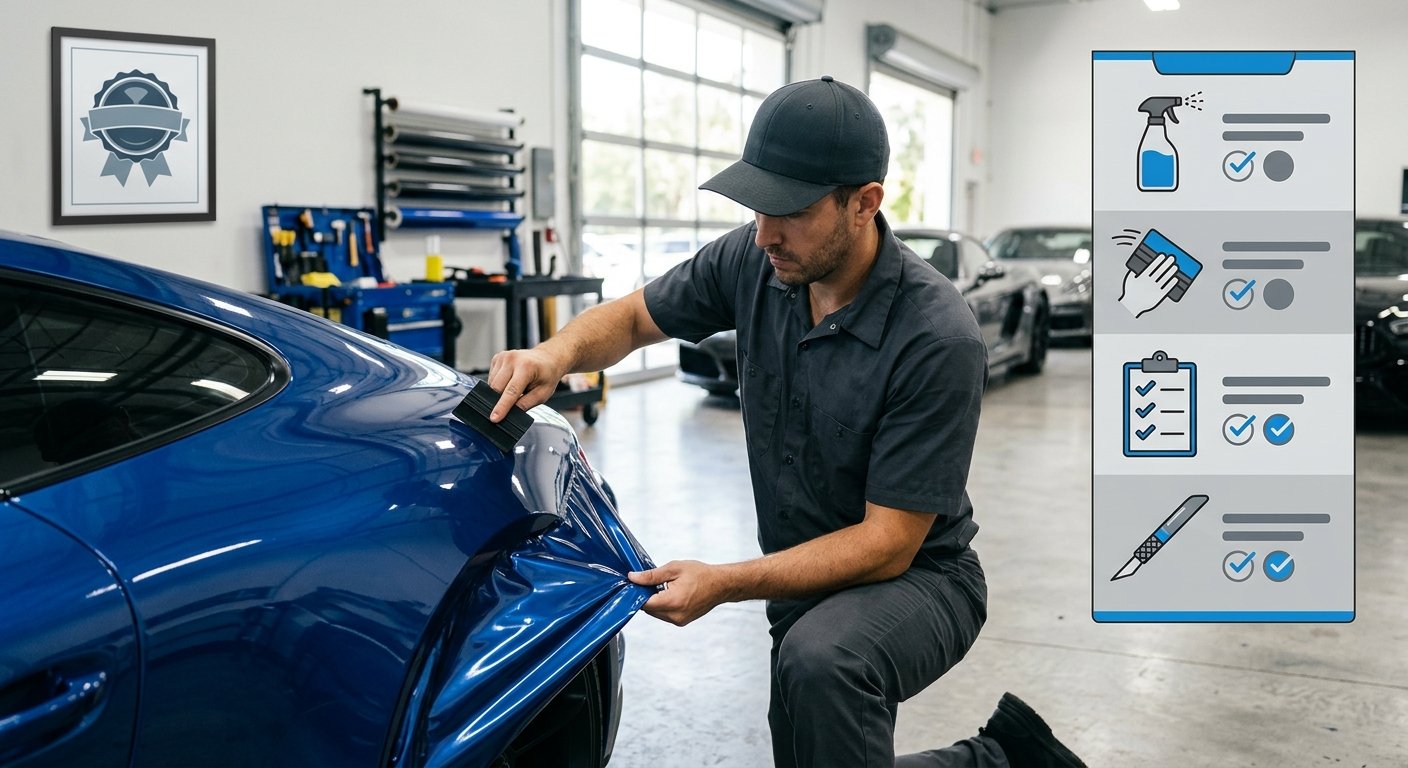
3M’s certification program for wrap installers isn’t a marketing badge handed out freely. It requires installers to demonstrate proficiency in application techniques, surface preparation, handling of 3M’s proprietary materials, and compliance with installation standards that directly affect warranty eligibility. 3M’s Graphics Training program involves hands-on evaluation and formal coursework, not simply purchasing materials at volume.
When you choose a 3M certified wrap installer, you’re not just paying for someone who has used the product. You’re engaging a professional who has been vetted by the manufacturer to apply those materials in ways that meet 3M’s performance specifications. This matters enormously when it comes to warranty claims—because 3M’s wrap warranties are tied to certified installation. If an uncertified shop applies 3M film and it fails prematurely, you typically have no manufacturer recourse.
The Certification-Warranty Connection
3M’s commercial wrap films, including the widely respected 1080 and 2080 series, carry warranties that cover film performance under normal conditions. However, those warranties are contingent on proper installation by a certified applicator. An installer who skips proper surface deglossing, applies film over contaminated panels, or ignores edge-sealing protocols doesn’t just risk a failed wrap—they void the manufacturer’s backing entirely.
For fleet managers wrapping ten or twenty vehicles at once, this warranty protection is a meaningful financial safeguard. For a luxury car owner who has spent thousands on a custom color change, it’s the assurance that the film itself will perform as advertised throughout its rated lifespan.
Why South Florida Demands More From Installation
South Florida is genuinely one of the harshest environments for vehicle and marine wraps in the continental United States. The combination of intense UV radiation, high ambient humidity, salt air proximity, and heat that regularly exceeds 90°F creates stress on vinyl films that installers in more temperate regions simply don’t contend with at the same level.
According to the U.S. Department of Energy’s solar resource data, South Florida receives among the highest solar irradiance of any region in the country. That’s relevant to wrap longevity because UV degradation is the primary enemy of vinyl films—it attacks both the film’s color layer and the adhesive beneath it. Cast films, like those used in 3M’s professional-grade lineup, are engineered to resist UV far better than calendered films common in budget applications, but even cast films require proper installation and care to reach their rated lifespan in this climate.
Salt air is a particular concern for marine wraps and coastal vehicle storage. Improper edge termination—where the wrap film meets panel edges or trim—can allow salt-laden moisture to penetrate under the film, accelerating adhesive failure and causing lifting. A certified installer understands these failure points and addresses them during installation with techniques specifically suited to the South Florida environment.
Commercial Fleet Wraps: The Stakes Are Higher Than Aesthetics
For a business wrapping a service fleet, the vehicles are rolling advertisements. A fleet wrap that fades unevenly, peels at edges, or develops bubbles within the first year doesn’t just look unprofessional—it actively undermines the brand equity the company was trying to build. The Outdoor Advertising Association of America has consistently documented vehicle wraps as delivering among the lowest cost-per-impression of any advertising medium, but only when the graphics maintain their integrity over time.
This is precisely why fleet clients should insist on 3M certified installation. Consistent color output, predictable adhesion performance, and warranty-backed materials aren’t optional nice-to-haves for commercial work—they’re baseline requirements. At Florida Car Wrap, our commercial fleet wrap services are built around these standards, ensuring that whether you’re wrapping two vehicles or twenty, every installation meets the same quality benchmark.
Luxury and Exotic Cars: Where Certification Becomes Non-Negotiable
Color change wraps on luxury and exotic vehicles represent a specialized subset of the craft that exposes any technical shortcomings immediately. Panels on these vehicles are often complex in geometry, with compound curves, deep recesses, and tight radii around body lines that require advanced film manipulation skills. 3M’s cast films are designed to conform to these shapes without excessive heat or tension—but applying them correctly demands a level of trained technique that certification training develops.
The consequence of a poor installation on an exotic car isn’t simply a failed wrap—it can mean adhesive residue on paint, lifted edges that trap debris, or stress marks at panel edges that compromise the vehicle’s appearance. When the base vehicle costs more than many people’s homes, the margin for error is essentially zero.
Our custom car wrap services are executed with competition-level precision. The same attention to detail that Steve Hargittai has brought to award-winning competition wraps applies to every luxury vehicle that comes through our shop—because the standard shouldn’t drop just because a camera isn’t watching.
Marine Wraps: A Unique Certification Challenge
Boat and yacht wraps introduce material and installation variables that go beyond even the most demanding automotive work. Marine environments subject graphics to constant water exposure, UV reflection off water surfaces (which intensifies UV load significantly), fuel and cleaning chemical contact, and the physical stress of wave impact and trailering.
Applying wraps to fiberglass, aluminum, or composite marine surfaces requires knowledge of surface preparation specific to those substrates, and adhesive systems appropriate for below-waterline and at-waterline applications. 3M certified installers who have worked extensively in marine applications understand these distinctions. Our boat wrap services address every one of these variables, from substrate preparation through final edge sealing, using materials rated for the South Florida marine environment.
What to Ask Before Hiring a Wrap Installer
Whether you’re a fleet manager, exotic car owner, or boat owner, these questions will help you separate genuinely qualified installers from those trading on borrowed credibility:
- Are you 3M certified? Ask to see documentation. Certification is verifiable, not self-reported.
- What films do you stock and use? A certified installer should be able to explain the difference between cast and calendered film and why one is appropriate for your application.
- How do you handle surface preparation? Proper prep—cleaning, degreasing, panel inspection—takes time. Shops that skip it cut corners where it matters most.
- Can you provide warranty documentation? Legitimate 3M wrap warranty coverage requires certified installation. If they can’t provide documentation, the warranty may not apply.
- Do you have experience with my specific vehicle or vessel type? Complex geometries on exotics or marine substrates require demonstrated experience, not just general vinyl skills.
- Can I see a portfolio of completed work? Quality installers maintain detailed records of their work. Hesitation here is a red flag.
Frequently Asked Questions
What is a 3M certified wrap installer?
A 3M certified wrap installer has completed 3M’s formal training and proficiency evaluation program, demonstrating the technical ability to install 3M graphic films according to manufacturer specifications. This certification is required to offer 3M’s manufacturer-backed warranty on completed installations.
Does 3M certification affect the wrap warranty in Florida?
Yes. 3M’s film warranties are tied to certified installation. In Florida’s intense UV environment, where film performance is already under elevated stress, having that warranty backing provides meaningful financial protection. An installation performed by an uncertified shop typically voids manufacturer warranty coverage regardless of the film brand applied.
How long do 3M car wraps last in South Florida’s climate?
With proper installation and routine maintenance, professional-grade 3M cast films are rated for five to seven years in most conditions. South Florida’s UV intensity and heat can place them toward the lower end of that range without proper care, which is why certified installation—including edge sealing and correct adhesive activation—is critical to maximizing lifespan.
Are 3M wraps worth the investment over cheaper alternatives?
For commercial fleets, luxury vehicles, and marine applications, yes. Budget calendered films degrade significantly faster under South Florida conditions, often showing edge lifting and color fading within one to two years. The higher upfront cost of 3M materials with certified installation typically delivers a lower cost-per-year of performance over the wrap’s lifespan.
Can I get a 3M wrap on my boat or yacht in South Florida?
Absolutely. Marine-grade applications require specific materials, surface preparation knowledge, and installation techniques suited to fiberglass and composite substrates. Not all automotive wrap installers have marine experience, so it’s important to work with a shop that has a documented track record in marine graphics specifically.
The Right Installer Protects Your Investment
Choosing a wrap installer based on price alone is one of the most common—and costly—mistakes vehicle and vessel owners make in South Florida. The material and labor represent only part of the total value at stake. Your vehicle’s paint, your brand’s visual identity, and your boat’s appearance are all on the line.
3M certification exists precisely to give clients a reliable indicator of professional competence before work begins. It doesn’t guarantee perfection, but it does signal that an installer has been trained, evaluated, and held to standards that matter for long-term performance.
If you’re ready to discuss a commercial fleet project, a luxury vehicle color change, or a marine wrap in South Florida, contact Florida Car Wrap to speak directly with our team about your specific application. We’re here to help you make an informed decision—whatever that decision turns out to be.
