

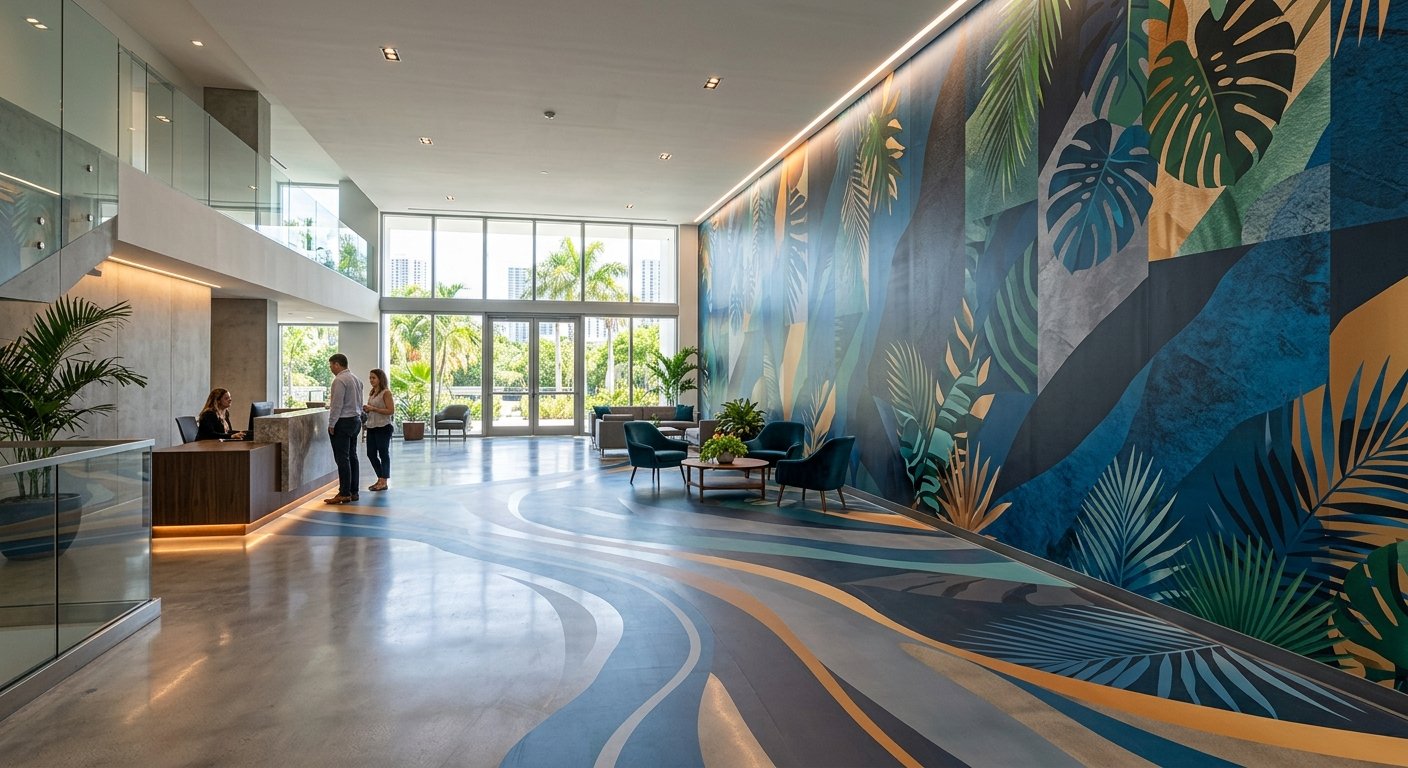
Walk into the right retail space, hotel lobby, or corporate headquarters and you feel it immediately—that environment has been designed with intention. The brand is present, the atmosphere is immersive, and the space itself does marketing work. Increasingly, the tool behind that transformation isn’t paint or permanent millwork. It’s architectural wraps.
Wall wraps, floor wraps, and large-format vinyl graphics have fundamentally changed how South Florida businesses approach interior and exterior branding. Whether you’re refreshing a retail location, creating a trade show environment, rebranding a commercial space, or adding dramatic visual impact to a lobby, architectural graphics deliver results that paint and traditional signage simply cannot match—with far less disruption to your operations.
What Are Architectural Wraps?
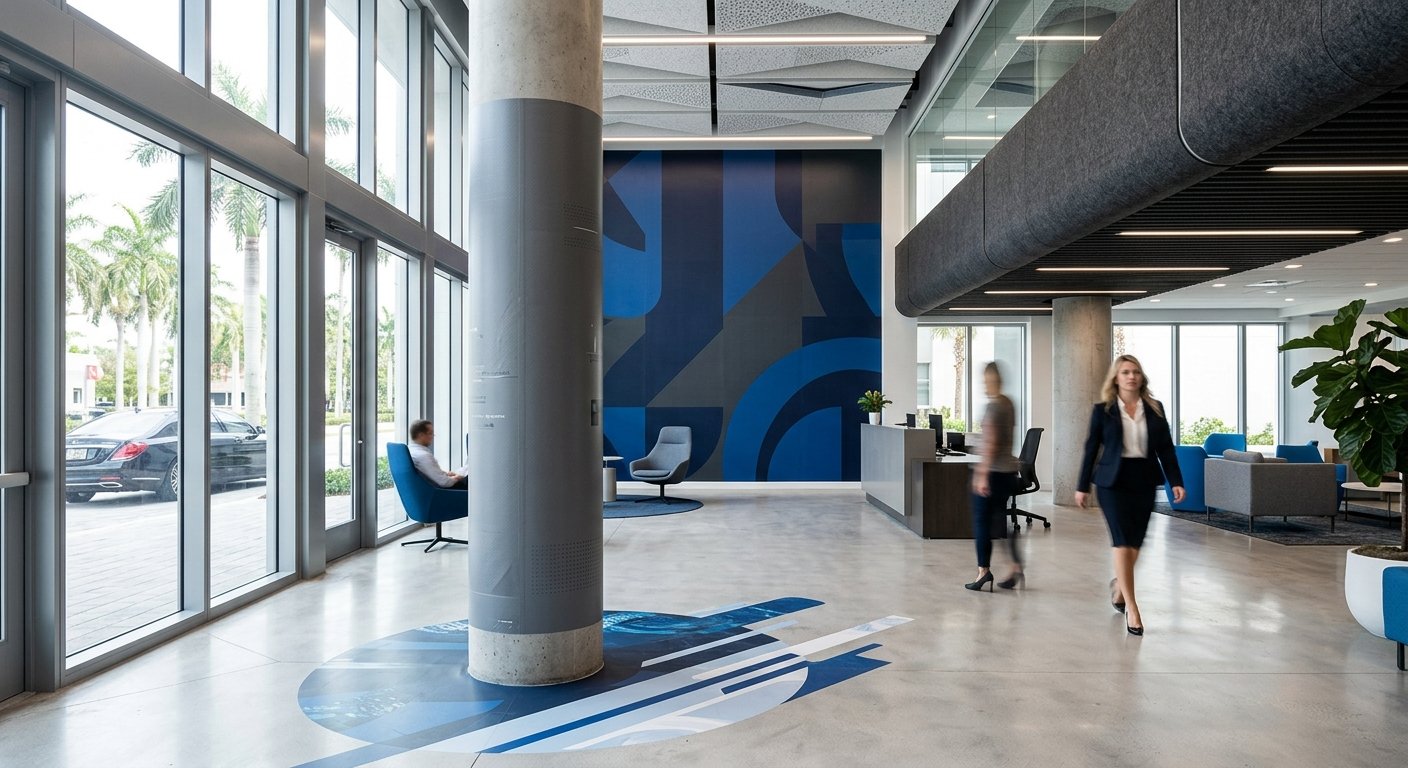
Architectural wraps refer to large-format vinyl graphics applied to walls, floors, ceilings, pillars, staircases, windows, and other structural surfaces. The category includes wall murals in vinyl, dimensional wall graphics, floor graphics for permanent or event use, and environmental branding systems that unify an entire space.
Unlike paint, vinyl wraps can be produced with photographic-quality imagery, precise brand colors, custom textures, and fine typographic detail. Unlike rigid signage, they conform to curved or irregular surfaces and can be updated when your brand evolves—without demolition or costly renovation.
The materials have advanced significantly. Premium-grade cast vinyl films—the same category used in our custom car wraps—offer dimensional stability, resistance to UV degradation, and clean removability that cheaper calendered films can’t provide. In South Florida’s environment, where intense UV exposure and humidity are constants, material selection is not a minor detail. It determines how long your installation looks professional.
Wall Wraps: More Than Decoration
A well-executed wall vinyl wrap serves multiple purposes simultaneously. It reinforces brand identity, shapes customer perception, communicates values, and creates memorable environments. For businesses, that’s significant return on a single investment.
Commercial and Retail Applications
Retail environments in South Florida face a specific challenge: foot traffic is high, sunlight pours through storefronts, and the competition for customer attention is relentless. Wall murals in vinyl allow retailers to change seasonal messaging without repainting, create Instagram-worthy interior moments that drive organic social media exposure, and maintain consistent brand expression across multiple locations.
Corporate offices use wall graphics installation to reinforce culture—mission statements rendered large-scale, values mapped across conference room walls, full-height photography that transports employees and clients. Healthcare facilities use wayfinding systems integrated into wall graphic systems. Hotels and restaurants create signature visual moments that guests photograph and share.
Event and Trade Show Environments
The trade show and event industry relies heavily on large-format wall graphics because they solve a fundamental problem: you need a brand environment that assembles quickly, looks premium, and breaks down cleanly. High-quality wall vinyl wraps applied to modular structures or directly to venue walls accomplish exactly that. When the event concludes, a proper cast vinyl film removes without leaving adhesive residue or damaging painted surfaces—provided it was installed with appropriate primers and release liners for the substrate.
This is where installation expertise matters enormously. The architectural wraps we execute at Florida Car Wrap follow the same quality standards as our vehicle work—meticulous surface preparation, precision panel alignment, and heat-formed edges that won’t lift in South Florida’s heat and humidity.
Floor Wraps: Underestimated, High-Impact
Floor graphics are arguably the most underutilized branding tool in commercial environments. When customers enter a space, their eyes naturally move between the floor and eye level—and a floor graphic in that entry path commands attention precisely because it’s unexpected.
Permanent Floor Wraps
Permanent floor graphics use heavy-duty laminated vinyl engineered specifically for foot traffic. These materials must handle abrasion, cleaning chemicals, and the compression of repeated foot contact without delaminating, yellowing, or becoming slip hazards. Certified floor graphic materials are tested to meet slip-resistance standards—a non-negotiable consideration for any commercial installation.
According to the U.S. Occupational Safety and Health Administration, slip, trip, and fall hazards are among the most frequently cited workplace safety violations. Any floor graphics installation should use materials that meet or exceed OSHA’s coefficient of friction standards for walking surfaces. We specify only certified anti-slip laminates for floor applications—this is professional-grade work, not an afterthought.
In retail, showroom, and restaurant environments, branded floor graphics can direct traffic flow, mark featured product areas, reinforce promotional messaging, and create visual continuity between architectural zones. Automotive showrooms use floor wraps around featured vehicles to create a premium presentation environment.
Temporary Floor Wraps and Event Floor Graphics
Temporary floor wraps serve the event, hospitality, and retail promotion industries with installations designed for short-term impact and clean removal. Event floor graphics—custom logos centered on dance floors, directional graphics in convention halls, branded pathways through event venues—create cohesive environments that elevate the attendee experience.
The distinction between temporary and permanent floor wraps lies in the adhesive system and laminate specification. Temporary installations use lower-tack adhesives engineered to release cleanly from sealed concrete, tile, or hardwood without lifting finish or leaving residue. The timeline for safe removal depends on the substrate, ambient temperature, and how long the graphic has been installed—all factors an experienced installer accounts for in the planning phase.
South Florida-Specific Considerations
Architectural graphics installed in South Florida face environmental conditions that differ meaningfully from installations in cooler, drier climates. UV index readings in Miami and Broward County regularly exceed 10—the “extreme” threshold—for months at a time. This accelerates the degradation of inferior vinyl films, causing color shift, adhesive failure, and edge lifting.
For exterior wall graphics, this means cast vinyl with UV-protective overlaminates is the minimum acceptable specification. For interior applications near windows with direct solar exposure, the same principle applies. According to research published through the U.S. Department of Energy, south-facing glazing in Florida can transmit significant solar radiation indoors—enough to affect materials not rated for UV stability.
Humidity also creates adhesion challenges. Surfaces that haven’t been properly dried, primed, or prepared will cause adhesive failure in weeks rather than years. Our 3M Certified Installation process includes substrate assessment and, when necessary, surface preparation protocols that address South Florida’s moisture conditions before a single panel goes up.
The Installation Process: What Quality Looks Like
Professional wall graphics installation follows a sequence that separates lasting results from premature failures. Here’s what a quality process includes:
- Site assessment: Substrate type, surface condition, ambient temperature and humidity, lighting conditions, and traffic patterns are all evaluated before material specification.
- Material selection: Cast vs. calendered vinyl, laminate type, adhesive system, and slip-rating (for floors) are chosen based on application requirements—not what’s cheapest or most available.
- Surface preparation: Cleaning, degreasing, and priming are completed to manufacturer specification. This step is where most failures originate when cut short.
- Panel layout and alignment: Large-format graphics require precise seam placement and pattern matching. Proper layout planning prevents visible seams in high-attention areas.
- Application and finishing: Heat tools, squeegees, and edge-sealing compounds ensure full adhesion and long-term edge integrity.
- Post-installation inspection: Every edge, seam, and bubble-prone area is inspected before the installation is considered complete.
This process is the same discipline that drives Steve Hargittai’s award-winning work in vehicle wraps—and it’s what we bring to every architectural graphics project across South Florida.
Commercial Fleet Branding Extends to Your Space
Many of our commercial fleet clients eventually realize that their branded vehicles and their physical space should communicate the same identity at the same quality level. A fleet of wrapped service vehicles making the right impression on South Florida roads deserves a headquarters, showroom, or office that reinforces that identity when clients arrive.
If you’re exploring commercial fleet wraps for your business, architectural graphics are a natural complement—same materials, same craftsmanship, same brand consistency. We work with businesses to develop cohesive visual identities that move with your fleet and live in your space.
Frequently Asked Questions
How long do wall wraps last in South Florida’s climate?
With premium cast vinyl and proper UV-protective overlaminates, interior wall wraps typically maintain appearance for five to seven years or more. Exterior wall graphics in direct sun may have shorter maintenance cycles due to UV intensity. Material selection and surface preparation are the primary variables that determine longevity.
Can wall and floor wraps be removed without damaging surfaces?
When installed with appropriate materials and removed within their rated lifespan, quality cast vinyl films remove cleanly from most painted walls, tile, sealed concrete, and hardwood. Calendered films and improperly stored or over-aged graphics are more likely to leave residue. Professional installation significantly reduces removal risk.
Are floor wraps safe for high-traffic commercial areas?
Yes—when the correct materials are specified. Commercial floor graphics must use anti-slip laminates that meet safety standards for coefficient of friction. We specify certified non-slip overlaminates for all floor applications and can provide documentation of compliance for facilities with safety requirements.
What surfaces can accept architectural wraps?
Most flat and moderately curved surfaces accept vinyl wraps: drywall, concrete, tile, glass, metal panels, wood, and composite materials. Heavily textured surfaces require specific primers or films designed for texture conformity. A proper site assessment identifies any substrate conditions that need to be addressed before installation.
How disruptive is the installation process for a business?
Most commercial installations are planned to minimize operational disruption. Depending on square footage and complexity, installations are often scheduled around business hours or in phases. Surface preparation and adhesive cure times are factored into the project timeline. A detailed pre-installation plan is part of every professional engagement.
Ready to Transform Your Space?
Whether you’re rebranding a retail environment, creating an immersive event installation, or adding architectural graphics to your commercial space, the quality of your materials and the expertise of your installer determine everything. Florida Car Wrap brings the same 3M-certified craftsmanship that has earned recognition in the competitive vehicle wrap world to every wall and floor wrap project we undertake in South Florida.
Contact Florida Car Wrap to discuss your architectural graphics project and learn how premium installation transforms spaces—and brands—that last.
