
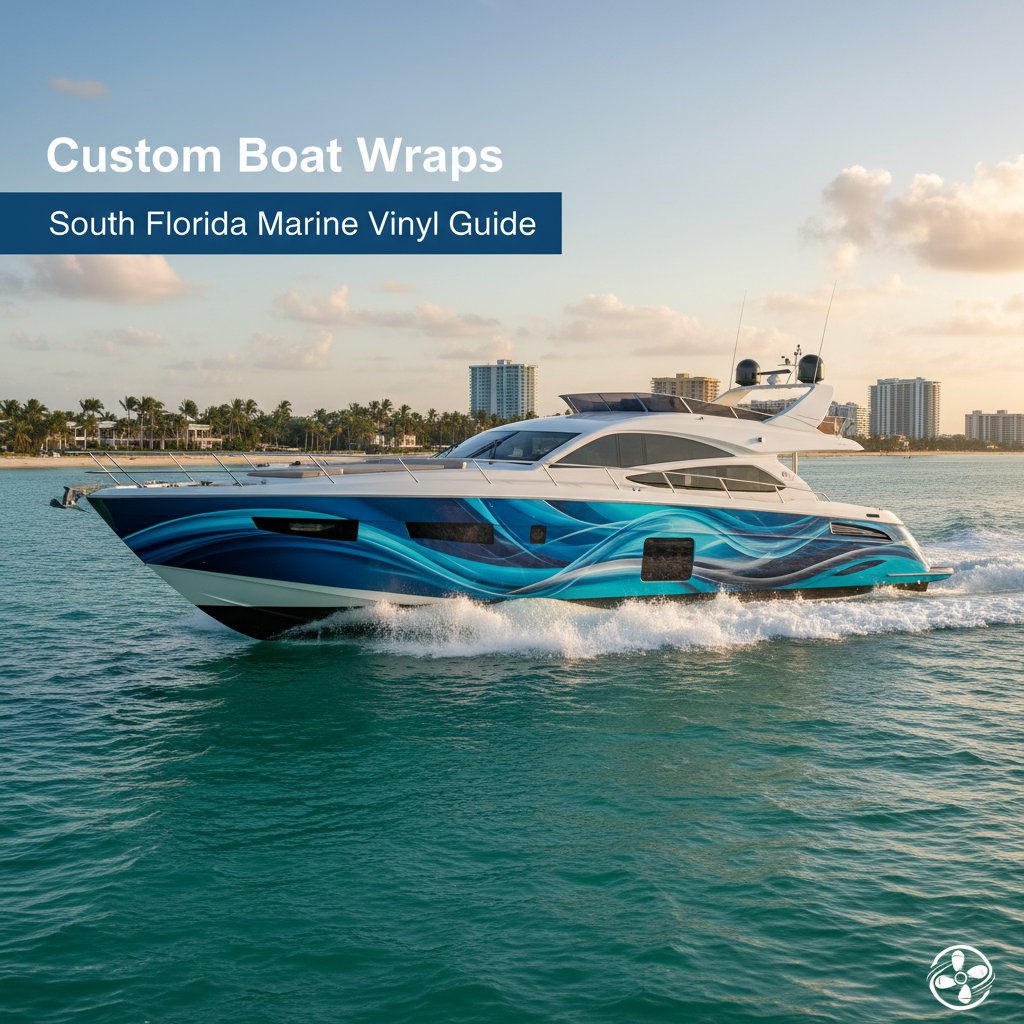
The marine environment presents unique challenges that destroy ordinary vehicle wraps within months. Salt spray crystallizes on surfaces, UV radiation breaks down adhesives, and constant moisture penetration causes bubbling and delamination. South Florida’s coastal conditions amplify these destructive forces exponentially, making proper marine vinyl selection and installation techniques absolutely critical for watercraft longevity.
Understanding the specific requirements for boat wraps in our region means recognizing that standard automotive vinyl simply cannot withstand the punishment delivered by Biscayne Bay, the Atlantic, or the Gulf of Mexico. The difference between a professional marine-grade installation and an automotive wrap applied to a boat becomes painfully obvious within the first season.
Marine Grade Vinyl vs. Automotive Materials
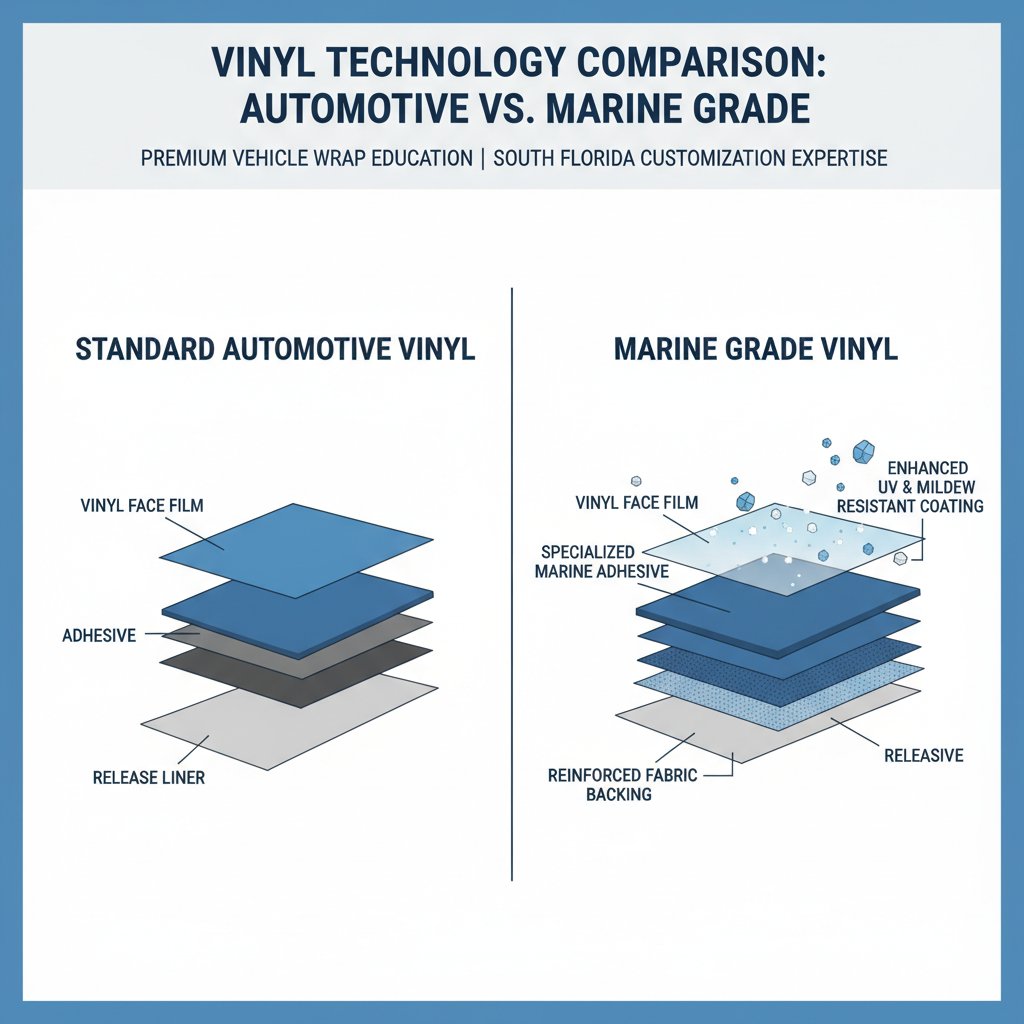
Marine vehicle wrapping demands specialized materials engineered specifically for constant water exposure and salt air corrosion. While automotive wraps use cast vinyl designed for curves and durability, marine grade vinyl incorporates additional protective layers and modified adhesive chemistry that prevents the catastrophic failures common when using land-vehicle materials on watercraft.
The molecular structure of marine-grade vinyl includes UV inhibitors at concentrations three to four times higher than automotive films. This isn’t marketing language—it’s material science addressing the reality that reflected sunlight off water doubles UV exposure compared to land vehicles. The adhesive backing on marine vinyl uses acrylic formulations that maintain bond strength even when saturated, whereas standard automotive adhesives lose approximately 60% of their holding power when subjected to continuous moisture.
3M boat wraps utilize the company’s Controltac technology, which allows for repositioning during installation while maintaining aggressive final adhesion. This becomes crucial when wrapping complex hull geometries where precision matters for both aesthetics and hydrodynamic performance. The air-release channels in premium marine vinyl prevent the trapped moisture pockets that create lifting points where delamination begins.
South Florida’s Unique Marine Challenges
Operating watercraft in South Florida waters exposes vinyl to conditions that simply don’t exist elsewhere. The combination of year-round heat, intense UV radiation, salt concentrations that vary with tidal flow, and biological growth factors creates an environment where only properly specified materials survive.
Water temperature in South Florida ranges from 75°F to 88°F throughout the year, maintaining conditions where adhesive creep becomes a constant concern. Unlike northern climates where cold water temperatures slow chemical degradation, our warm waters accelerate every breakdown mechanism. Salt air doesn’t just affect boats in the water—marina storage exposes vessels to continuous salt-laden humidity that attacks vinyl from all directions.
The microorganisms thriving in warm saltwater present another challenge. Algae, barnacles, and other marine growth don’t just attach to hulls—they penetrate beneath poorly sealed vinyl edges, creating pathways for water intrusion that rapidly expands once started. Professional yacht wraps south florida installations include edge sealing techniques specifically addressing these biological factors.
UV Exposure and Thermal Cycling
South Florida delivers approximately 4,000 UV index hours annually—one of the highest concentrations in the continental United States. When sunlight reflects off water surfaces, effective UV exposure nearly doubles. This reflected radiation attacks vinyl from angles that never occur with land vehicles, degrading color stability and adhesive bonds simultaneously.
Thermal cycling between air-conditioned storage and 95°F on-water conditions causes expansion and contraction that tests every seam and edge. Premium marine vinyl maintains elasticity through these temperature swings, while inferior materials become brittle or excessively soft, leading to cracking or stretching that destroys graphic integrity.
Installation Techniques for Marine Applications
Applying boat graphics florida requires fundamentally different techniques than automotive wrapping. Hull geometries include compound curves, through-hull fittings, rub rails, and surface transitions that demand advanced skills beyond standard vehicle work. The preparation process alone distinguishes professional marine installations from adequate automotive work.
Surface preparation begins with solvent cleaning that removes not just dirt but the waxy oxidation layer present on gelcoat surfaces. This step proves critical because gelcoat continues outgassing for years after manufacture, and any contamination layer between vinyl and surface guarantees eventual adhesive failure. Professional installations include surface energy testing using dyne pens to verify adequate bonding potential before vinyl application begins.
Temperature and humidity control during installation directly impacts long-term durability. Ambient temperature should remain between 68°F and 78°F with relative humidity below 60% during application. These conditions ensure proper adhesive flow and molecular bonding. Rushing installations during unsuitable weather conditions cuts working time but guarantees premature failure.
Edge Sealing and Primer Application
The edges of boat wraps represent the primary failure initiation points. Water naturally migrates toward any opening, and once moisture reaches the adhesive layer, capillary action spreads it rapidly across large areas. Professional marine installations incorporate liquid edge sealant—not just heat application—along every termination point, through-hull penetration, and complex curve where vinyl edges meet.
Primer application on porous or textured surfaces creates the chemical bridge between gelcoat and adhesive. This step, often skipped in lower-tier installations, determines whether a wrap survives five years or fails within eighteen months. The 3M 94 primer used in certified installations modifies surface energy and provides mechanical grip that raw adhesive alone cannot achieve on certain hull materials.
Design Considerations for Watercraft
Effective boat graphics differ fundamentally from automotive designs. Watercraft are viewed from distance, across water, and often in motion, requiring graphics that maintain visibility and impact under these specific conditions. Color selection must account for how maritime environments affect perception.
High-contrast designs work best for marine applications. Subtle gradients and fine details that look exceptional on vehicles often disappear when viewed across water or in the high-glare conditions common in South Florida. Bold color blocking with strong edge definition maintains visual impact regardless of viewing distance or lighting conditions.
Metallic and chrome finishes require careful consideration for marine use. While these materials create stunning effects, they show water spots and salt residue more obviously than matte or gloss solid colors. Clients should understand the maintenance commitment associated with reflective finishes in marine environments.
Hydrodynamic Impact
Vinyl thickness affects hull performance, particularly on high-performance vessels. Premium marine vinyl measures approximately 3.5 to 4.0 mils thick—enough to affect waterflow over racing hulls or performance fishing boats. While the impact remains negligible for most recreational craft, competitive vessels require consideration of how wrap thickness influences speed and fuel efficiency.
Seam placement matters hydrodynamically. Professional car and boat wraps installations position seams along natural hull lines rather than across waterflow paths. This attention to detail prevents the slight turbulence that seams can create, maintaining performance while achieving complete coverage.
Maintenance Requirements for Longevity
Even the highest-quality marine vinyl wraps require proper maintenance to achieve their full lifespan potential. The difference between a wrap lasting four years versus eight years often comes down to care protocols rather than installation quality.
Rinsing with fresh water after every saltwater use removes the crystallized salt that acts as an abrasive compound against vinyl surfaces. This simple step prevents 70% of premature wear issues. Using pH-neutral cleaning solutions rather than harsh detergents preserves the protective coatings that give marine vinyl its UV resistance and color stability.
Waxing wrapped boats requires specific products formulated for vinyl rather than gelcoat. Traditional marine waxes contain petroleum distillates that soften vinyl adhesives over time. Quality vinyl-safe protectants add a sacrificial UV barrier that extends color life significantly when applied quarterly.
Cost Factors and Value Analysis
Marine vinyl wraps represent a significant investment, with costs varying based on vessel size, design complexity, and material selection. A professional yacht wrap for a 30-foot center console typically ranges from $3,500 to $7,000, while larger yachts can require $15,000 or more for complete coverage.
This investment must be weighed against paint alternatives. Marine-grade paint jobs cost substantially more than wraps while offering less flexibility for future changes. Paint also requires extensive surface preparation including potentially hazardous material removal, while wraps install over existing finishes without chemical stripping processes.
The removability of quality wraps adds value for vessels that may be sold or re-branded. A professionally installed wrap removes cleanly even after years of service, returning the hull to original condition without the permanent commitment of paint. This reversibility maintains resale value while allowing dramatic customization during ownership.
Certification and Installer Selection
3M Preferred Installer certification indicates an installer has met specific training requirements and maintains standards for material handling and application techniques. This certification isn’t merely a marketing designation—it represents verified competency in advanced wrapping methods including the marine-specific techniques that ensure longevity in saltwater environments.
Evaluating a boat wrap company florida should include reviewing marine-specific portfolio work, not just general vehicle wrapping experience. Ask potential installers about their surface preparation protocols, edge sealing methods, and warranty coverage specific to marine applications. Installers who don’t distinguish between automotive and marine processes likely lack the specialized knowledge required for watercraft.
Warranty terms reveal installer confidence in their work. Comprehensive warranties covering material and labor for three to five years indicate an installer using proper materials and techniques. Shorter warranty periods or coverage excluding marine-specific failure modes suggest corners being cut that will become expensive problems later.
When to Choose Full Wraps vs. Partial Graphics
Complete hull wrapping provides maximum visual impact and uniform UV protection, but partial graphics offer cost-effective branding for commercial fishing operations, charter services, or rental fleets. The decision depends on objectives, budget, and vessel use patterns.
Full wraps create a seamless appearance while protecting the underlying gelcoat from UV degradation and minor impacts. For vessels kept in the water year-round, this protection preserves hull condition significantly. The wrap essentially acts as a sacrificial barrier absorbing environmental damage that would otherwise affect the hull directly.
Partial graphics work effectively for vessels where branding needs concentrate on specific viewing angles—typically hull sides and transoms. Charter boats benefit from large company logos and contact information on visible surfaces without the expense of complete coverage. This approach allows professional appearance while managing costs appropriately for commercial operations.
Professional Installation Makes the Difference
The gap between adequate and exceptional marine wrap installations determines whether your investment delivers four years or ten years of service. Watercraft wrapping demands specialized knowledge that goes beyond automotive experience, incorporating understanding of marine environments, hull materials, and the unique stresses that boats endure.
South Florida’s demanding conditions don’t forgive shortcuts or learning curves. Every boat wrap installation should reflect deep understanding of how salt, sun, and sea affect materials over time. When evaluating watercraft wrapping services, prioritize demonstrated marine experience, proper certifications, and comprehensive warranties that protect your investment.
Your vessel deserves the same attention to detail and material quality that goes into its mechanical systems. Contact our team to discuss how professional marine-grade vinyl wraps can transform your boat’s appearance while providing lasting protection against South Florida’s challenging coastal environment. Let’s create graphics that perform as well as they look, mile after mile on the water.
